Ángel Martínez
Ángel Martínez holds a degree in economics from the UAM and he is an analyst at the Esade Center for Economic Policy (EsadeEcPol).

19 Dec, 2024
On June 15, 2023, the government launched a 50% subsidy on the price of high-speed tickets (up to a maximum of €30 bonus), aimed at young people. The measure was aimed at young people between 18 and 30 years of age and was explicitly intended to improve their access to this type of travel. The […]
12 Sep, 2024
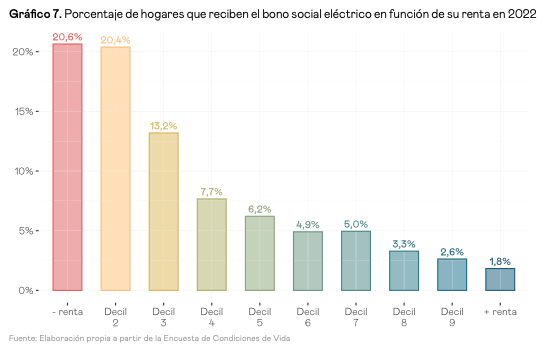
Analysis published together with Oxfam Intermón. Key ideas In 2022, almost 8 out of 10 potential beneficiaries did not receive the electricity social bonus: its coverage rate stands at 24.5%, and is particularly high for large families (45.5%). A good share of those who do benefit from the social bonus are not vulnerable families: among […]
23 Apr, 2024
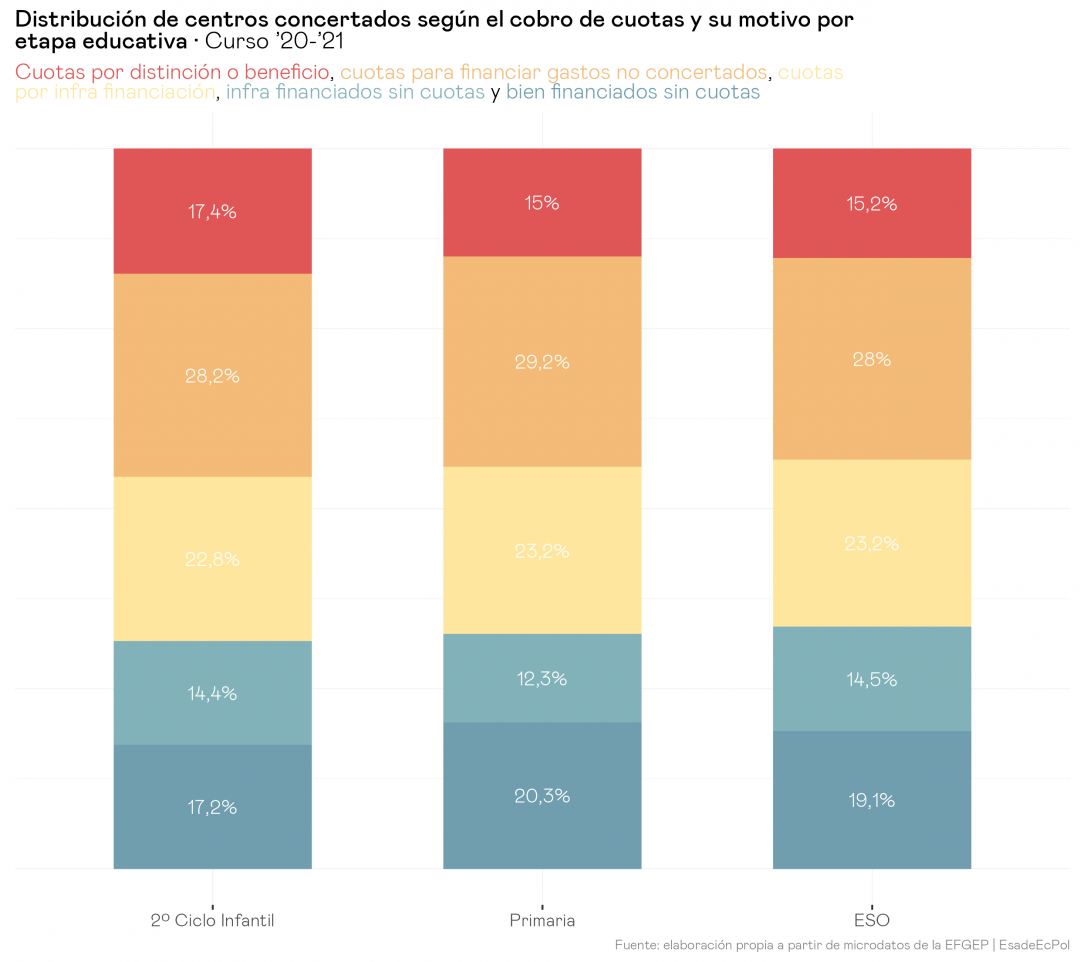
Subsidized education is a central element of the Spanish educational system. While 67% of students attend public schools, nearly 30% attend publicly funded but privately owned centers, called “centros concertados”(and only 4% attend self-financed private centers). The “concertados” fulfills an instrumental function in the development of Article 27 of the Constitution: freedom of education. However, […]
5 Dec, 2023
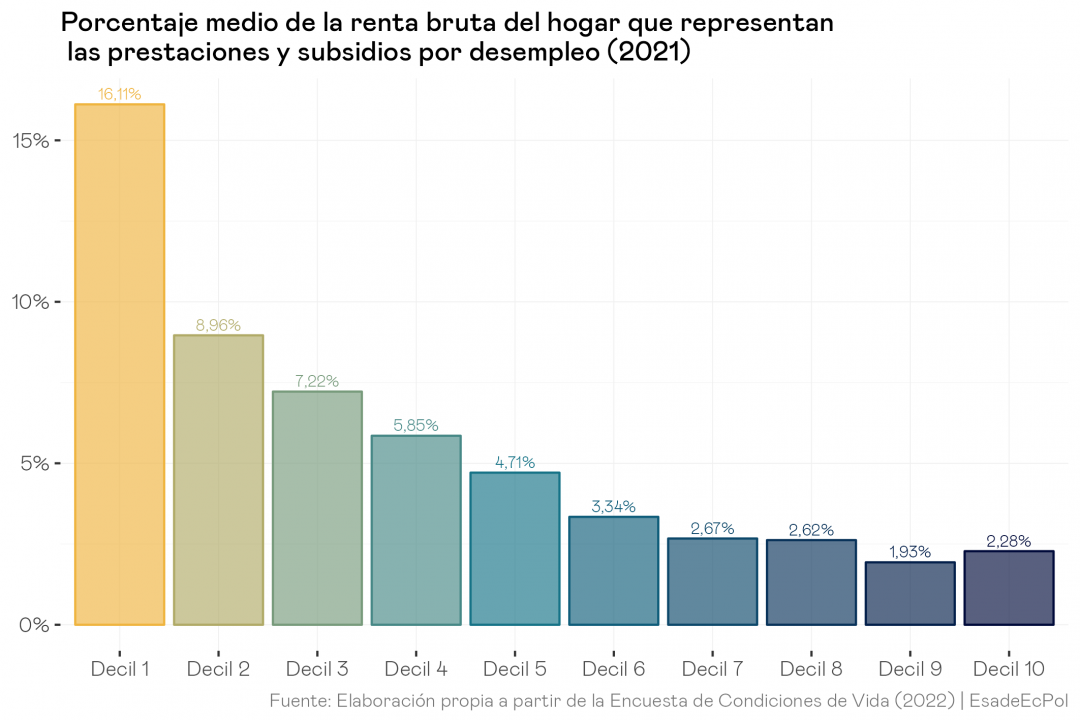
The new legislature is opening a debate on the reform of the unemployment benefits and subsidies system, with apparently opposing views even within the government itself. Gathering in this brief the most relevant published evidence that identifies causal effects of recent reforms for Spain, allows to anticipate what effects reforms in this area might have: […]
2 Dec, 2023
The effects of taxes on the consumption of goods with negative externalities have, for more than a century now, received considerable attention from economic research and also from national policymakers. However, studying the effect of taxes on these products poses a considerable methodological challenge for two reasons: i) the limited availability of public data on […]
25 Sep, 2023
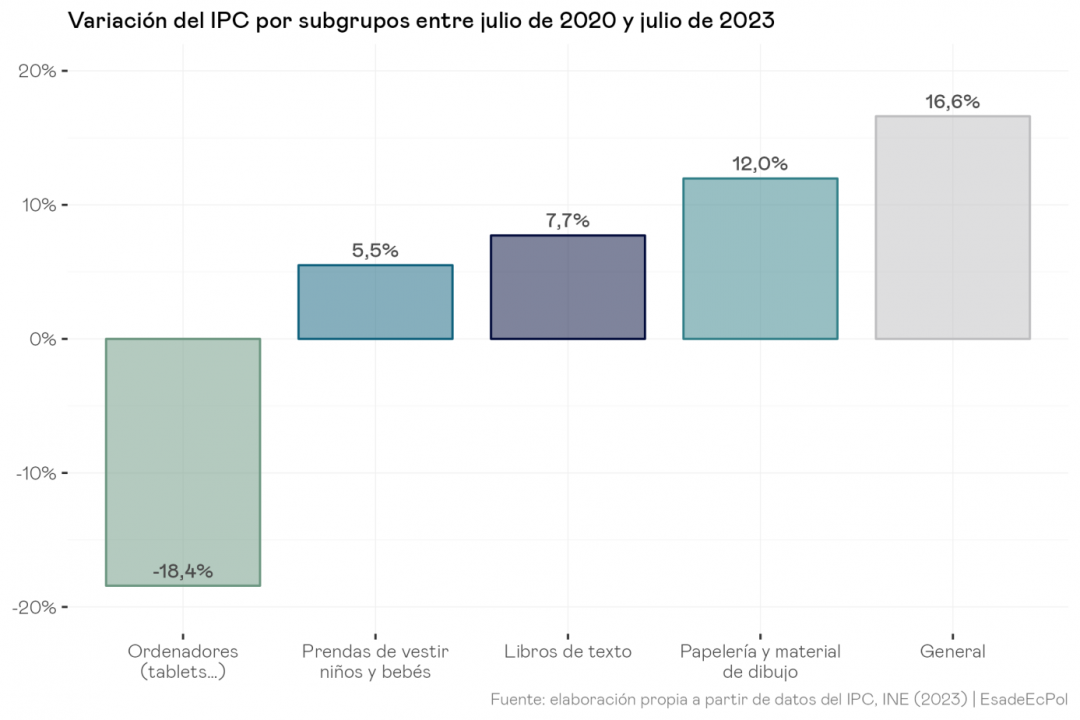
Key ideas → At EsadeEcPol we have carried out a new analysis of household school spending that is more comprehensive and rigorous than existing ones. → Average spending per pupil on school supplies is €328 in Primary, €398 in Compulsory Secondary Education (ESO) and €474 in Bachillerato (upper secondary). → Textbooks and IT equipment are […]
8 Jun, 2023
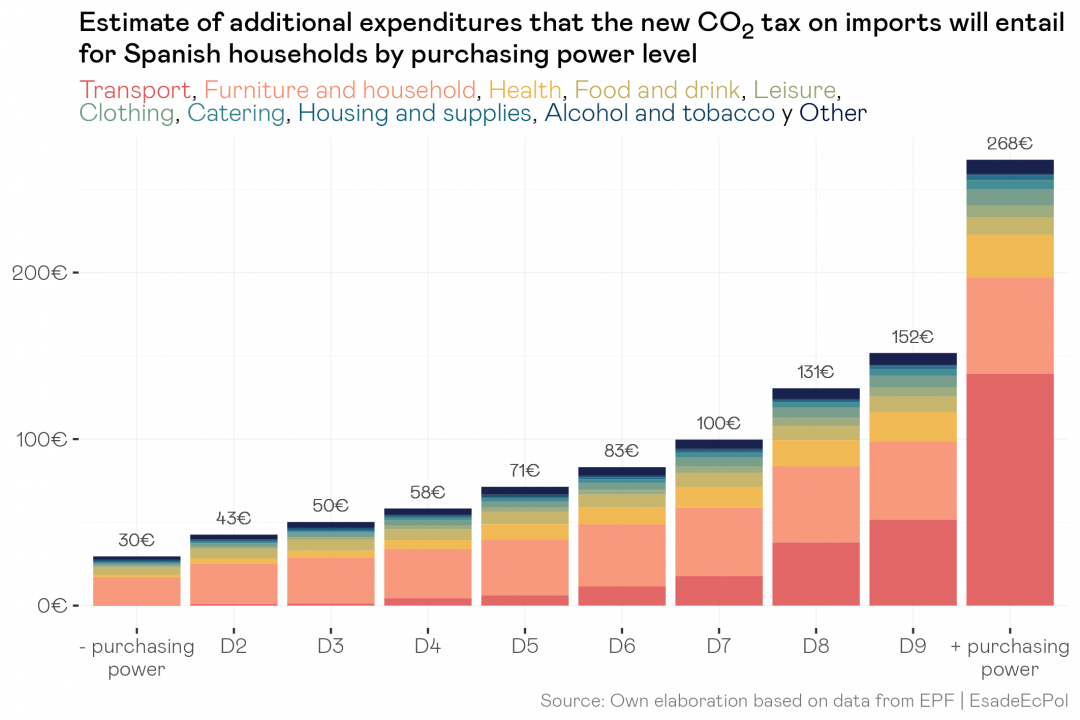
Energy-intensive sectors in the European Union pay for the environmental costs of their activities through an emissions allowance market, where each tonne of CO2 emitted has a specific price. To prevent these additional costs from putting European industry at a disadvantage compared with imports from third countries, a free quota was previously allocated to the […]
3 May, 2023
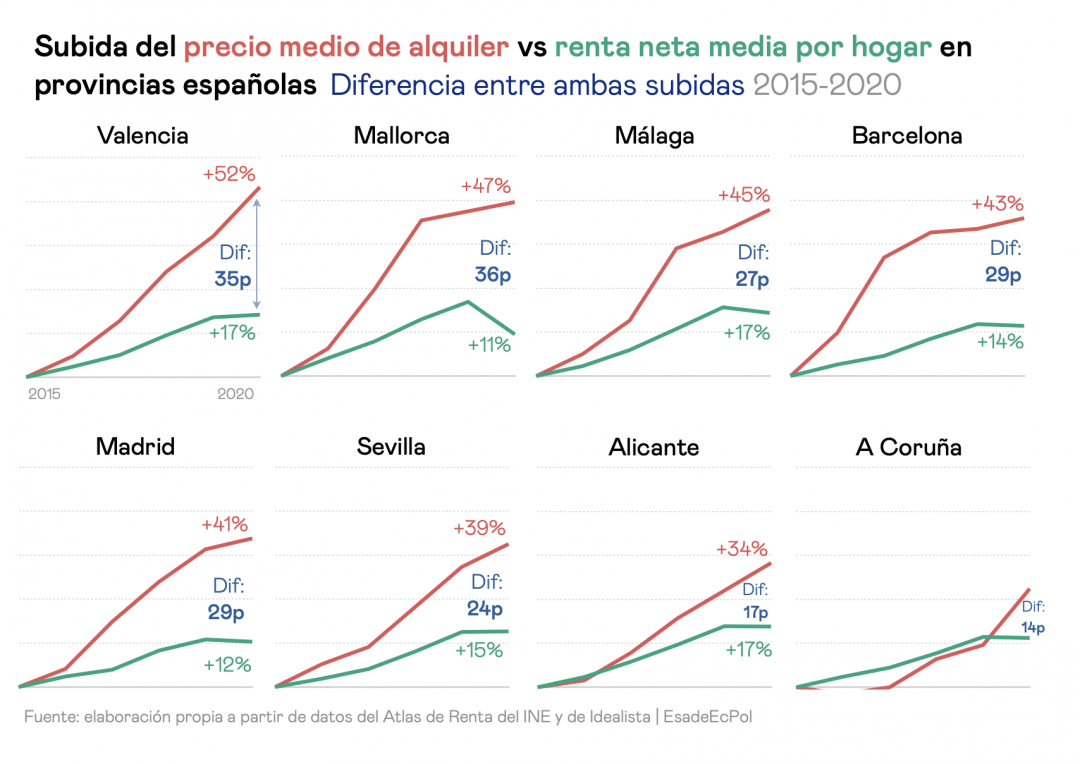
The new housing policy aims to solve the evident rental problems in Spanish cities through price controls in stressed areas and an effort to increase the supply of social rental housing. The effort on access is promising and goes in the right direction to solve the problem, while the controls could prove counterproductive. The commitment […]
30 Mar, 2023
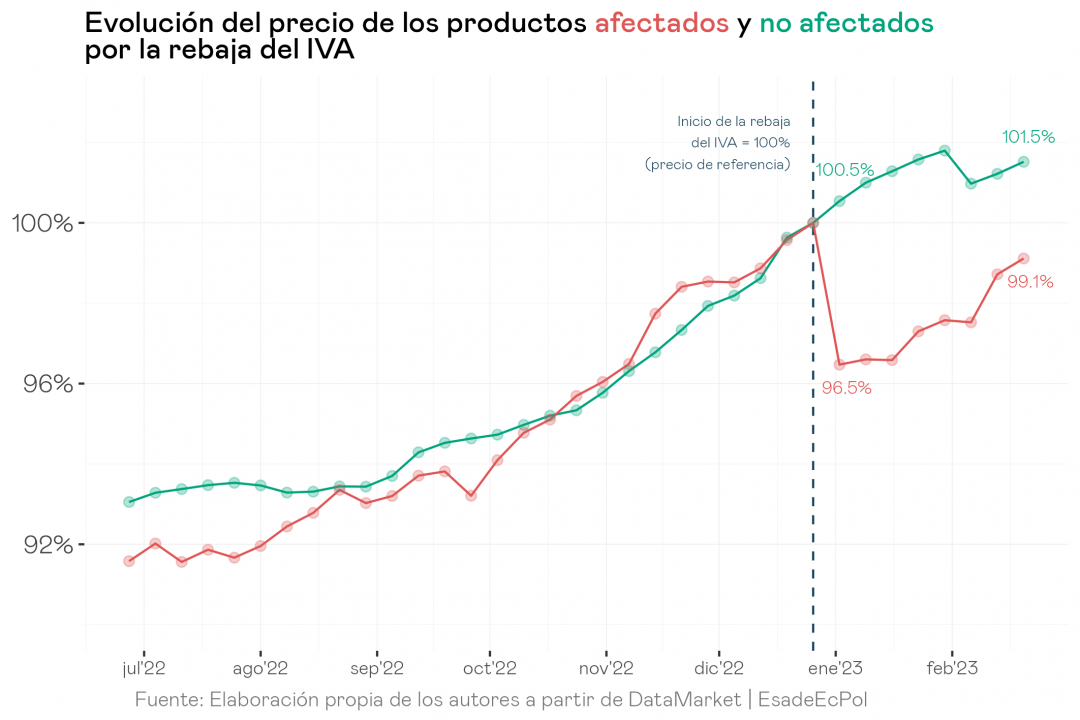
Inflation is causing a severe loss of purchasing power for many families in Spain, especially those on lower incomes. In response to this problem, on 1 January 2023 the Spanish government decided to cut VAT on essential foodstuffs from 4% to 0%, while other basic foods (such as uncooked pasta or oil) went from 10% […]
21 Mar, 2023
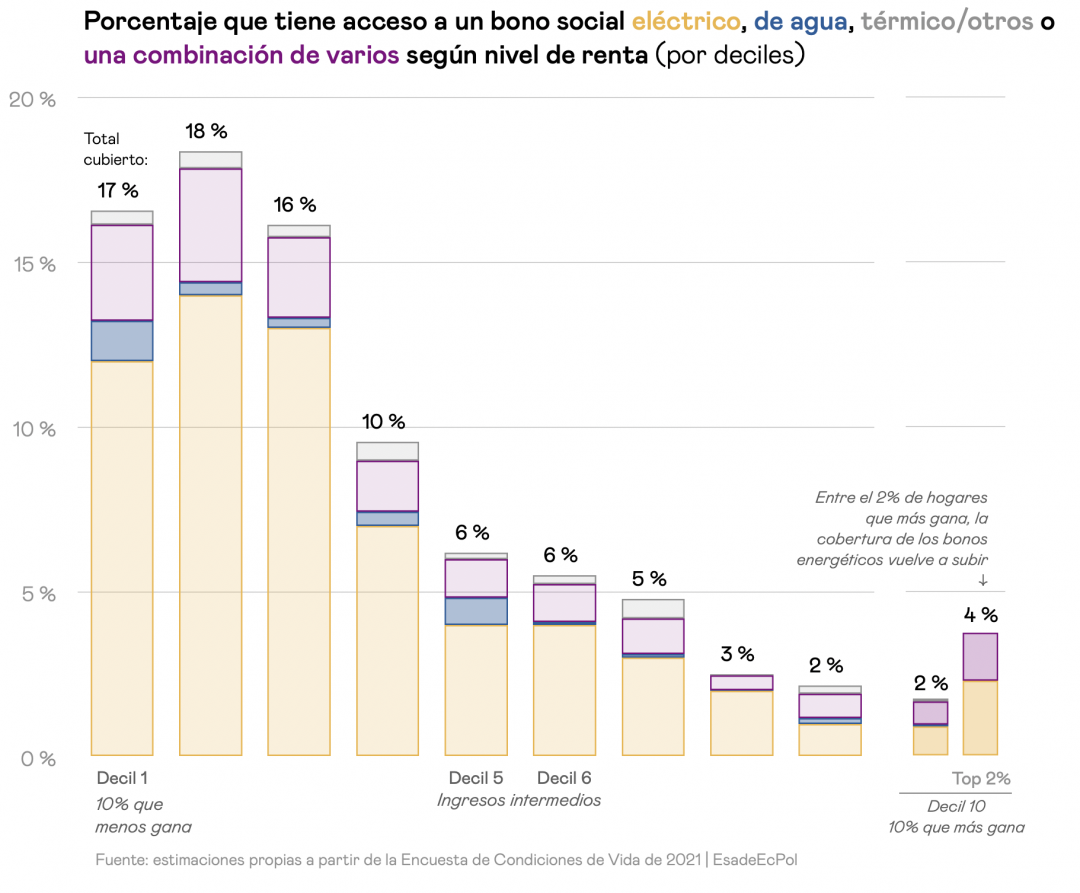
Only 8.3% of households receive any energy social bonus, even though 14.3% reported having problems keeping their home at an adequate temperature in 2021, the latest available data. This percentage only rises to 17% among the third of households with the lowest income, and falls rapidly as we look at middle- and upper-middle-class households, covering […]
6 Mar, 2023
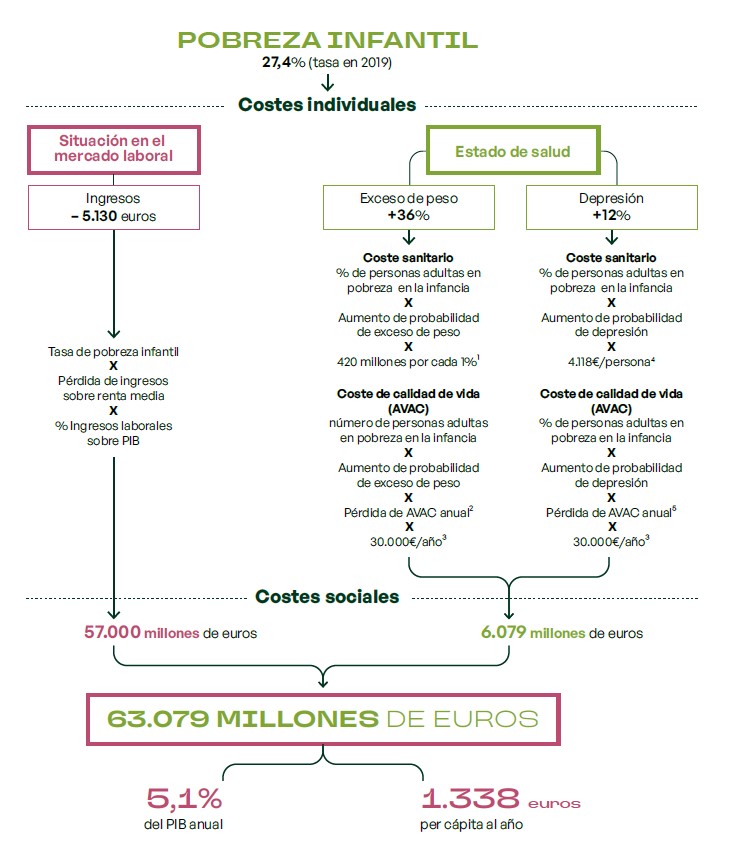
EsadeEcPol took part in the preparation of the study “The cost of child poverty in Spain”, presented today by the High Commissioner against Child Poverty, together with Romén Adán (KSNET), María Sánchez (KSNET/LSE), Luis Ayala (UNED), María Romaguera (UNED), Mariña Fernández (UAH), Judit Vall (UB) and Carlos Victoria (EsadeEcPol/UCM), under the direction of Libertad González […]
18 Jan, 2023
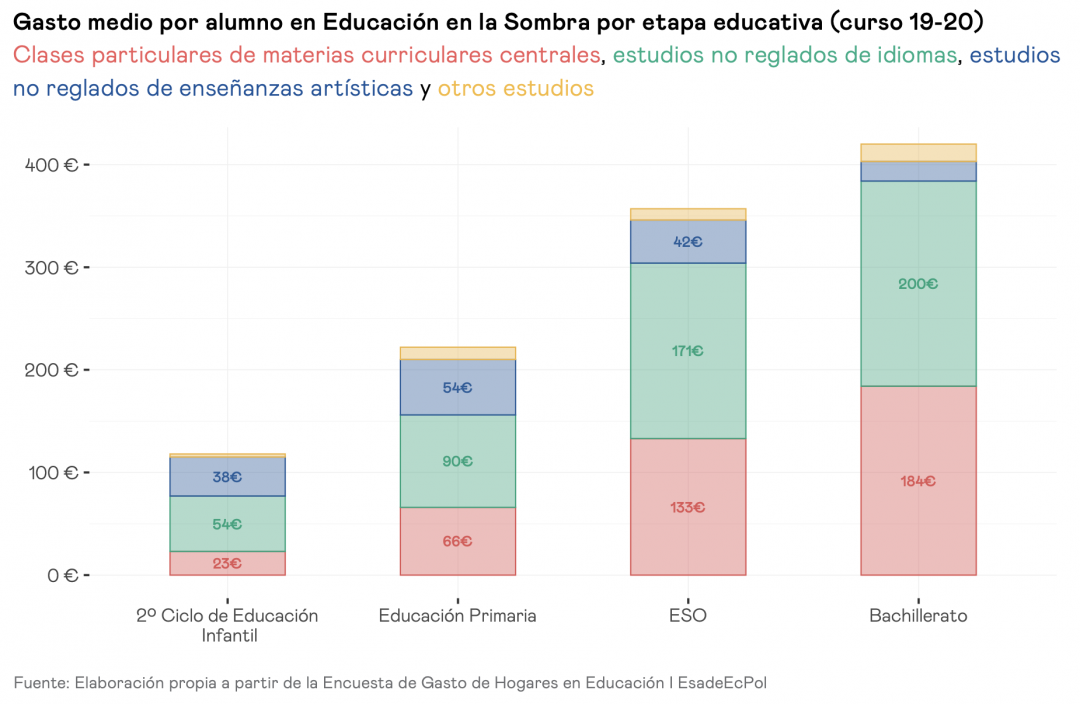
According to the 2019/2020 Household Education Spending Survey (EGHE), the size of the Shadow Education (SE) market in Spain is even larger than estimated by the Household Budget Survey (EPF) for the same year, presented in Moreno’s EsadeEcPol report in January 2022. Based on this new survey, also from the INE, total spending amounted to […]
29 Nov, 2022
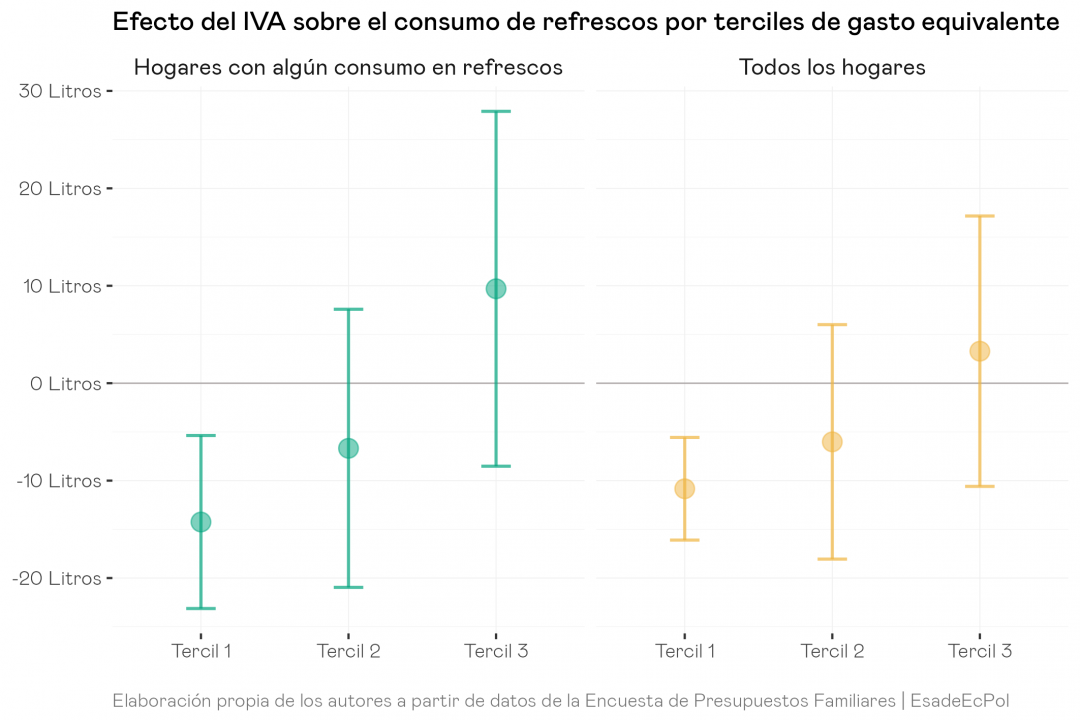
This policy brief is a summary of the academic working paper by Ángel Martínez Jorge and Javier Martínez Santos, which you can find here. Sugar taxes have become the benchmark measure to discourage the consumption of a product considered to be strongly associated with obesity, especially childhood obesity. In 2021 Spain raised VAT from 10% […]
29 Oct, 2022
In this paper we evaluate the tax on sugar-sweetened and artificially sweetened beverages by exploiting a natural quasi-experiment in Spain: in 2021 an increase in Value Added Tax was introduced in all regions of Spain except a few that do not have VAT. These regions serve as a control group, offering a unique opportunity in […]
10 Oct, 2022
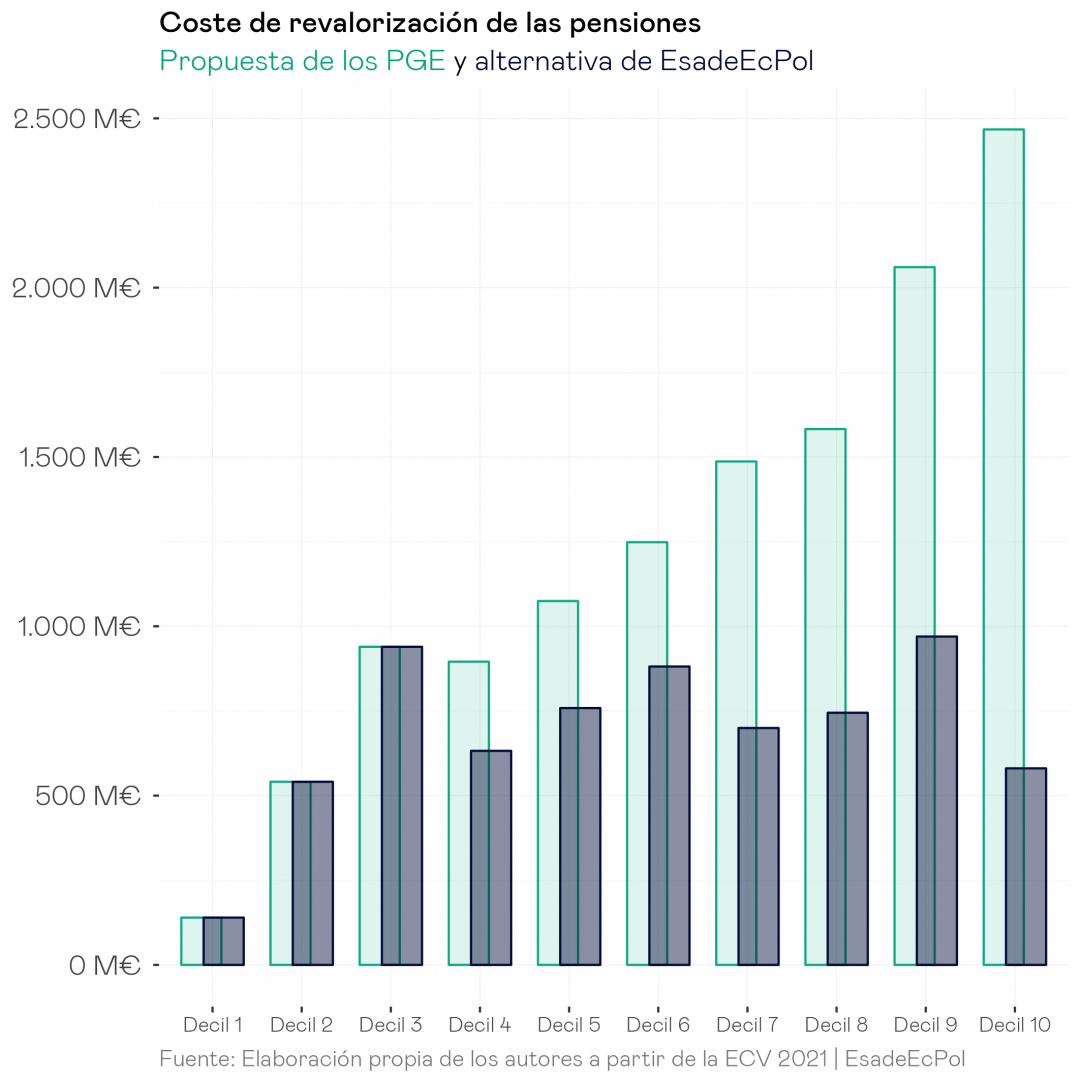
The initial draft of the 2023 General State Budget anticipates an increase of some 25 billion euros in social spending compared with 2022. Of this, around 19.5 billion will go to pensions, and 12.43 billion specifically to the general 8.5% indexation announced by the government. In other words: half of the new social spending goes […]

7 Jul, 2022
In this policy brief we present the study that, to date, offers the most detailed analysis of the effect of the discount on fuel prices. To do so, we develop an econometric model that allows us to predict fuel prices with 99% accuracy using daily data from the more than 11,000 service stations in Spain […]

11 May, 2022
La jornada escolar matinal (continua) se ha extendido rápidamente en muchos centros públicos de toda España en los últimos 30 años. Aunque no existen datos oficiales, las encuestas más recientes muestran que la jornada matinal (continua) es mayoritaria en los centros públicos de Infantil y Primaria.

28 Apr, 2022
→ Temporary employment is one of the biggest problems in the Spanish labour market. It is high, present in all sectors, generates inefficiencies and economic problems, especially for certain groups, and is usually involuntary. → The 2021 Labour Reform has tried to tackle this problem through (i) the abolition of the temporary contract for a […]
7 Apr, 2022
The short- and medium-term effect of the economic decoupling between Russia and Europe resulting from the invasion of Ukraine is a double blow to Spaniards’ purchasing power, combining rising inflation and slowing GDP growth. We expect the crisis to reduce Spain’s expected growth for 2022 by more than 1%, with upside risks. Inflation, for its […]

30 Mar, 2022
Fundación Vodafone España and Haz, la Alianza por la Educación set the working group the central objective of exploring the competency-based curriculum and its effective implementation and assessment in Spain. This exercise was carried out through 8 online sessions held between April and September 2021, organised by Fundación Vodafone España and the Center for Economic […]

16 Mar, 2022
These documents are part of the «Learning loss after the pandemic» project, led by the Esade Center for Economic Policy (EsadeEcPol) and the COTEC Foundation. To find out more, visit www.perdidadeaprendizaje.es Learning loss after a year of pandemic: the case of the Basque Country This first document presents the main results of the analysis of […]

9 Feb, 2022
Territorial polarisation is among the main megatrends of 21st-century globalisation. The causes of depopulation are structural and are associated with the dynamics of globalisation and agglomeration economies. In this policy brief we analyse data on the evolution of depopulation in Spain over the last 25 years and study the different manifestations of the territorial divide: […]

10 Nov, 2021
¿Cómo queda la foto de las desigualdades causadas por la pandemia, un año y medio después de la eclosión global del virus?

26 Oct, 2021
En el presente documento analizamos al detalle los componentes clave (control de precios, medidas fiscales y aumento de oferta) de la nueva y ambiciosa Ley de Vivienda presentada por el Gobierno.

14 Oct, 2021
Sobre la existencia de un tope final para la edad de jubilación, apenas hay desacuerdo, pero una brecha se está abriendo en el debate público respecto a dónde y cómo debería funcionar este tope.

16 Sep, 2021
La fiscalidad sobre los impuestos especiales en España no debería quedar fuera de la reforma fiscal que planea el gobierno. Los impuestos al tabaco y a las bebidas azucaradas son particularmente importantes dentro de esta categoría por su capacidad recaudatoria y su impacto sobre la vida cotidiana.

6 Jul, 2021
En el curso 2020/21, el gobierno y las CCAA redujeron las ratios alumno-profesor para asegurar las recomendaciones epidemiológicas de distancia social en los centros. La vuelta a la normalidad augura un retorno a ratios más altos, algo que ha generado un debate muy controvertido.



3 Mar, 2021
The evidence gathered elsewhere shows that rent regulation policies cause countless effectiveness and fairness issues.