Trade
Innovation and supply-side levers as an opportunity for the growth of Spanish exports during the energy transition
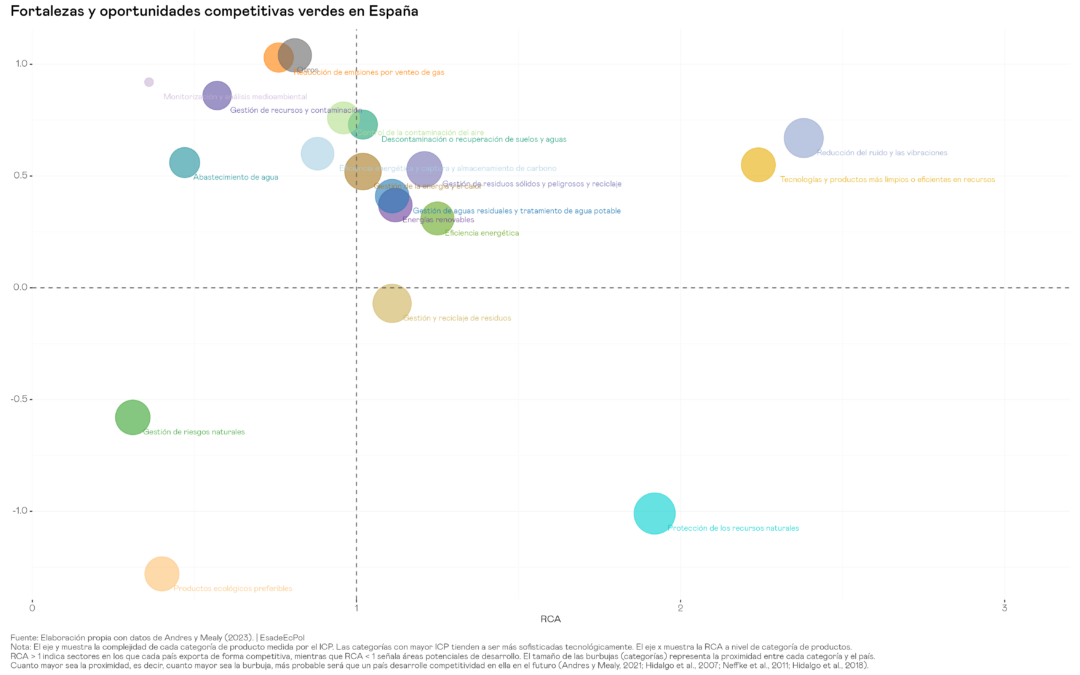
This report examines Spain’s position in the green economy, analysing its productive capabilities, the competitiveness of its exports and its diversification potential. To do so, it draws on R&D investment data and on the Green Transition Navigator to identify opportunities for Spain to thrive in green export markets amid the global energy transition. Spanish R&D […]
Cristina Peñasco
18 September 2025
Read more
1 August 2025
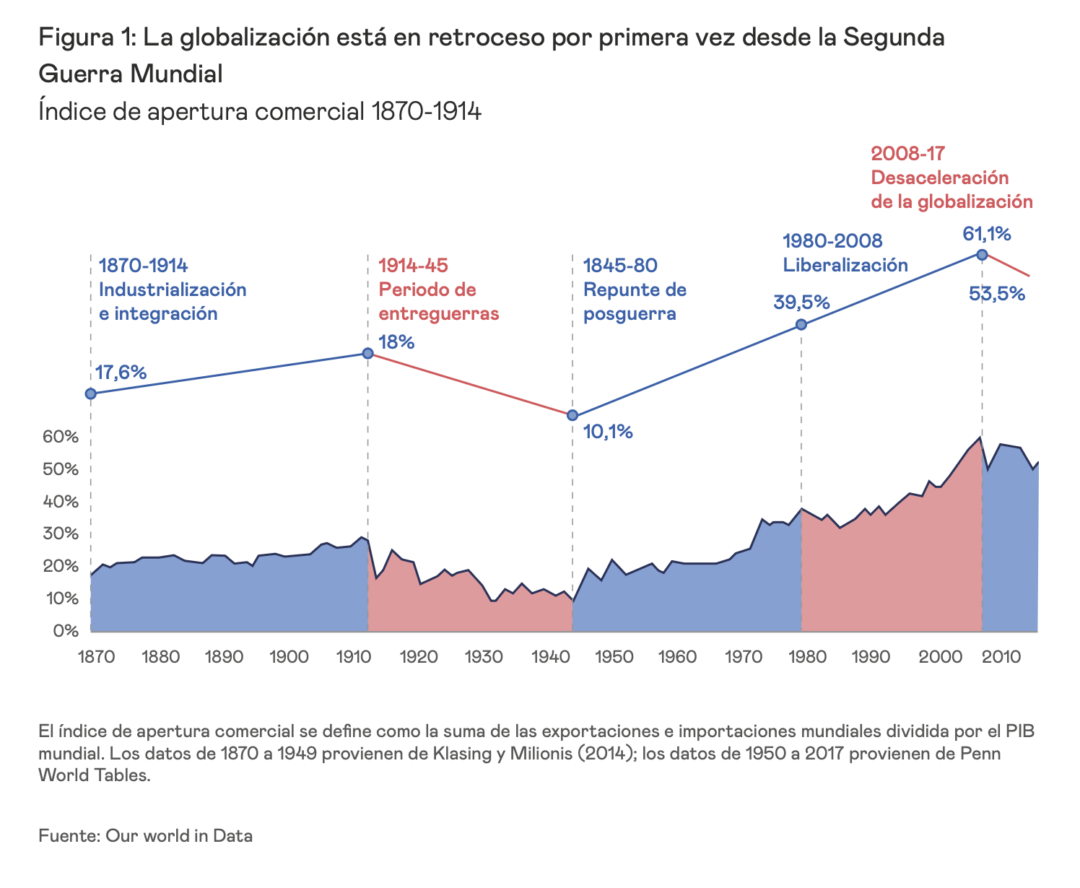
→ Geoeconomic tensions have spurred diversification strategies such as China+1, nearshoring, and friendshoring, reshaping value chains to reduce concentration risks in China. → Although Chinese exports are rerouted through third countries (Mexico, Vietnam), recent U.S. “Liberation Day” tariffs curb these tactics, yet six in ten companies have already altered their logistics routes in 2025. → […]
1 August 2025
→ Both the U.S. and EU have shifted toward protectionist policies and industrial subsidies (Infrastructure Investment and Jobs Act, CHIPS Act, IRA; European Chips Act, MRR), reversing the era of tariff openness and raising regulatory uncertainty. → Discretionary tariff exemptions and the unpredictability of new trade barriers complicate business planning, raise capital costs, and disrupt […]
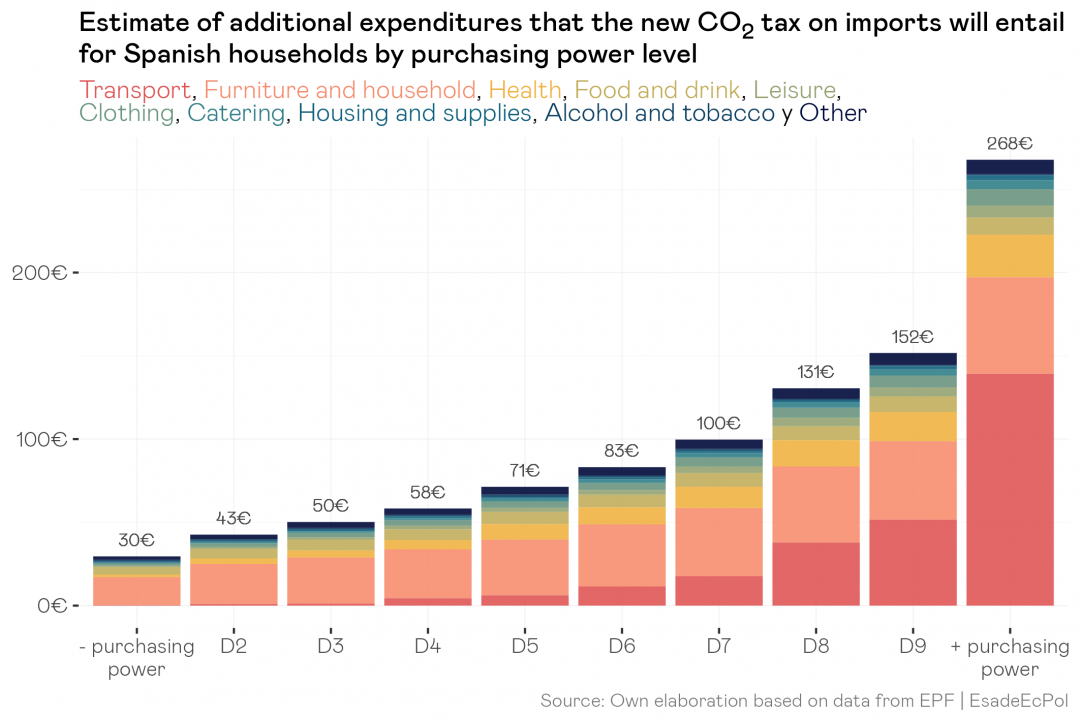
What will be the effect in Spain of the new EU emissions tax on imports?
8 June 2023
Energy-intensive sectors in the European Union pay for the environmental costs of their activities through an emissions allowance market, where each tonne of CO2 emitted has a specific price. To prevent these additional costs from putting European industry at a disadvantage compared with imports from third countries, a free quota was previously allocated to the […]
A modest proposal for an effective and efficient CBAM
30 June 2022
World trade must add to its prices the environmental costs of CO2 emissions associated with the production of goods. To this end, the European Parliament has just voted in favor of a Carbon Border Adjustment Mechanism (CBAM) to tax imported products according to their emissions, subjecting them to the same price as European goods that already pay for them in an internal market for emission allowances.
The impact of the carbon border adjustment on industrial competitiveness
15 June 2022
The European Union is working to establish a carbon border adjustment mechanism (CBAM), so that imported products pay the same price as that now paid by European producers through the existing emission rights trading system (EU ETS). The objective is to level the playing field between local producers and foreign producers that export to the […]
The European Parliament’s proposal on carbon pricing (CBAM): bottlenecks, positive aspects and what it does not resolve
10 January 2022
In one sentence: the initial report by Mohammed Chahim (European Parliament) to the Commission’s proposal to price importers’ emissions features some interesting developments but will face numerous political bottlenecks and, above all, does not tackle the fundamental problems of the EU Executive’s proposal. On the eve of Epiphany, we received the gift of the draft report sent by Mohammed Chahim, MEP, to the […]
The European Carbon Border Adjustment Mechanism debate: key policy implications and political challenges as viewed from Spain
10 December 2021
The European Commission proposed last July a Carbon Border Adjustment Mechanism (CBAM) devoted to tax imported products based on their carbon content, hence subjecting them to the same carbon price as European products and reducing the risk of leakage.