“Sant Joan de Déu is already one of the European hospitals most able to attract international patients”, according to its managing director at Matins Esade
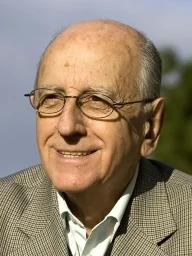
The managing director of Sant Joan de Déu Hospital, Manuel del Castillo, explained at today’s Matins Esade session that “this is one of the European hospitals most able to attract international patients today”. Del Castillo provided an overview of the hospital’s history from its foundation in 1867 to the present day and the Covid-19 crisis.
“Everything seemed to be going well until the outbreak of Covid-19”, explained Manuel del Castillo. “Our main activity has fallen (particularly patients from the rest of Spain, who do not travel as much they used to), and likewise our international income, and our costs have increased (PPE, PCR tests, etc). We have had to adapt again”. As Del Castillo said during the session, this adjustment required three things: an adjustment plan; to be a hospital with no Covid-19 (conducting PCR tests regularly on all children and staff); and to abide by the concept of becoming a liquid hospital.
Being a liquid hospital means, according to the managing director of Sant Joan de Déu Hospital, “doing more things remotely. At the moment, 78% of consultations at Sant Joan de Déu Hospital are on line because of the Covid-19 situation.”
Globalisation
In recent years, Sant Joan de Déu has experienced an intense globalisation process that has transformed it into a world benchmark in complex paediatric pathologies. At present, it treats more than 100 children each day from other countries with pathologies – mainly oncological, cardiac and neurological – that cannot be treated satisfactorily in their place of origin.
Del Castillo also pointed out during Matins Esade that the hospital “is undertaking projects to develop associated hospitals in places such as Algeria and Russia that are interested in our expertise”.
He added that “we are working on creating a Cortex control centre to get an overall perspective of patients (monitoring children in their homes and in other countries, etc).” “Our activity is now on the upturn and we think we will manage well to the end of the year,” he summarised.
History and funding
During Matins Esade, the managing director of Sant Joan de Déu Hospital, Manuel del Castillo, gave an overview of the hospital’s history and transformation. It has evolved from a charitable hospital in 1867 to a general children’s hospital in 1973, a tertiary hospital in 2004, a global hospital in 2013 and now, a liquid hospital. This has made it necessary to become international and apply three key factors: expertise (innovative treatment, clinical trials and teaching), humanism (improvements for patients and making a hospital stay a positive experience for children) and engagement.
This expert explained that funding comes from three sources: public funding, non-public funding (based on international agreements with countries in Latin America, the Middle East and Russia) and a fundraising and patronage project holding 400 events a year.
As a result, Sant Joan de Déu Hospital accounts for half of the paediatrics in the Barcelona area. It is Europe’s third largest in this speciality and the fifth in terms of research, and has an NPS of 73%, as this Matins Esade speaker explained.
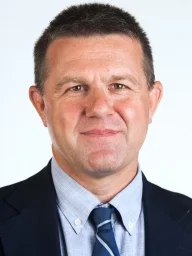
Matins Esade are a space for business discussions organised by Esade Alumni where the managers of well-known companies share insights into the company they run and their sector. On this occasion, the speaker was accompanied by the professor of the Esade Department of People Management and Organisation, director of the Executive Master in Healthcare Management and director of the Esade Institute for Healthcare Management, Manel Peiró.