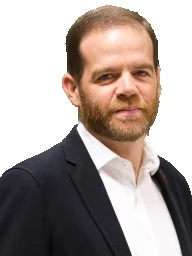
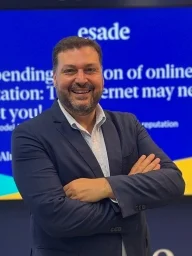
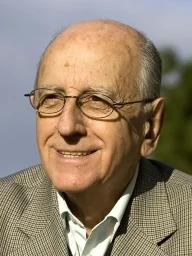
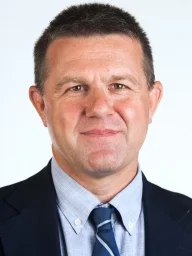
Martin Indyk, Executive Vice President of the Brookings Institution, and Javier Solana, President of ESADEgeo, agree on the need for foreign policy that is more strategic than tactical
"We are witnessing a very delicate moment in international politics, where any movement can lead to a significant step backwards," commented Javier Solana, President of ESADEgeo-Center for Global Economy and Geopolitics, during a debate session entitled "Trump vs. the World? The New US and the European Response", organised by ESADEgeo, Fundación Alternativas, El País and Casa de América. The session also featured the participation of Martin Indyk, Executive Vice President of the Brookings Institution, former US Ambassador to Israel and former US Special Envoy for Israeli-Palestinian Negotiations. Just a few weeks into his term, Donald Trump appears poised to destabilise the world order as we have known it in the West since the end of World War II - multilateral rules and institutions, security alliances and an open economy - whose aim has been to ensure rights, prosperity and global security. At the same time, the European Union (EU) is experiencing a moment of fragility as it faces multiple internal crises. "We need to strengthen our international relationships on the basis of strategic trust and an exercise in reflection that will make us more resistant to new threats," argued Dr. Solana. Dr. Indyk expressed agreement: "We're facing a scenario where we have to expect the unexpected. We need to set aside the tactical debate so that we can start thinking and acting strategically."
A new world order?
"The first populist president in the White House launched his campaign with the motto ‘America First', a message to the world that says it's OK to put the specific interests of one country ahead of all others," commented Dr. Indyk. "Trump is leading the emergence of an ‘international nationalist' movement, which also includes several European conservative political leaders." Dr. Solana expressed "concern" that "the president of the world's leading power has rejected multilateralism", particularly with regard to the risk of Trump "breaking the Iran nuclear deal, the environmental commitments achieved at COP21, and the right of asylum", which would be a "great defeat" for the international community.
In relation to Europe, Dr. Solana noted that Trump's "support for the UK's Brexit process" as well as his "appointment of Ted Malloch, a man who has boasted about helping to bring down the Soviet Union, as the US ambassador to the EU" has generated "great sense of unease". Asked about Washington's possible interest in the dissolution of the EU, Dr. Indyk noted that "America would suffer considerably" and that "in the Trump Administration there are people who, unlike him, understand the role played by the US in the world, so his rabble-rousing attitude will no doubt meet internal resistance". This opposition, Dr. Solana argued, "will arise especially in relation to NATO".
A common European defence
"According to Trump, NATO is an obsolete institution," commented Dr. Solana. "He is primarily interested in two things: getting European allies to increase their defence spending and getting them to commit to defeating ISIS, which is what he thinks NATO's fundamental mission should be." He added: "We mustn't forget that during the Iraq war, the US government received pushback from several EU countries, so you can't expect a war against the Islamic State to find much support among European leaders."
"Regardless of Trump, NATO needs to make adjustments," commented Dr. Solana, a former High Representative of the Union for Foreign Affairs and Security Policy. "Trump's presidency only makes this more urgent." The recent terrorist attacks in various European capitals, he argued, "demonstrate that interior security and exterior security exist on a continuum" and reflect "Europe's lack of a strategic security capability to respond more autonomously to threats and therefore be able to provide for and guarantee its own safety." He concluded: "If the EU engaged in serious reflection in these terms, more European countries would be willing to increase their defence spending, and that would give a huge boost to European integration."
Discreet diplomacy
"An impulsive and vain Donald Trump decided to break the rules by talking on the phone with the president of Taiwan, with no regard for the fact that a precondition of his relationship with China is that Taiwan is not on the table," commented Dr. Indyk. "However, the economic relationship between China and the US is highly interdependent. Only when Xi Jinping sent him an official statement expressing his resentment did he begin to realise that the relationship could be jeopardised." He added: "Trump wants to renegotiate the terms with America's major trading partners - China, Mexico, Japan and Germany - and see himself as a winner. He follows an infantile, narcissistic logic, and Xi Jinping, unlike Enrique Peña Nieto, responded with discreet diplomacy and managed to put him in his place."
As for Trump's relationship with Israeli Prime Minister Benjamin Netanyahu, Dr. Indyk recognised that the Republican president "does not have a history of commitment to Israel, but instead simply sees Sharia law and most majority-Muslim countries as a threat". He added: "His desire to reach a 'definitive agreement' in the conflict must be taken with great caution. He needs to ask himself what kind of diplomacy can play a constructive role in such a complex conflict."
Ana Carbajosa, a journalist from El País, moderated the debate. Vicente Palacio, director of the Observatory of Spanish Foreign Policy at Fundación Alternativas, and Santiago Miralles, Director General of Casa de América, also offered remarks during the session.