Manuel de la Rocha (Spanish Government): “The recovery plan includes 170 reforms; the funds depend on their implementation”
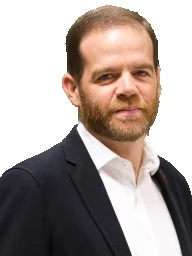
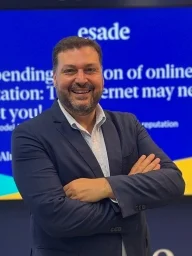
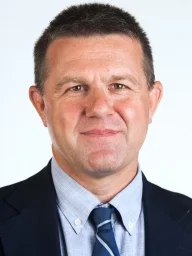
Managing the EU Next Generation funds well is one of the big administrative challenges facing the executive in the wake of the crisis caused by the pandemic. It is also an unprecedented opportunity which could mean “a huge leap of a decade or more in the modernisation and transformation of Spain’s economy”, according to the secretary-general of Economic Affairs and G20 in the Spanish Government, Manuel de la Rocha, during the webinar “Cómo usar los fondos europeos: prioridades estratégicas para España” (How to use EU funds: strategic priorities for Spain) held by the EsadeEcPol centre for economic policy, whilst talking to EsadeEcPol director, Toni Roldán. The secretary-general explained that the plan being drawn up by the government includes 170 reforms in 30 lines of action and 10 policy areas, with four directives: the ecological shift, digital change, gender equality, and social and regional cohesion. The plan “must be approved by the European Union and likewise, the payment of funds will be subject to the implementation of the reforms agreed upon,” he added.
Recovery plan procedures
“The first EU funds are expected to be received by Spain in June or July: an advance payment of 13% of the allocated amount, which member States are entitled to after signing the implementation law which will form part of the funding agreement once the EU Commission and ECOFIN (Economic and Financial Affairs Council) have checked, approved and ratified the plans,” explained Manuel de la Rocha. “Following this, the European Commission will continue to pay out the funds, twice a year, providing the aims are met”, he added.
However, as Manuel de la Rocha pointed out, “Unlike other countries, Spain cannot wait for the earmarked funds to arrive”. “We need to inject funds into the economy immediately”, he added in reference to the expansion policy put forward in Spain’s Budget for this year. Since January 1st, €27bn has been charged to EU funds, so in fact we are implementing the plan whilst negotiating it, he explained, as allowed under the Recovery and Resilience Facility.
Distribution of funds: less red tape, more transparency
The secretary-general for Economic Affairs and G20 also said that in order to streamline paperwork, “Spain passed a law in December enacting measures for reviewing legislation about awarding projects with a view to cutting red tape and increasing the capacity to apply the funds”. All this also depends on the autonomous regions of Spain in charge of implementing projects in their spheres of action, “so we urge these regions to enact mirror regulations to streamline the distribution of funds”, he said.
One of the greatest challenges Roldán said, is ensuring that “funds are distributed in the best possible way with the greatest transparency and awarded to the best projects, not to just a few big companies”. In this respect, De la Rocha declared that “calls for funding applications will be multiple, open and competitive”. The Government meanwhile, “has begun to compile expressions of interest with the two-fold aim of consulting and probing certain groups about possible projects in areas that might be otherwise overlooked in calls for applications, whilst taking an interest so that different groups can start drawing up proposals”, said the secretary-general. “Many calls for applications will be announced by the end of the first quarter”, he added.
Investment and reform priorities
De la Rocha mentioned that investment in high-tech, strategic projects (PERTES) “must generate traction on the entire value chain in sectors such as green hydrogen, energy, 5G, microchips and batteries and electric vehicles”, although he warned that “they will be subject to EU state aid regulations which make investment mandatory and are therefore a co-investment”. There will also be calls for funding applications intended specifically “to boost digital change in SMEs, for example, or help small businesses go on-line, or shore up the hospitality sector, amongst others”.
On the other hand, amongst “the reforms needed to deal with the future”, the secretary-general mentioned pensions, the job market, active employment policies and SEPE (Spain’s state-run job centres); the modernisation of public administrations; education and vocational training; the law of universities; and life-long learning.
Toni Roldán ended the session by acknowledging that “the EU’s response to this pandemic, the speed and dimensions of funding have been remarkable compared to other crises. But if we do not make the very most of these funds or if Spain’s economy and productivity are not overhauled, this might be the last response of this nature”. Manuel de la Rocha agreed, and concluded by saying that Spain “can’t afford to miss the boat, it’s our duty to younger generations”.