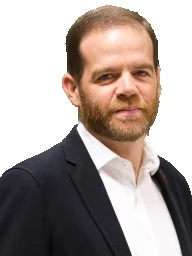
J.L. Barceló (ONCE and ILUNION) at ESADE: 'Spain is one of the most advanced countries with regard to disability legislation, but not with regard to its enforcement'
José Luis Barceló, director of Legal Services for the ONCE Foundation and ILUNION, noted today at ESADE that ‘Spain is one of the most advanced countries with regard to disability legislation, but not with regard to its enforcement’.
He made these remarks in the context of the event held today, in conjunction with the ONCE Foundation, for the Inserta Responsable Forum, entitled, ‘From the regulatory context to the effective inclusion of people with disabilities in the labour market and social transformation’. The Spanish Secretary of State for Justice, Carmen Sánchez-Cortes, and the secretary general of the ONCE Foundation, Teresa Palahí, gave the closing remarks.
Public action to promote equal opportunity
The Secretary of State for Justice discussed the main areas in which public action has been taken to promote equal opportunity and combat discrimination against people with disabilities. To this end, after praising ‘the efforts and commitments undertaken by the organisations and institutions that support people with disabilities’, she highlighted ‘the special contribution made by social clauses in public hiring processes to foster employment and promote equality for disadvantaged groups’.
Secretary Sánchez-Cortés also reviewed the measures undertaken by the Ministry of Justice to achieve ‘a regulatory framework and a set of public policies that allow people with disabilities to actively participate in their rights and freedoms in full equality with other citizens’ in areas such as free legal assistance, mortgage procedures, support for victims of crime, especially disabled victims, and the implementation of a new scale for compensation for injuries caused by traffic accidents.
More diversity, greater customer satisfaction
The secretary general of the ONCE Foundation noted that when a company hires people with disabilities, not only does it benefit from their talent, but also the resulting diversity helps to boost customer satisfaction. ‘At the ONCE Foundation, we are convinced of the need to work with companies, a task that has translated to the conclusion of 12,500 employment contracts through member companies of the Inserta Forum’.
Likewise, Eduardo Berché, dean of ESADE Law School, spoke of the need for people with disabilities to have the same opportunities to access the labour market as others, adding that ‘they have to be integrated, because, when they are, it is the company that hires them that wins’.
Spanish disability and labour market observer
With a view to contextualising and analysing the state of employment for people with disabilities in Spain, Luis Enrique Quifez, a scholar and analyst at FSC Inserta, took advantage of the forum to present ODISMET, the Spanish Disability and Labour Market Observer, sponsored by the ONCE Foundation and FSC Inserta with co-funding from the European Social Fund. According to Mr Quifez, the new body ‘aims to become a point of reference for employment statistics for people with disabilities in Spain’.
Ramón Pueyo, director of Governance, Risk and Compliance at KPMG in Spain, also spoke at the event, noting that ‘it is important for governance bodies to ensure that the company acts in accordance with clearly established principles that take outside opinions into account’. In his view, companies that are unable to meet the needs of society ultimately do not survive.
The deputy director of Resource Management at C.I. Repsol in Tarragona, Xavier Fava, said that ‘with great energy and a serious selection process, it is possible to offer people with disabilities a career, which is also a competitive advantage for the company’.
The director of HR at Nestlé, Luis Miguel García, emphasised that ‘human resource directors are the guardians of culture and must work to ensure that the leadership is inspiring and diverse’.
Finally, the CEO of ILUNION Hotels, José Ángel Preciados, explained that the hotel company that he leads is a pioneer in Spain in terms of accessible establishments. He likewise indicated that he expects the share of disabled persons on his staff to reach 40% shortly. ‘We are spearheading a project that sets us apart from the rest. We are working for our guests and for an increasingly just and more generous society.’