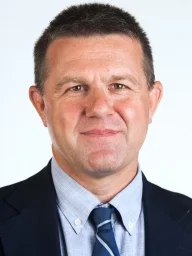
David Vegara (ESADE): "Greece has made massive fiscal adjustments"
“A great deal of fiscal adjustment has been carried out in Greece, said Professor David Vegara of ESADE’s Department of Economics, Finance and Accounting and Spain’s former Secretary of State for Economics, at the event held at ESADE last Tuesday by ESADE Alumni and Executive Education. “Opinions may differ about the speed but not the need for this adjustment, he emphasised.
During his talk, Vegara explained the circumstances leading up to the Greek crisis: high public deficit, considerable injections from Europe and a major property bubble, “but not quite as large as in Ireland, in his opinion.
This ESADE professor considers that, “the fallout has been totally devastating, with a markedly negative rate of growth between 2011 and 2012 and very high unemployment (similar to the level in Spain) amongst the most vulnerable segments of the population, such as young people. The mismatch between the credit and debit sides of Greece’s current account, he felt, was comparable only to Spain’s.
Solidarity mechanisms
The speaker went on to explain how the Greek crisis led to the “implementation of major solidarity mechanisms, because “the size of the problem was huge in comparison with the IMF’s run-of-the-mill problems. “Official funding only served to keep certain private banks out of the red, pointed out Vergara, recently appointed deputy director of the European Financial Stability Facility (EFSF).
“Bad luck played a part too because the international scenario was no help, but solidarity mechanisms have been strengthened, he said and then continued, “We can argue about whether private sector involvement, the write-off, was sufficient or not, but we must not forget that it happened. “The debate in Greece should have been about how to do the adjustment, not about whether to do it, he added.
Future
“Greece should have a surplus in 2015 – a situation with few precedents in developed countries, said the ESADE professor, and then added, "Greece has improved its unit labour costs, and in relative terms the German economy, if we use this country as a benchmark, and the Greek economy are equally competitive." Vergara explained that according to the OECD, "Greece is at the forefront of reforms to boost growth."
During his talk, David Vegara explained the financial aid pledged to Greece (€245.6 billion, i.e. 117.7% of its GNP) taking into account funds from the EFSF, the IMF and bilateral aid in comparison with other countries such as, for example, Ireland, another country that has suffered a financial crisis and which has received €67.5 billion.
"There has been a policy of easy lending without taking risks into account. The reason why banks were not allowed to go under deserves a separate debate. There is a regulatory agenda when a bank fails, we don’t want it to affect the public coffers the way it did, said David Vergara when asked how situations like the one in Greece could be avoided.