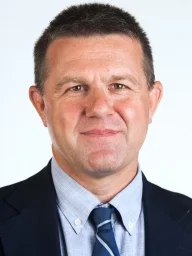
Tomás Pascual Gómez -Cuétara, Chairman of Calidad Pascual, at ESADE: "Our success is keeping the family united"
This morning at the ESADE-Deloitte Lecture Series "Family Businesses of the 21st Century: Challenges and Opportunities", Tomás Pascual Gómez -Cuétara, Chairman of Calidad Pascual, acknowledged that the key to his company's success has been "keeping the family united and linked to the project, and having an economically sustainable business". Mr. Pascual Gómez -Cuétara observed: "I have seen four generational handovers in my family: that of my mother's company, that of my father's company, and in my company, the handover from the first to the second generation and now from the second to the third generation. There is nothing left of the first two companies, and that gives us perspective."
Although the companies of Mr. Pascual Gómez -Cuétara's parents –Tomás Pascual Sanz and Pilar Gómez -Cuétara– have disappeared, the Chairman of Calidad Pascual noted that he learned a lot from those experiences. "My father entrusted the management of the company to third parties and created the board. Both of these innovations made it easier to build consensus among the siblings," he recalled. "In my mother's company, there was a social leader –my grandfather. While he was alive, the company remained united." To these two lessons –leadership and the benefits of opening up the company – Mr. Pascual Gómez-Cuétara added a third: professionalisation, which took place at Calidad Pascual during the handover from the first to the second generation. "This was the key to the daily operations of the company," he explained. "Now, we are working on the handover from the second to the third generation in terms of ownership and governance, although not in terms of the company itself, which is more complicated; you can't break the rules of the market. You need training, a selection process and a vacancy."
The value of milk and internationalisation
Having overcome the death of the founder and the economic crisis, Calidad Pascual is now facing the future with two major goals: "recovering the value of milk, which has become a commodity" and "investing in long-shelf-life yogurt in our internationalisation process".
Regarding the first goal, Mr. Pascual Gómez -Cuétara commented: "The segmentation that took place throughout the consumer-goods sector was accompanied by a tendency to buy products of plant origin rather than animal origin. This forced us to compete in price, which caused milk to lose all its value."
As for internationalisation, Mr. Pascual Gómez -Cuétara confirmed that, although the company began the process in 2010, it was not until 2015 that it truly jumped into the foreign market. To make this move, the company decided to bet on long-shelf-life yogurt. "This is a product that does not require organised or cold distribution, so it can travel far," explained Mr. Pascual Gómez -Cuétara. "We started in Southeast Asia and now we're laying the groundwork to enter sub-Saharan Africa. We don't plan to enter developed countries where the market is already closed."
The third session of the 10th ESADE-Deloitte Lecture Series "Family Businesses of the 21st Century: Challenges and Opportunities" also featured the participation of Enrique Verdeguer, Director of ESADE Madrid; Fernando Ruiz, Chairman of Deloitte; and Joaquín Uriach, Lecturer at ESADE, President of ESADE Alumni and Chairman of the Uriach Group.