President of Randstad Spain: “Employers are extremely concerned about the lack of qualified professionals and the battle for talent”
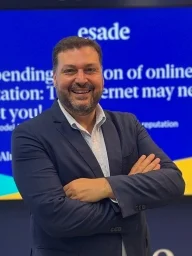
“Employers’ main concern is the lack of qualified professionals and the battle for talent”, highlighted Jesús Echevarría, president of Randstad Spain, Portugal and LatAm, at the latest ‘Desayunos Esade’ held by Esade Alumni in conjunction with Criteria Caixa. During his talk, he explained that “the lack of talent in Spain is child’s play compared to other countries”, and that “multinationals are competing for the same profiles, and this talent can often work from home and not even have to relocate.”
According to Echevarría, this battle for talent is due to a lack of qualified profiles in Spain, “About 60% of unemployed persons have no training and barely 54% of people in employment have university degrees or vocational training”. “This is one of the problems we must deal with as a country,” explained the Randstad Spain CEO, “We must provide the training needed to improve employability, and facilitate reskilling and upskilling for those already in employment”.
The great challenges facing the job market
Jesús Echevarría sees major challenges facing today’s job market. In addition to training and a lack of talent, the employment of the future will be conditioned by work-life balance, according to a model he describes as completely flexible, in which WFH, equality, diversity, inclusion and CSR policies will play a key role. From a transversal approach, companies must take care of the employee experience from the moment they apply for a job. “The function of Human Resources will become transactional and focus on employees’ entire journey through the company, bearing in mind such factors as professional advancement and remuneration”, he commented.
Big data is also part of this future scenario already here today, “but not as regards the data themselves but their analysis,” continued the president of Randstad Spain. People analytics will be crucial, for example, for knowing how recruitment is changing, which departments have the highest staff turnover and why, and whether we are nurturing our talent.”
Record employment levels
Jesús Echevarría sees major challenges facing today’s job market. In addition to training and a lack of talent, the employment of the future will be conditioned by work-life balance, according to a model he describes as completely flexible, in which WFH, equality, diversity, inclusion and CSR policies will play a key role. From a transversal approach, companies must take care of the employee experience from the moment they apply for a job. “The function of Human Resources will become transactional and focus on employees’ entire journey through the company, bearing in mind such factors as professional advancement and remuneration”, he commented.
The president of Randstad Spain was accompanied by Mario Lara, director of Esade Madrid, and Juan M. Hernández Puértolas, head of communication at the La Caixa Foundation Group.