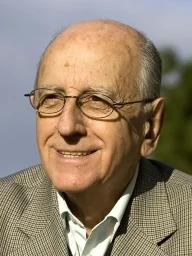
Petronor Chairman Josu Jon Imaz: "To end the crisis, we must promote industry because it creates the most jobs"
At a recent Matins ESADE session sponsored by Ernst & Young in collaboration with La Vanguardia, Petronor Chairman Josu Jon Imaz declared: "If the world has to support the growth of both population and GDP, we are going to need more energy and clear policies to ensure the sustainability of economic development. Therefore, Spain needs to promote industry and create a competitive environment if we want to see economic growth and job creation."
Mr. Imaz described a future for the oil industry in which resources start to shift to other countries. He expressed concern about Europe losing competitiveness in the medium term: "In 10 or 15 years, America will be exporting energy and will no longer depend on the Middle East. This means that Europe will be less competitive and more dependent on the US." Such developments "could handicap growth in Europe", he warned, before adding: "We need to think carefully about what role we want to play in this world."
To avert this scenario, Mr. Imaz argued, Spain will need to increase its exports. "It's true that exports have increased and that our balance of trade with countries like Belgium is positive, but we cannot be the only country in the world that has oil and does not exploit it," he declared. Mr. Imaz stressed the need to open a social and institutional debate on the exploitation of energy resources: "This is one of the factors that will allow us to begin the recovery process, although it will be long."
Mr. Imaz called natural gas "crucial" to fixing industrial energy costs in Europe. "US industry currently obtains natural gas at one third of the price it costs here," he observed.
CO2 policies
Mr. Imaz criticised Spain's current environmental legislation. Differences with respect to other countries' laws put Spain at a disadvantage, he argued: "CO2 policies are absolutely absurd because refineries in Europe have to pay for their emissions, but their competitors in India do not." This leads to the closure of European plants, the loss of industrial jobs and the offshoring of production to countries that pollute more, said Mr. Imaz.
These trends affect not only the oil industry but also the steel industry, both of which Mr. Imaz characterised as "absolutely offshorable". "If we want to have economic activity," he said, "we must rethink many of the things we've been doing in recent years."
Competitiveness factors
Mr. Imaz expressed satisfaction with recent actions on the part of the Spanish refining industry. Although demand has fallen, Spain's refining industry has invested €6 billion euros. "But we still need to work more on our competitiveness if we want to be major players," he added.
According to Mr. Imaz, Repsol, CEPSA and BP have "done their homework" with regard to Spanish industry over the past five years. These companies have eight refineries in Spain, an investment which allows them to access markets where crude oil is cheaper, such as Colombia and Mexico.
With a production capacity of 11 million t/year, Petronor is Spain's largest refinery. The company exports more than a third of its output. It employs 928 workers directly and creates a further 6,200 jobs through induced employment. Petronor accounts for more than 40% of traffic at the Port of Bilbao. The company has invested more than €1 billion over the past five years.