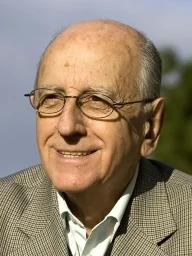
An Inspiration Break with Núria Agell
"What thrills me is understanding, analysing and seeing how AI systems can be applied to solving real-life problems"
Why did you decide to become a researcher?
In the final year of my Maths Degree at Barcelona University (UB), I did my Capstone Project at the Technical University of Catalonia (UPC). It was at the UPC that I began my research career in the Applied Mathematics Group. This work revealed applications of theoretical work I had done earlier. I also had the chance to attend and run conferences. I found it thrilling to see how researchers presented and discussed their recent work. It was then that I began working in the fields of Probability and Fuzzy Logic.
How did you come to work in the Artificial Intelligence field in ESADE’s GREC Research Group?
In the 1990s, I did my doctoral thesis at the UPC under the direction of Professor Núria Piera, a top international researcher who was one of the pioneers in the Artificial Intelligence (AI) field in Spain. At that time we had a strong interest both in studying AI mathematical models and their applications to real-world settings. This made us think of the importance of inter-disciplinary research. We went on research stays at CNRS (France) and Edinburgh University (Scotland). In 1990, I began my academic career at ESADE and we were thinking of seeking AI applications for business fields. In 1995, we set up the GREC Research Group, which began both Basic and Applied Research in the Management field and in other scientific disciplines.
What is your research based on?
At the theoretical level, we carry out studies on Automatic Learning Systems — that is to say, machines that learn from earlier cases to find new solutions. In general, these systems are used to classify patterns. This line of research has many applications to Management, especially in fields bearing on market segmentation. Second, one can highlight research based on ways of reasoning, such as Fuzzy Logic and Qualitative Reasoning. This helps us to come up with applications that shed light on human reasoning and to produce machine imitations of it. This discipline is known as Reasoning Under Uncertainty or as Computing with Words and Perceptions — CWP for short. Last, I would like to highlight the research line bearing on group and multi-attribute decision-making. This allows analysis of forms of collective reasoning and its applications range from Recommender Systems to the quest for influencing factors in social networks and analysis, measurement and consensus indicators.
What excites you most about what you do?
What thrills me is understanding, analysing and seeing how AI systems can be applied to solving real-life problems.
Where do you draw inspiration from?
Seminars, reading, discussion with colleagues and above all, conversations with PhD students. Working with people from other disciplines and sharing our results with them is also highly productive. Their feedback often throws up unexpected ideas and inspires us to advance. Just when it seems that a research study is finished, we find that discussions and reflections on the work and attempts to generalise findings throw up new ideas. These ideas reveal promising new avenues for further research. In general, I like new ideas and I take a positive attitude to the unknown.
What is your biggest dream as a researcher?
Nowadays, scientific advances come through collective effort. Being able to take part in competitive projects is a big achievement itself. I am keen to make my own contribution to AI theories and applications for solving real-world problems. I love my daily work and the small yet vital contributions it makes to scientific advancement.
What do you do when you need to take a break?
Reading, sport, films, television, travelling, and so on.
Inspiration Break
Inspiration Break is a set of seven short questions in which members of the ESADE community talk about their work in the School, why they love their field, where they draw inspiration from and what they do to relax.