De Walmart a Al Qaeda: An Interdisciplinary Interpretation of Globalisation
Everyone knows that most corporations focus on their profits and maximising returns for their shareholders. What happens when company managers lose their critical faculties and are mesmerised by their 'management dashboards' and slavishly follow the dictates of stock markets? What happens if we go one stage further and the people running the show are financial types and boffins keen to reduce the world's complexities to economic models and algorithms?
Throw all the foregoing into the pot and stir with speculative financial wizardry that beggars belief. The result is a Devil’s Brew, a world in which economic value is wholly divorced from social value, explains Prof. Murillo in his book titled De Walmart a Al Qaeda [From Walmart to Al Qaeda].
After Lehman Brothers
Contrary to what many would have us believe, the ills that were diagnosed in the wake of the Lehman Brothers collapse are still with us. The big Wall Street firms continue to recruit the brightest students from America’s top universities at shamelessly high salaries that have nothing to do with the real economy. No previous experience or financial knowledge is expected of these recruits — merely an ability to adapt to a dubious set of "values" that focus on social rather than economic skills and in which both parties (but not the rest of us) come out winning. The recruits gain the aura of the "Wall Street brand" and the firms can boast that their ranks are stuffed with Ivy-Leaguers.
David Murillo asks searching questions: what has changed in the mentality of the financial sector over the last few years?; what consequences does this economic and (im)moral landscape have on multinationals and on our societies? The results show that the financial sector has mushroomed to the point where it has become "too big to bail". In dealing with the fall-out, government "management" still focuses on the short-term, ruthless austerity policies, forcing taxpayers to foot the bill, and slashing social benefits. Meanwhile, States have avoided the real fiscal issue, failing to tackle the tax havens and financial engineering that threaten our welfare and instead have merely papered over the cracks.
What can we do to change this bleak state of affairs? What is the citizen’s role in combatting the austerity policies imposed by the Troika? What hope is there that a global government could solve the problems that seem to be beyond Nation States? Would such a hypothetical government enshrine American values or with European or Chinese ones?
The great challenges of globalisation
Prof. Murillo’s fast-paced book is easy to read and sets out the great challenges posed by globalisation with remarkable clarity. Its canvas is a broad one, ranging from theories that seek to explain this brave new world with its clash of ideologies, the growth of new corporate giants, the mind set underlying the world of high finance and speculation, the birth of management as a discipline, and the social rebellion against autistic, irresponsible companies. The final question the author asks is: What values do we wish to foster and how can we further their adoption? The book charts the path we should take to attain certain values and a way of seeing the world.
"The economic crisis has speeded up the transfer of power from The West to The East, such that US uni-polar hegemony is now no more than a memory. The interdisciplinary approach to globalisation underlying this book is key to understanding the multi-polar world in which we live. It is essential reading for managing the new world, which is here to stay", says Javier Solana, President of ESADEgeo, former High Representative for the EU’s Common Foreign and Security Policy (CFSP), and former NATO Secretary-General.
About the author
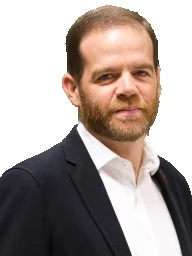
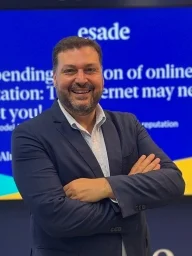
David Murillo Bonvehí is an expert on globalisation and geo-politics, and Professor of ESADE’s Department of Social Sciences at Ramon Llull University (URL). He works as an adviser to international organisations such as UNDP [United Nations Development Programme], UNIDO [United Nations Industrial Development Organization] and IADP [the Inter-American Development Bank].