Andrés Velasco (LSE) and Luis Garicano (Renew Europe): “The pandemic has put the European Union at an existential crossroads”
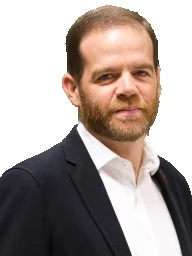
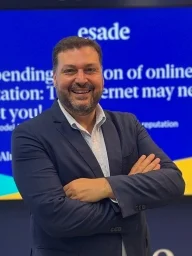
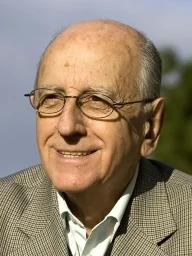
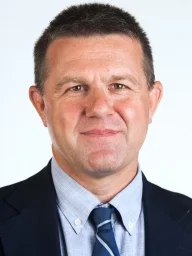
The magnitude of the global economic impact caused by the COVID-19 pandemic crisis has triggered a race by states for financial rescue packages to deal with the economic recession now looming. “The Eurozone has never looked as vulnerable as it does today. The European Union is at an existential crossroads where the viewpoints of Italy, France and Spain are at odds with those of Germany, the Netherlands and Austria. This tension could jeopardise the EU project and shift the geopolitical orientation of certain member states, possibly towards China – now one of the largest creditors in the world”, said Luis Garicano, vice president of Renew Europe, during a discussion with Andrés Velasco, dean of the School of Public Politics at the London School of Economics and Political Science, during the webinar “The Day After: Capitalism in Times of Pandemic” organised by the Esade Center for Economic Policy and Political Economy (EsadeEcPol) and the Madrid office of the Friedrich Naumann Foundation. This webinar, chaired by EsadeEcPol director Toni Roldán and the head of FNF in Madrid David Henneberger, discussed how the economic outlook of this crisis could reshape capitalism as we know it: its impact on globalisation and liberal democracies, and the role of states in response to the pandemic.
Economic outlook and inequalities
“The economic impact of this pandemic cannot be compared with that of other financial, debt or currency crises in recent times. Governments did not decree a lockdown of the population or business in any of those”, pointed out Andrés Velasco. “This situation will cause a deep economic recession and recovery will depend on how quickly we return to normality”, he said. Luis Garicano suggested that the lack of knowledge about virus immunity is reflected in the uncertainty of economic policy: “The problem is how long liquidity injections and other monetary stimuli can continue without causing hyperinflation”, he warned although they both agreed that “the main economic problems in the short term are related to a deflationary shock, a drop in demand and employment”.
As regards the IMF forecast that the global economy will shrink by 3%, Velasco indicated that “recovery will be relatively easier for developed economies compared to those with medium and low income and a large informal economy, where a considerable part of the active population cannot afford to stay at home, and whose governments are less able to collect tax for applying redistribution policies”.
Globalisation and international trade
As regards how this crisis might reshape the conditions of globalisation, international trade and the free movement of people, goods and services, Luis Garicano said, “We will have to adapt to a new normality after the pandemic. The way we travel and go on holiday will change, there will be more restrictions on cross-frontier movement, and there will probably also be a return to industrial policy in countries seeking to safeguard the supply of certain basic goods and, therefore, make the entire supply chain available in their country.” According to Andrés Velasco, “there is a risk that the interpretation of this crisis will strengthen certain confirmatory biases and polarise public opinion, so caution is necessary when adopting a narrative about what is happening.” “The mobility of people will probably change but I do not think that this will mean the end of free trade in goods and services. Rather than a clear-cut situation, I think it is a reorganisation of globalisation which will benefit some people and harm others”, added Velasco.
Liberal democracy and populisms
Another debate triggered by the COVID-19 pandemic concerns the most effective type of government and the role of the state when responding to the crisis, and what this might mean in a political landscape characterised by tension between populism and liberal democracy. In the opinion of Andrés Velasco, “the verdict about whether the response of liberal democracies is better or worse than that of populist governments or authoritarian regimes is insufficient” and he believes that the difference depends on “whether we manage to emerge from this crisis with a sense of solidarity and fraternity that bolsters liberal democracies, or whether we emerge with a scenario in which identity and socio-economic factors are more fragmented”. Luis Garicano, on the other hand, considers that “the countries where the response to the crisis seems to be less effective are those where liberal democracy has been weakened by populisms”, in reference to Spain, Italy, the United States and the United Kingdom. He ended by commenting that “It is a matter of state capabilities: the response is better when there is a feeling of unity and acting all together than when political institutions weakened by populist discourse are polarised.”