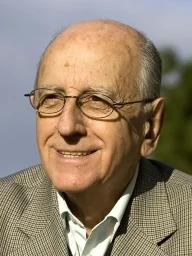
Gonzalo Gortázar, CaixaBank CEO at ESADE: "Banking can still be profitable despite zero interest rates"
“Banking can still be profitable despite zero interest rates. CaixaBank is a good example of this. Our returns are currently running at 10% because 55% of this figure is generated by other activities. During his talk at Desayunos ESADE this morning, Gonzalo Gortázar, CaixaBank CEO, was quite emphatic, “traditional banking is not profitable but activities such as insurance, payments, investment funds and consumer credit are, and this is where his bank has a competitive edge. In addition, “in the first quarter of 2014 the Spanish economy started to pick up and employment began to grow, although the banking sector still faces many challenges. Gortázar outlined the four challenges: regulation, profitability, reputation and digitisation.
“We need a breather on the regulation front
“It’s just eight years since the Lehman Brothers went bust, explained the CaixaBank CEO. “Since then regulations about banking solvency and liquidity have steadily increased. He feels that, “banks have adapted to these regulations very fast but now “need a break. “Spain could never have recovered unless its banking industry was set on a firmer footing, but we need some time to weigh up the impact of the new regulations and see if there is any fallout that needs to be remedied.
As for returns, Gortázar explained that “zero rates are placing a strain on liabilities but insisted that the alternative is to focus on customer relations by creating a well-rounded relationship spanning the business spectrum. “Right now, one in four Spaniards has their wages paid into our bank. In this respect, the CaixaBank CEO pointed out the significant deleveraging of banks (from 11.3% in 2008 to 48% in 2015). “I'm surprised that despite a 3% growth in GBP, borrowing has fallen by 5%. “We cannot predict what would happen against a backdrop of political stability but common sense suggests that if there was one, this borrowing situation would not persist, said Gortázar.
Banks yet to mend their reputation
Of all the challenges facing the finance industry, Gonzalo Gortázar highlighted the reputation issue. “According to the main indicators, banking is the most mistrusted industry, lagging far behind other industries in Spain and at levels similar to that of the government. “Banks have made a lot of mistakes, he added but then praised the contribution banks make to society. “Social projects funded by banks make a big contribution and it is a pity that the closure of some banks has caused investment to fall (from €2,000 million in 2008 to just €700 million in 2015).
The CaixaBank CEO emphasised that “la Caixa’s social project area “devotes €500 million a year to this field. He then listed the foremost divisions. “MicroBank, a CaixaBank subsidiary, is a lead player in microfinance. Since its inception it has granted 515,000 microloans which have created 155,000 jobs. For the last eight years, “la Caixa Foundation has been the bank in the world with the largest budget for social projects. “Our bank focuses on society. We believe in financial inclusion [they have offices in 93% of Spain’s towns with more than 5,000 inhabitants], encouraging savings and looking ahead [they have 4.3 million insurance customers], and providing help in the form of loans and housing [490,000 restructured loans, execution of 22,000 non-recourse loans, and 33,000 rented homes]. "
Digitisation, fintech and globalisation
Gonzalo Gortázar sees digitisation as the fourth challenge banks face, but insisted that CaixaBank has already done a great deal in this respect. “We have an Internet market share of 32% and 5.1 million active e-bank customers including three million mobile banking users. He also stressed CaixaBank’s commitment to hiring young people. “In the last two years we have taken on 1,791 people aged between 25-30 years, 6% of our current workforce.
Finally, as regards globalisation, the CaixaBank CEO was quite clear that his bank “is determined to help its international customers but not interested in buying up banks outside Spain, apart from the BPI takeover bid announced previously.
Gonzalo Gortázar, the keynote speaker in this Desayunos ESADE Alumni session, was accompanied by Pedro Navarro, Executive Vice President of the ESADE Foundation board of trustees, and Maite Barrera, founding partner of Bluecap and sponsor of Desayunos ESADE.