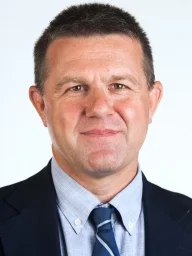
Anand Giridharadas (New York Times), at ESADE: "To combat inequality, we need a real political debate"
“The entire discussion seems to revolve around taxes, but we’re not debating the rules, or the system, or the welfare state. To solve inequality, we must develop policy actions. These comments were made by Anand Giridharadas, writer and columnist for the New York Times, who, together with Javier Solana, President of the ESADE Center for Global Economy and Geopolitics (ESADEgeo), was a featured speaker at the first “Big Challenges session, held at ESADE Madrid and ESADE Barcelona. ESADE and ESADE Alumni created this new social debate series as a venue for dialogue and reflection on the major trends and challenges of our time.
Mr. Giridharadas commented, “We have to abandon the false hope that we can solve inequality through volunteering and charity. In order to achieve a more egalitarian society, we need a real political debate on this issue – as with climate change – and we have to reinvent consumption and also our aspirations. We need a real discussion about the system and its rules, and about how wealth and power are distributed.
“The story that young people have been told about how to change the world is wrong, but young people do have the opportunity to change the world, commented Mr. Giridharadas. “They once again have to see politics as a space of possibilities, rather than just continuing to work in the system and reproduce it. No social conquest has ever been achieved through the actions of volunteers or companies; it’s always been thanks to a collective movement. If you don’t believe me, ask women, gays, black people, or differently abled people.
Dr. Solana commented, “We need a significant change of mindset in terms of how we do things and how we could be doing them. Like Mr. Giridharadas, he was critical of certain kinds of philanthropy and donations, citing as an example the recent announcement that Facebook founder Mark Zuckerberg would give away most of his stock in the company.
Two speeds in global trends
Dr. Solana also cast doubt on the statistical indicators that suggest that poverty has decreased worldwide over the last decade. “The current era seems to be characterised by a strong sensation of inequality, he commented.
“Perhaps poverty levels have decreased in the worldwide rankings, but this does not necessarily reflect global trends, said Mr. Giridharadas, echoing Dr. Solana’s comments. “We’re living in a time of great transformations, with disruptive and revolutionary innovations, he added. “At the same time, the world seems to be gradually separating into two very different realities that are so distant that they do not even share the vision or the aspirations that people have for the future.
The need for equality of resources
“Globalisation and digitalisation are already completely changing the way we understand work, money, mobility, etc., even at levels that we are not yet able to see, commented Mr. Giridharadas. “The virtualisation of business at the global level has isolated the privileged few from the effects that their actions have on the lives of communities and people. He added: “The ultimate expression of this virtualisation has taken place in finance, because nobody really makes money in a vacuum. This arises from a dense, complicated, interdependent system of rules and appraisals, and it is due to the decisions and actions that we have taken.
Dr. Solana then turned his attention to the other great global challenge, climate change, which recently brought world leaders to Paris to discuss shared solutions. He acknowledged that developed countries “use more energy and natural resources than they should and warned that “equal opportunity cannot really exist without equality of resources.