Aitor Erce
Aitor Erce works as an independent research advisor for the European Investment Bank and is currently a visiting fellow at LUISS.
14 Jul, 2026
Every six months, with the support of Banco Sabadell, Esade publishes its Economic and Financial Report, which now reaches its 39th edition under the title “Energy capabilities for a new economic era.” With it, Esade upholds its commitment to contributing to public debate through rigorous, plural analysis that, as a leading school backed by its […]
30 Jan, 2025
Spain has set very ambitious goals for the decarbonization of the transport sector: a 34% reduction in CO2 emissions by 2030, 60% by 2040, and 90% by 2050. In the long term, structural changes (development of railway infrastructure, penetration of electric vehicles, modification of transport supply and demand…) will play a central role in achieving […]
12 Jan, 2024
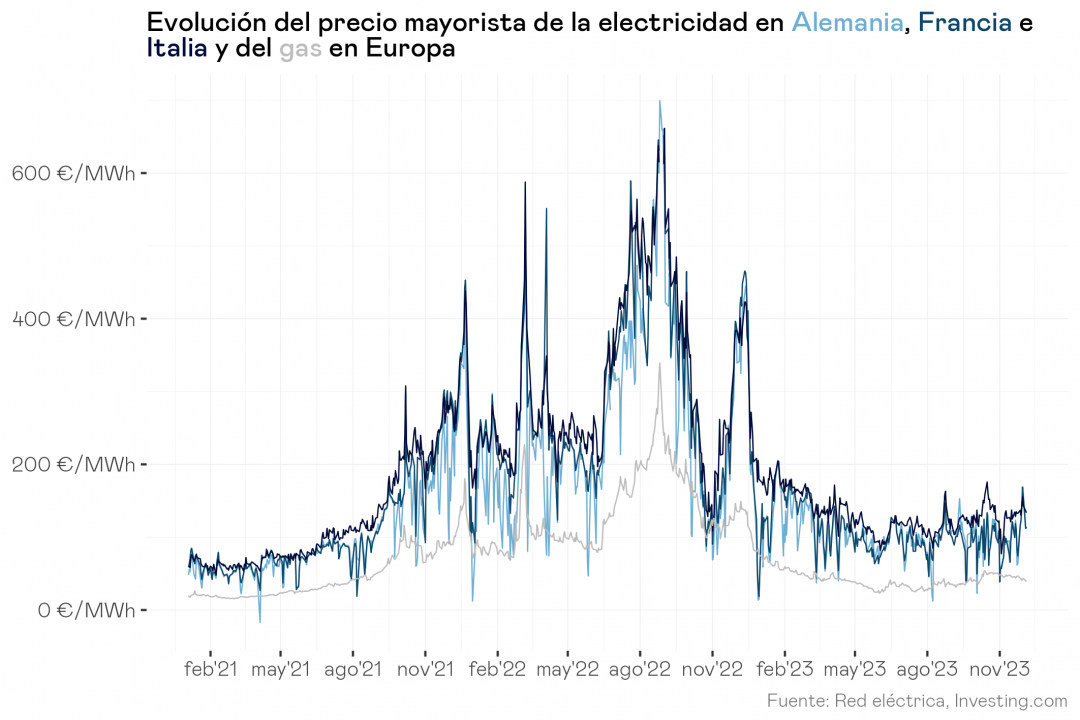
The functioning of the European electricity market needs new instruments to encourage investment in large-scale renewable energy projects and storage. Although in theory markets such as the European could incentivize investment, in practice they have failed to do so. In fact, at a certain point of maturity, the price decline in the electricity markets reduced […]

26 May, 2022
The need to align the goals of decarbonisation and energy independence from Russia increases the need for policies to rationalise our energy consumption. The most promising policies for doing so are those that affect the price of energy through taxes and similar instruments, especially for households, individuals and commercial establishments, for two reasons: They maintain […]
10 Dec, 2021
The European Commission proposed last July a Carbon Border Adjustment Mechanism (CBAM) devoted to tax imported products based on their carbon content, hence subjecting them to the same carbon price as European products and reducing the risk of leakage.
24 Sep, 2021
Creemos que la redistribución de cargos que supone el FNSSE va en la dirección correcta. Consideramos, sin embargo, que valdría la pena reconsiderar el diseño específico de compensaciones o complementarlo.