Inequality
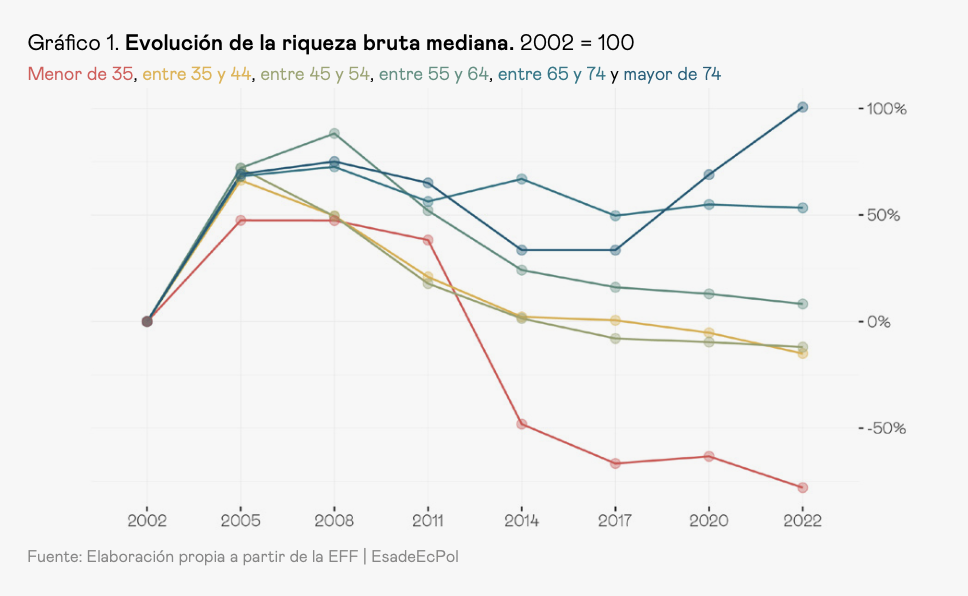
The evolution of Spanish household wealth: why saving is so hard for younger generations
This study, part of the Savings Observatory we run with Fundación Mutualidad de la Abogacía, provides an in-depth analysis of how wealth accumulation has evolved over time and across household compositions by age group, also including some particularly relevant cross-cutting dimensions. First, we look at the evolution of wealth using the Survey of Household Finances […]
Javier Martínez Santos, Jorge Galindo
9 October 2025
Read more
26 June 2025
La desigualdad es un fenómeno difícil de medir por comprender muchas dimensiones y requerir datos no siempre disponibles. Habitualmente el foco se pone en la renta, que representa el flujo de ingresos recibidos en un período de tiempo (por ejemplo, salario, dividendos, alquileres, etc.). Sin embargo, la riqueza, entendida como el total de activos (saldo […]

29 NOV, 2023
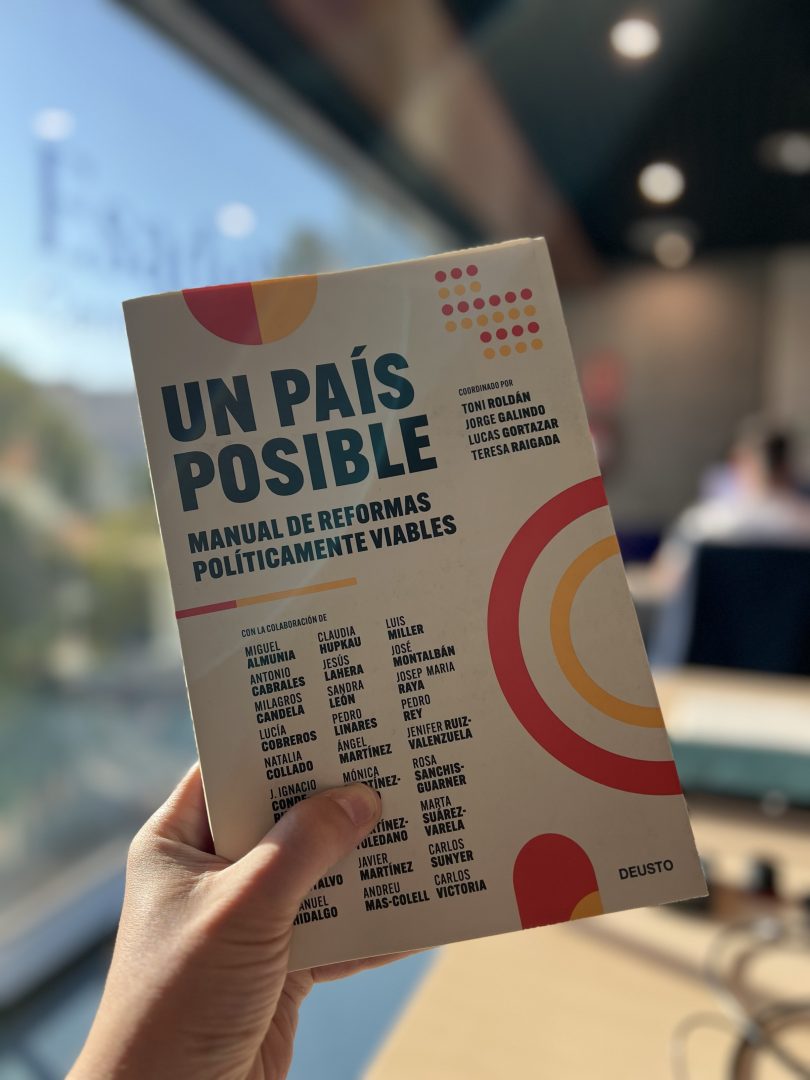
Last Tuesday, November 28th, we talked about our book “Un País Posible: Manual de Reformas Políticamente Viables” (Un País Posible: A Handbook of Politically Viable Reforms) thanks to the invitation of the Harvard Kennedy School Spain Alumni Network. The conversation counted with the interventions of Toni Roldán, Miguel Almunia, Marta Suárez-Varela and Antonio Cabrales and […]
10 October 2023
Spain has practically the same real per capita income as 15 years ago, while other countries around us are much richer than they were then. This means that over the last eighteen years we have not improved our average standard of living. We are therefore on the road to two lost decades. There are many […]
What happened to income inequality in Spain during the pandemic?
29 June 2023
Key Ideas → 80% of households lost purchasing power during the pandemic (between 2019 and 2021) in real terms. → Inequality was reduced over the same period thanks to large income growth among the poorest 10% of households. → Half of this increase in income is explained by the growth in the coverage rate of […]
Income Inequality and Redistribution in Spain: New Evidence Based on the World Inequality Lab Methodology
22 June 2022
Income inequality has increased in many developed and developing countries over the last four decades, which has generated growing interest from the academic and policy communities in its measurement and determinants. The standard source for measuring income inequality and redistribution is household surveys, which tend to underestimate top incomes and do not capture countries’ […]
El ascensor social en España: un análisis sobre la movilidad intergeneracional de la renta
17 May 2022
El crecimiento de la desigualdad de ingresos en las economías avanzadas ha suscitado una gran preocupación pública en torno al posible deterioro de la igualdad de oportunidades. En particular, la movilidad intergeneracional es una de las formas para medir la igualdad de oportunidades: a mayor movilidad intergeneracional, menos depende el éxito económico o social de […]
Ganadores y perdedores de la crisis: las seis brechas que abrió la pandemia
10 November 2021
¿Cómo queda la foto de las desigualdades causadas por la pandemia, un año y medio después de la eclosión global del virus?
Evaluación de las implicaciones distributivas del Fondo Nacional para la Sostenibilidad del Sistema Eléctrico
24 September 2021
Creemos que la redistribución de cargos que supone el FNSSE va en la dirección correcta. Consideramos, sin embargo, que valdría la pena reconsiderar el diseño específico de compensaciones o complementarlo.
When generative AI increases inequality: experimental evidence from a university debate competition
9 September 2019
→ This research brief summarizes the results of research evaluating the impact of generative artificial intelligence (AI) on productivity and inequalities through a debate tournament experiment (RCT), in which students are randomly assigned ChatGPT support to prepare for a series of one-on-one debates. → Contrary to results so far in the literature that point to […]