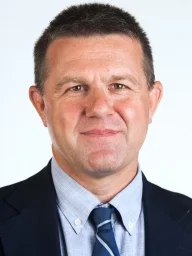
Tanya Anderson (USA) at ESADE: "We need to strengthen the relationship between Spanish and American business owners and entrepreneurs"
"Entrepreneurs' contribution to the economy is what restores faith in businesses in times of crisis like today," said Tanya C. Anderson, US consul general in Barcelona, at the conference "The Entrepreneurship Paradigm" held by ESADE and the Grup Set Foundation.
The consul noted that "Spain is a major source of direct investment in the US, so it is important to support Spanish businesses and entrepreneurs in order to strengthen trade and relations on both sides of the Atlantic."
She likewise encouraged attendees to use the free trade agreement in Europe to find new ways to start companies, create jobs and level the playing field in the growing Asian market.
At the conference, leading figures from the business, institutional and academic communities agreed that it was critical for schools to cultivate entrepreneurial initiative, given the high youth unemployment rate in Spain. According to Eugenia Bieto, director general of ESADE, "Spanish society needs to recognise entrepreneurs and understand that they are positive for the country's growth, as they contribute to GDP, help to create jobs and bring needed optimism."
To this end, she continued, it is vital to ensure a legal and administrative environment that is conducive to entrepreneurship; to create financial instruments that go beyond traditional banking tools; and to promote training to build strong companies.
For her part, Adela Subirana, president of the Grup Set Foundation, stressed, "We must take advantage of what civil society has to offer; we must not wall ourselves off from it."
Low self-confidence and crisis
Fear of failure and risk aversion are the main stumbling blocks when it comes to entrepreneurship. According to the Libro Blanco de la Iniciativa Emprendedora en España (White Paper on Entrepreneurship in Spain), 45% of Spaniards are afraid of failure, and only one in ten is willing to take risks.
As noted by Luisa Alemany, director of the ESADE Entrepreneurship Institute, another barrier to entrepreneurship in Spain is the poor image people have of self-employment. Entrepreneurship scored only 48% on a popularity rating in Spain, compared to 73% in the United States and 62% in France. Moreover, young people believe that society values independent professionals (72%) and scientists and artists (69%) more highly than entrepreneurs and business owners (38%); only civil servants score worse.
Nevertheless, for Alemany, "it is a matter of self-confidence," as, according to the report, Spaniards do not consider themselves to be very creative and believe that what happens to them is largely determined by other people or simply luck. In this sense, she noted, "Eight out of ten Spaniards believe that nothing they can do will make a difference, due to the negative influence of external factors, such as the crisis." In contrast, 72% of Americans believe that success depends on them alone.
Teaching entrepreneurship
Alemany criticised the lack of entrepreneurial training in Spanish classrooms compared to other European countries. "Children will not grow up to take risks if a certain degree of independence is not encouraged in the learning process," she argued.
In this regard, she noted that, whereas the rest of Europe places greater value on the concept of initiative and company spirit, in Spain independence and initiative are only encouraged in the personal arena. Culture, she argued, is thus one of the keys to entrepreneurial success.
Several young entrepreneurs also participated at the event, sharing their experiences as business owners in a variety of sectors. They included: Pere Antúnez (Formatgeria Montbrú), Lídia Rodríguez (Muerdos de Hoy), Elisa Durán ("la Caixa"), Ana Maiques (Starlab), Miquel Costa (Keiretsu Forum), Casimiro Gracia (Axis) and José Manuel Romero (Molecor).