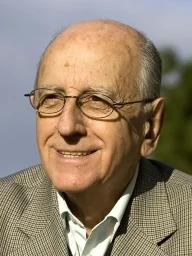
Gerassimos Thomas (European Commission): "We need to develop suitable market conditions that will allow consumers to join the energy transition"
“We must empower consumers – the real actors of the energy transition – and develop suitable market conditions that will allow them to overcome the barriers to access that they encounter in the current energy system, so that they are able to fully engage with this transformation, declared Gerassimos Thomas, Deputy Director-General of the European Commission’s Directorate-General for Energy and Climate Change, during his remarks at the 5th Global Annual Energy Meeting hosted by ESADE, the European Commission, BCG and KIC InnoEnergy today at Espacio Bertelsmann in Madrid. The event took place, as noted by Aránzazu Beristain, Director of the European Commission Representation in Spain, “just a few days after the European Commission officially presented in Brussels its Smart and Clean Energy Package, a series of legislative and non-legislative measures related to energy efficiency, renewable energy sources, energy market design and energy governance. In light of the challenges associated with integrating a market as diverse as that of the European Union, where each country has a different legislative framework, Javier Solana, President of the ESADE Center for Global Economy and Geopolitics (ESADEgeo), argued that the package is “a good first step towards creating the Energy Union.
“The energy sector, which is crucial for societies, is mired in particularly uncertain times, warned Dr. Solana. Angel Saz-Carranza, Director of ESADEgeo, commented: “The effects, for example, of climate change, the progress of the Energy Union, and future policies on the use of coal and renewable energy sources in the United States are now very unpredictable. Therefore, it is especially important to create spaces to share rigorous and diverse information as well as forums for reflection and dialogue.
Smart and Clean Energy Package
“We see the energy transition as a dual opportunity to meet our decarbonisation goals, on the one hand, and to simultaneously generate employment and economic growth, on the other, commented Mr. Thomas. “This will be possible once we have managed to decouple economic growth from greenhouse gas emissions. In order to achieve this objective, Mr. Thomas explained, “We must create a more balanced and competitive market using legislative and non-legislative measures in order to create favourable conditions that will allow the renewable energy market to flourish, improve the design of the market and stimulate investment. He concluded: “If we do this, we could generate a 1% increase in Europe’s GDP, add about €190 billion to the region’s economy and create about 900,000 jobs by 2030.
“We have witnessed the expansion of a patchwork of measures in the various EU member states that have not taken into account the European energy market as a whole, warned Mr. Thomas. “If we want renewable energy sources to prosper, we must enhance the cooperation among member states and move towards a better-integrated energy market. Dr. Solana echoed these concerns and underscored the importance of “implementing the appropriate regulations to make market integration optimal in terms of regional and sub-regional coordination.
On the topic of the ‘Winter Package’ Diego Pavia, CEO of KIC InnoEnergy, commented: “This will create many new opportunities for new players, who tend to be agile and dynamic, and it will help consumers benefit from new market opportunities and reduce their environmental footprint. He added that the ‘Winter Package’ will “open up opportunities for technological innovation, business-model innovation and social innovation.
Prospects of the coming energy market
“The Paris Agreement is in effect; after the COP22 summit in Marrakech, we have entered a new phase. This fight is now irreversible, but it won’t depend on the decisions of any single country, commented Ms. Beristain. This view was echoed by Tim Boersma, Director of Global Natural Gas Markets at the Center on Global Energy Policy at Columbia University, who described the ‘Winter Package’ as “just a first step towards decarbonisation.
Regarding the possible effects that the Trump Administration could have on progress in this area, Mr. Boersma observed: “American momentum in the fight against climate change may have entered a downturn, and other countries like China could take the lead. He added: “US energy and climate policy will be entering uncharted territory, but we hope that the efforts already implemented during the Obama Administration by the various states and cities across the country will continue.
“We are not facing a new phase in the cycle; we’re facing a paradigm shift in the energy sector, commented Ivan Marten, Partner, Managing Director, and Global Leader of Energy Practice at BCG. “We’re in a world that’s moving at two speeds: the OECD countries, which have low growth and high awareness of environmental issues, and emerging and Asian countries, which have much higher growth but face the challenge of achieving responsible growth that is environmentally compatible. “These mega-trends are shaking up the future of the energy market, commented Josu Jon Imaz, CEO of Repsol. “In this context, we don’t know who will be successful, or who our competition will be in the coming years. All we can predict is that our competition will be whatever company is best able to adapt to the changes in the market.