Finding the meaning of life
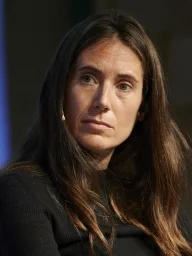
By Sira Abenoza. Professor of Sustainability, Business Ethics and Social Entrepreneurship at ESADE Business and Law School in Barcelona, Spain
Teaching ethics to today’s law and business students is not just important – it’s essential. Students currently studying at the top law and business schools will be the leaders of tomorrow’s world. In other words, they will hold a large share of the power to decide what sort of world our children will live in. And this, obviously, is no trivial matter. The good or bad use of power will determine the future of the world.
To take just one example, the blind exercise of power prompted Eichmann to organise the transport of hundreds of thousands of Jews to concentration camps. It prompted Enron traders to leave thousands of people without electricity, jobs or savings. Blind power is unaware of how its actions impact the environment – in the broad sense. It is only capable of pursuing its individual – or organisational – interests.
It’s easy to make the analogy with today’s world and deduce that this type of power will not allow us to avoid the climate-change catastrophe that could flood hundreds of islands and destroy entire countries. With this form of power, we won’t be able to lift out of poverty and hunger the millions of people who unfortunately, even today, live under such conditions.
However, we’re now seeing signs that make us think there might still be hope. Last week’s agreement at the Paris climate summit and the new IMF policies for reducing inequality are two good examples of a new way of wielding power: responsibly.
Today, education means educating people, professionals and future leaders who are able and properly equipped to exercise power in a responsible manner. Education, therefore, means providing training in values, expanding one’s conscience, and awakening knowledge in oneself and in others. It means teaching that the good truth – or the real truth – is that which contains not only our own truth, viewpoint and perspective but also that of others; that of all affected parties. Therefore, good decisions – correct decisions – are brave and open-minded enough to unite visions and experiences that might initially seem to be in conflict.
In other words, if we want to educate the good leaders of tomorrow, we must first teach them how to engage in dialogue. And dialogue doesn’t just mean talking to people who look like us; it means opening up in order to listen, respect and adopt the vision of “the other – people who are different from ourselves.
This observation, and this goal, led to the idea of having ESADE Law School students participate in a lengthy exercise of Socratic dialogue with prison inmates. It also inspires us to teach our business students to talk with trade unions, NGOs and other representatives of society.
Teaching today’s students to become good legal professionals or good managers necessarily entails teaching them to engage in dialogue. Doing this is not just possible – it’s necessary. Not only will it benefit our environment; it will also lend meaning to our students’ professional and personal lives. There is no better form of teaching than that which helps students find the meaning of their lives.