Economic and Financial Report #39 · Energy capabilities for a new economic era
Omar Rachedi, Josep Mª Comajuncosa, Manuel Hidalgo Pérez, Marta Suárez-Varela, Pedro Linares Llamas, Gonzalo Escribano, Enrico Bergamini, Antonio García Maldonado
14 July 2026
Every six months, with the support of Banco Sabadell, Esade publishes its Economic and Financial Report, which now reaches its 39th edition under the title “Energy capabilities for a new economic era.” With it, Esade upholds its commitment to contributing to public debate through rigorous, plural analysis that, as a leading school backed by its entire academic community, reinforces its dedication to economic and social progress.
In his welcome article, the Report’s academic director, Omar Rachedi, starts from a twofold observation: Spain once again reaches this stage of the cycle in a comparatively favourable position —with sustained growth above the eurozone average, a dynamic labour market and a more robust external position— but it does so in an international environment that has changed in nature. Rachedi argues that energy has ceased to be just another cost for the economy and has become an infrastructure of competitiveness, security and strategic autonomy, and that the next technological wave, with artificial intelligence at its core, will turn energy policy into technology policy as well.
The international outlook note, by Josep M. Comajuncosa, then analyses how the energy shock stemming from the conflict between the United States and Israel and Iran, and the closure of the Strait of Hormuz, have flipped the dominant risk: less fear of an immediate recession and more concern about persistent inflation. The IMF projects global growth of 3.1% in 2026, with the euro area slowing to 1.1%, and sets out two scenarios depending on how energy prices evolve. On the domestic front, Manuel Hidalgo describes “the moment of transition”: a Spanish economy settling into growth of 2.2%–2.3% in 2026 and converging gradually towards its underlying potential growth (1.6%–1.9%), in a context where the drivers of the last cycle —immigration, tourism, European funds and monetary policy— are running out of steam almost simultaneously, and where the challenge shifts from the demand side to the supply side.
In the debate section, four authors examine the energy capabilities of Spain and Europe. Marta Suárez-Varela (Banco de España) reviews what Europe has done since the invasion of Ukraine —supplier reconfiguration, the shift towards liquefied natural gas, more renewables and efficiency— and what it needs from now on: flexibility, interconnections and storage. Pedro Linares (Comillas ICAI and EsadeEcPol) analyses the pending challenges of the energy transition in transport, industry and buildings, and the need for an investment framework that allows the vast majority of final energy uses to be electrified. Gonzalo Escribano (Real Instituto Elcano and UNED) examines the fossil reconfiguration and strategic decarbonisation after the war in Iran, with the notion of “selective fortification” as Europe’s response. And Enrico Bergamini (GREF, Esade) argues that the energy and technology crises are turning green industrial policy into an existential question for Europe, caught between the US “petrostate” and the Chinese “electrostate.”
Finally, the report is rounded off with Antonio García Maldonado’s reviews of two recent books: “La maldición del ganador. Anomalías de la psicología económica: pasado y presente,” by Richard Thaler and Alex O. Imas (Deusto, 2026), and “La era de las revoluciones. Avances y retrocesos desde 1600 hasta nuestros días,” by Fareed Zakaria (Debate, 2026).
Profesor del Departamento de Economía, Finanzas y Contabilidad de Esade, senior fellow de EsadeGeo.
View profile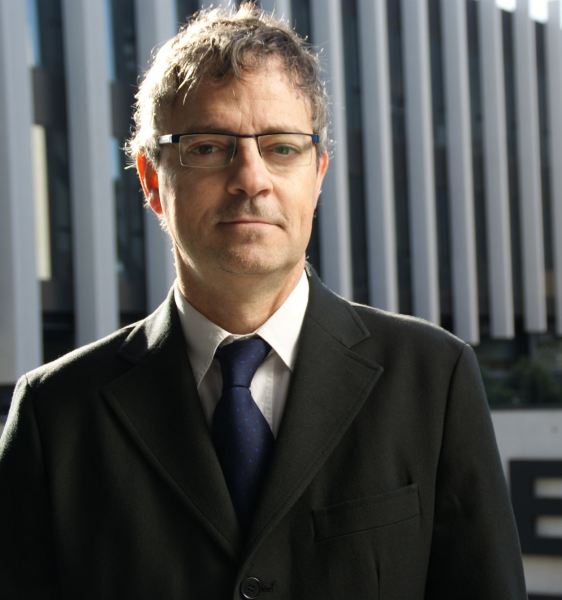
Profesor titular del Departamento de Economía,Finanzas y Contabilidad de Esade
View profile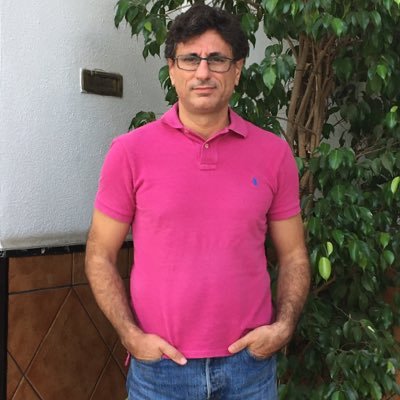

Profesor en la Universidad Pontificia Comillas
Director del Programa de Energía y Clima del Real Instituto Elcano y catedrático de Economía Aplicada en la UNED.
View profile
Economista especializado en política industrial verde, geografía económica y desigualdades.
View profile
Profesor de sistemas políticos e institucionales comparados en el Master Global en Asuntos Públicos del IMF y la Universidad de Nebrija
View profileRelated content