The private tutoring market in Spain between 2020 and 2024: the new social, territorial and linguistic geography of Shadow Education
Juan Manuel Moreno, Lucas Gortazar
25 June 2026
This report analyses the state of Shadow Education (SE) in Spain using the latest available wave of the National Statistics Institute’s (INE) Household Education Expenditure Survey (EGHE 2023/24) and compares it with the immediately preceding available wave (2019/20), analysed in detail in the EsadeEcPol report by Moreno and Martínez (2023).
We find that aggregate spending on private tutoring in 2023/24 was €2,782M, with almost half of students receiving tutoring. Compared with 2019/20:
- In aggregate spending, this represents a 65% nominal increase and a 38% increase in real euros (net of 19% inflation) from the €1,691M measured in 2019/20.
- Much of this growth can be explained by the fact that, during the 2019/20 academic year, the pandemic temporarily contracted consumption: in 2019/20 households paid for private tutoring for an average of 5.5–6 months, compared with almost 9 months in 2023/24. This 3-month difference coincides with the duration of the 2020 lockdown, and with the increase in spending in real euros.
- Participation remains stable between 2019-2020 and 2023-2024, reinforcing the idea of continuity: 47% of households with school-age children use private tutoring. However, this apparent stability conceals significant heterogeneity by educational stage, household income level, and autonomous community.
Although the aggregate increase in spending is essentially explained by the post-pandemic rebound, it varies substantially by stage, destination, income level, origin or autonomous community. The same applies to differences in participation in the SE market, since a household counts as a market participant regardless of the number of months it consumes private tutoring. Observing these heterogeneous trends, we find that:
- Primary education emerges as the stage with the highest SE growth, with a 56% increase in real euros per student compared with 2019/20 and 4 percentage points in the proportion of families that spend, while lower secondary (ESO) and upper secondary (Bachillerato) grow by 19% and 24% respectively in real terms, partly due to a 5-percentage-point drop in SE participation in both stages.
- Spending on languages and arts education grows the most, both above what could be explained simply by months added relative to the pandemic year. Languages are today, by far, the SE category that accumulates the highest spending and the one that explains much of the growth in total SE consumption.
- By household total spending quintile (an approximation of income), spending is concentrated in higher-purchasing-power families, but grows mainly in the two lowest income quintiles (+65% and +51%); also, but less so, in the highest (+35%); while remaining flat or moderate in the other two.
- Regarding the distribution of SE by autonomous community, the Basque Country is the region with the highest SE participation (61% of families) and also the highest average spending per student (overtaking Madrid in this variable), mainly due to the increase in spending on languages. Participation also grows significantly in Castilla y León, Catalonia and Castilla-La Mancha, while the less populous autonomous communities see their SE participation reduced.
- For their part, families of immigrant students sharply increase their SE spending, mainly due to languages: +60% versus +40% among native families.
The results allow us to understand how the centre of gravity of SE is shifting towards earlier educational stages and towards spending on expanding learning opportunities (languages, art and technology) rather than on reinforcement and support of core curricular subjects. However, the increase in spending on languages and its concentration in bilingual autonomous communities with a co-official language that serves as the medium of instruction for much of learning (as well as the higher SE language consumption of immigrant households) indicate that a not insignificant part of this demand arises from the need to support and reinforce primary-school students so they can progress academically in a medium of instruction that is not the language of the home.
SE is no longer merely the shadow of the school curriculum. It is an economy that runs parallel to the education system, with its own demand logics, its own inequalities and functions, among which it is increasingly difficult to distinguish between reinforcement and enrichment. Understanding this complexity is the first step towards designing policies that go beyond merely acknowledging the phenomenon and address the reasons why almost half of Spanish families consider it essential to resort to private tutoring. The EGHE 23/24 data allow us to state that this market is neither homogeneous nor responds to a single dynamic. It is rather heterogeneous, territorially diverse, composed of demands with different logics that require different responses. Treating it as a unitary phenomenon, whether to regulate it globally or to invest indiscriminately in reducing it, would be a guarantee of educational-policy failure.
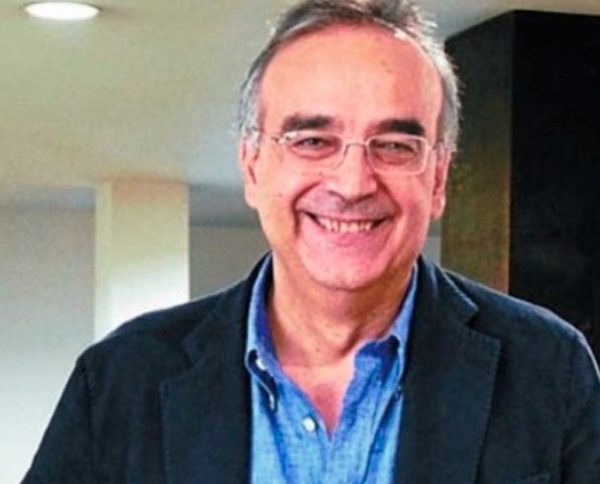
Catedrático de la Facultad de Educación de la Universidad Nacional de Educación a Distancia (UNED) y Senior Policy Fellow de EsadeEcPol.
View profile
Related content