Youth Loneliness in AI Time: from the diagnosis of synthetic privacy to a design framework for relational well-being
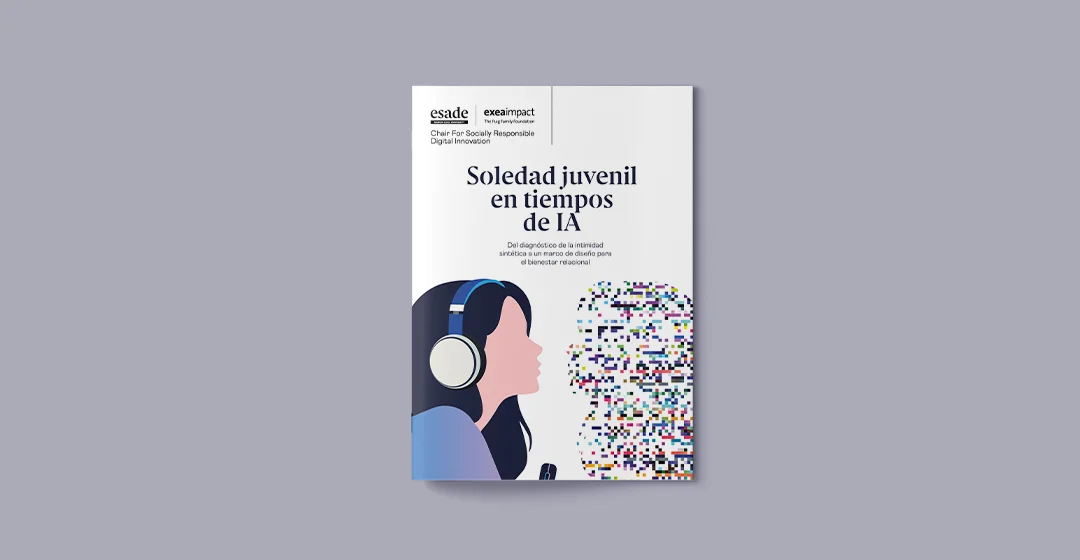
Generative artificial intelligence is transforming the way we relate to technology and other people. With the expansion of conversational tools and so-called AI companions, it is increasingly common to use technology to talk, share concerns, seek advice or find a form of companionship. This phenomenon opens up new possibilities, but also raises important questions about how these interactions can affect emotional and relational well-being, especially among young people.
In a context in which unwanted loneliness significantly affects new generations, it is worth asking what role artificial intelligence can play: can it contribute to strengthening human connections? The challenge is not only to understand how we use these technologies, but also to reflect on how they are designed and what kind of relationships they promote.
The report, produced by the Chair for Socially Responsible Digital Innovation (SoReDI), analyses this new reality, examines the risks and opportunities of these technologies and proposes a change of perspective: moving from an innovation focused exclusively on the individual user experience to a design that takes into account the relational well-being and quality of human links.
As a proposal, the report presents the SoReDI framework for a socially responsible digital innovation in terms of relational well-being, with principles and criteria aimed at guiding the design and development of technologies that respect people's autonomy, take into account their relational needs and contribute to strengthening human connections. Because the future of artificial intelligence is not written: it also depends on the decisions we make today about the technology we want to build and the society in which we want to live.
Publication