Governance in territorial networks: work session
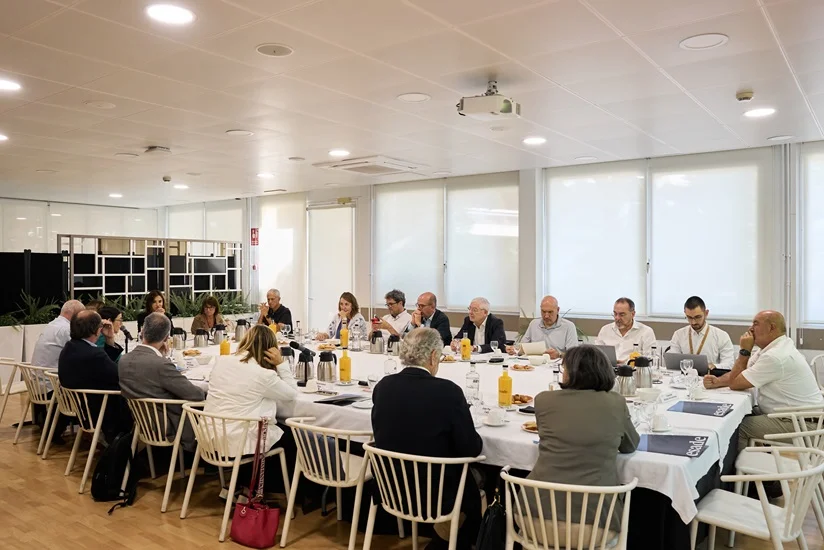
In the current context of global transformations such as climate change, digitalization, and demographic changes, public policy emerges as a key element to efficiently respond to the needs of citizens. The magnitude and depth of these challenges require an immediate response, characterized by collaborative public leadership with all involved actors.
The creation of synergies between different organizations emerges as a solution to dynamic and changing environments. For these interactions to be successful and productive, alliances must bring benefits to the participants, based on mutual trust, transparency, and effective communication that ensures cohesion and the achievement of shared goals. In this way, alliances enhance the complementarity of the actors, facilitate the creation of shared value, and ensure the fulfillment of public objectives.
Network governance requires collaboration among the involved actors, an appropriate organizational dynamic, and clear mechanisms to establish, promote, and evaluate common goals, respecting the autonomy of governance and management of the entities. Catalonia is a clear example where these public-private collaborations have driven a healthcare system characterized by a cooperative model, in which different public and private entities in the sector work together to strengthen the quality of services and the sustainability of the system. Territorial networks represent an evolution towards relational governance with greater cooperation and collaboration among the various actors to improve the quality, sustainability, and equity of public service delivery.
In this line, CatSalut, in 2015, created the AE C-17, a territorial alliance that brings together five hospitals from the regions of Barcelonès, Vallès Oriental, and Osona. The network, formed by Hospital Clínic, Hospital de Granollers, Hospital de Sant Celoni, Hospital de Mollet, and Hospital de Vic, and now also Hospital de Campdevànol, has managed to strengthen and establish a model of collaboration among the different hospitals, developing shared projects and achieving an improvement in healthcare for the reference population. Over the years, various successful strategic alliances have been deployed, such as the one between Hospital Clínic de Barcelona and Hospital San Juan de Dios de Esplugues, and many others, such as the territorial coordination around Hospital Althaia.
To continue improving territorial networks, it is essential to establish a dialogue space to jointly reflect on the lines of action of governance capable of efficiently managing and coordinating territorial networks in Catalonia.
From the PARTNERS Program of the Esade Center for Public Governance (EsadeGov), together with La Unió, we are pleased to invite you to a workshop aimed at identifying the key factors for the governance of these networks, as an indispensable element for their viability and the achievement of the public objectives that promote them, such as territorial equity of services, continuity and integration of care in a person-centered model, and economic and professional sustainability.
PROGRAM - 26 September 2024:
10:00 am Welcome and presentation of the day’s objectives
Mónica Reig, Director of the PARTNERS Program at Esade
Roser Fernández, General Director of La Unió
Xènia Acebes, Reference of the Commission for Care Integration of La Unió.
10:15 am Strategic Alliances in SISCAT, current context and present and future challenges
Roser Fernández, General Director of La Unió
Intersectoral governance of network organizations
Mónica Reig, Associate Director of EsadeGov-Center for Public Governance and Director of the Partners Program at Esade
11:00 am Presentation of strategic alliance: operation of the C17 and Althaia model
Antoni Castells, Hospital Clínic de Barcelona (C17)
Montserrat Domènech, Althaia
12:00 pm Debate with attendees
• What opportunities and challenges do AEs pose in your organization?
• Choose the key factors of good governance and management of AEs that you consider exemplary and identify the success factors.
• As a manager, what are the main challenges you have identified for the governance and management of AEs? What would be the main levers of change for their proper management?
1:15 pm Conclusions and Closing
Sara Manjón, Coordinator of the Subcommittee on Reorganizations and Strategic Alliances of La Unió
Roser Fernández, General Director of La Unió
Mónica Reig, Associate Director of EsadeGov-Center for Public Governance and Director of the Partners Program at Esade
1:30 pm End of the event
Attendees:
Roser Fernández, La Unió
Mónica Reig , Esade
Joan Grané, Fundació Privada Hospital de Campdevànol
Elena Puigdevall, Fundació Aspace Catalunya
Beatriu Bayés, Fundació Privada Hospital Asil Granollers
M. Antònia Baraldés, Salut Catalunya Central - Hospital de Berga
Adrià Comella, Fundació de Gestió Sanitària de l'Hospital de la Santa Creu i Sant Pau
Ignasi Carrasco, Servei Català de la Salut
Josep M. Bosch, Unió Catalana d'Hospitals
Manel Jovells, Althaia, Xarxa Assistencial Universitària De Manresa, Fundació Privada
Jose Antonio Neguillo, Fundación Hospital Sant Celoni
Josep Mª Padrosa, Fundació Hospital Olot i Comarcal de la Garrotxa
Sergi Iglesia, Fundació Salut Empordà
Montserrat Domènech, Althaia, Xarxa Assistencial Universitària de Manresa, Fundació Privada
Joan Parellada, CatSalut
Jaume Duran, Fundacio Sanitària Mollet
Maria Pueyo, La Unió
Antoni Castells, Hospital Clínic de Barcelona
Xènia Acebes , Hospital de la Santa Creu i Sant Pau
Manel Peiró , Esade
Sara Manjón, Consorci Hospitalari de Vic
David Font, Director Estratègia I Planificació
Ramon Massaguer, Fundació Puigvert
Xavier Roura, Esade