Female executives perceive gap between gender equality theory and practice in Spanish companies, reveals Esade
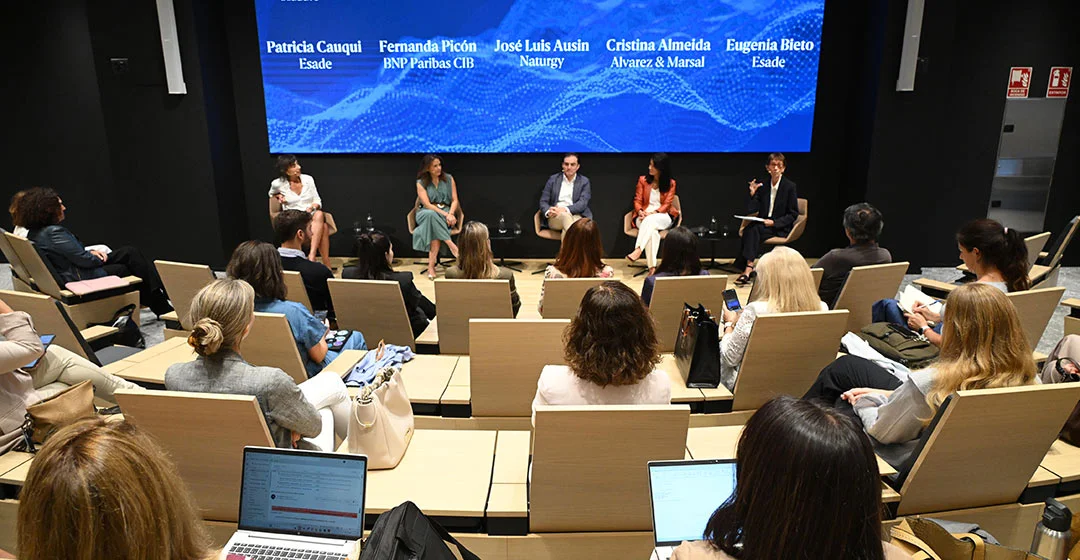
Over than half of female executives say that their company “has made progress” or “is above average” in terms of gender equality, but 42% see no specific improvements, citing unconscious bias (27%), work-life balance issues (17%) and lack of acknowledgement (12%) as the main obstacles
The latest edition of theEsade Gender Monitor, by Esade Women Initiative confirms that although the corporate discourse championing equality has advanced in recent years, female executives in Spain still face structural and cultural obstacles that hinder women’s access to the most senior management levels. This study, based on a survey of almost 1,500 female executives and directors about gender equality in their companies, highlights the gap between the words and the real impact of corporate gender equality policies.
Although the number of women describing the companies where they work as “more advanced” or “above average” in terms of equality has climbed from 41.5% in 2023 to 52.1% in 2025, 42% see no tangible change after equality programs are implemented. The main barriers cited are still unconscious bias (27%), difficulty in striking a work-life balance (17%), and a lack of recognition (12%).
As regards the inequalities most frequent in everyday life, micro-inequalities were listed by 18% of participants, followed by wage gaps (17%) and a lack of visibility of work (14%). Eugenia Bieto, general director of Esade in 2010-18 and author of the study, explained that “wage gaps and a lack of recognition are specific issues that could be remedied quickly, whereas micro-inequalities involve more subtle, complex considerations that require profound cultural changes.” Nonetheless, 74% of respondents said that despite these difficulties they had not thought about resigning or changing jobs.
The report also reveals that 82% of female managers have had to sideline some part of their personal life or career due to being a woman. The areas affected most often are leisure and free time (21%), well-being and mental health (16%), and physical health (13%). Furthermore, 52% of participants only manage to have one or two days a week to look after themselves whilst 14% had none.
Lack of support networks hinders access to senior management positions
The figures in the study confirm that promotion to senior management positions continues to be one of the most difficult issues: 82% of female executives feel that senior management positions are weighted in favor of men. Obstacles cited by respondents include a lack of formal and informal support networks (28%), the belief that women prefer middle-management positions for the sake of their work-life balance (20%), and the difficulty of balancing the demands of a senior management position with caring for dependents (17%).
According to Patricia Cauqui, academic director of Gender Balance and D&I programs at Esade and a contributor to the report, “many talented people choose to stabilize at levels of intermediate responsibility, with interesting projects and room for maneuver, whilst the structural scenario of senior management continues to be associated with hyper-availability, constant visibility and the logistics of caring for dependents not redistributed at the same pace.”
Future: more demanding generations and threat of ‘DEI fatigue’
Looking ahead, female executives see that new generations of female executives give greater priority to their work-life balance (76.9%), expect more of companies regarding measures in this respect (65.4%), and are more aware of their rights (46%). However, 70% warn about the onset of ‘DEI fatigue’ (Diversity, Equity and Inclusion) due to an excessively politicized discourse, superficial or unsustainable initiatives, and the disconnect between what organizations say and what they do.
The backdrop to these findings is the fact that, according to Spain’s National Institute of Statistics, only about 34% of management positions in Spain are held by women – highlighting the long way still to go. “This report shows we mustn’t settle for lip service: we need on-going policies and enough resources to bridge the gap between words and real action,” said Patricia Cauqui. “Companies must bolster their equality plans, promote co-responsibility in caring for dependents, and measure the outcomes transparently.”