The effects of rent caps in Catalonia
Jose Garcia Montalvo, Joan Monras, José María Raya
9 Feb, 2023
Rent control has become a central part of the public policy debate. Catalonia implemented one in December 2020: Law 11/2020, which capped rents in Catalonia for a year and a half. An evaluation of the Catalan experience based on microdata and a precise methodology, comparing homes affected and unaffected by the regulation, is essential not only to know the effect that law had, but also to anticipate the effect that future rules may have.
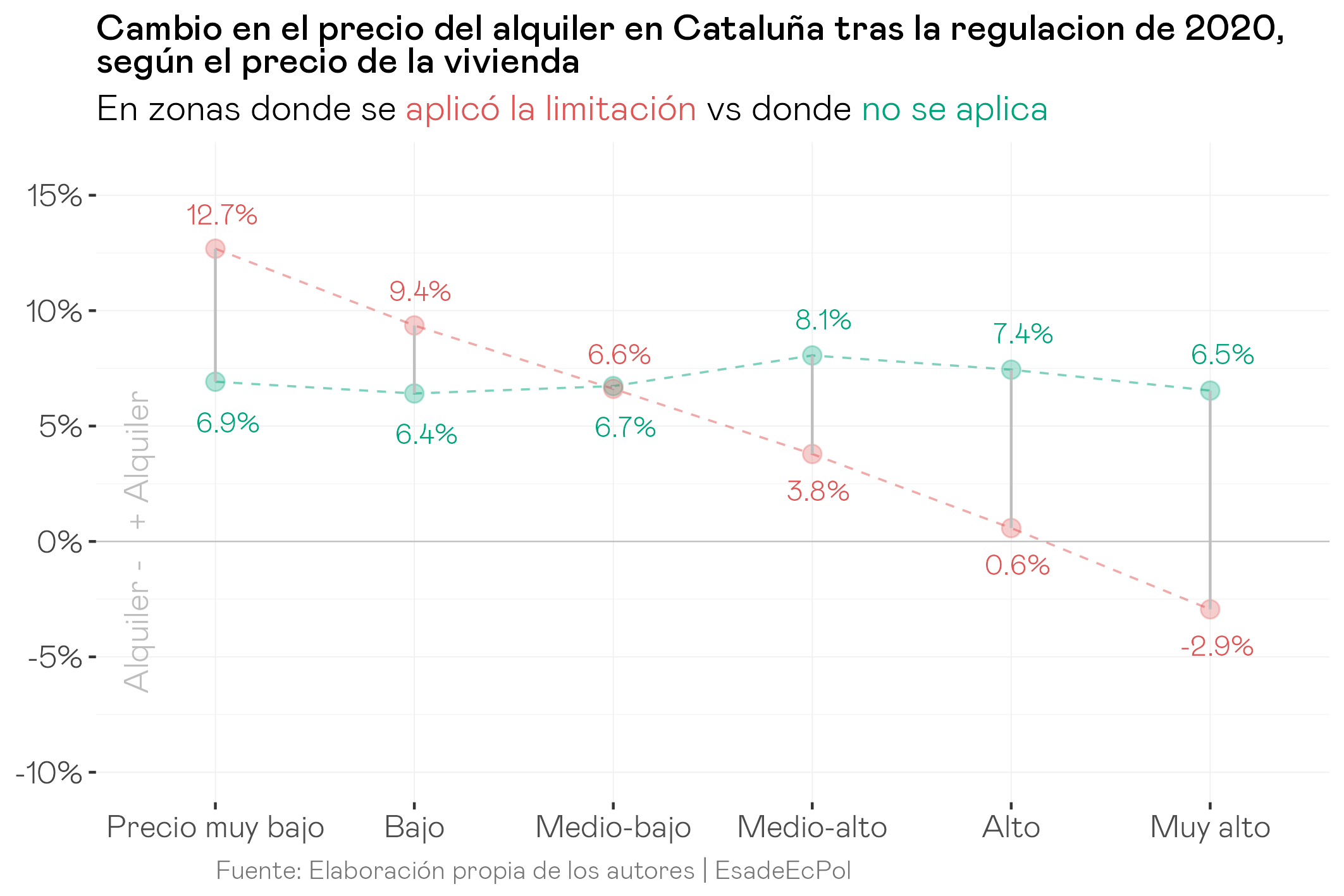
This is what Monras and Montalvo (2022) do, overcoming the problems of previous evaluations with a more complete and robust analysis that is able to take into account the reference prices in each area. In doing so, they observe a downward effect on aggregate rental prices of 5%, concentrated in expensive homes, and, by contrast, a significant increase for the cheapest homes, which tended to stick to the “ceiling” set by the reference index. The rule would work here in the opposite direction to the one intended.
Alongside these lower prices, the study finds a drop in rental supply of around 10% fewer contracts signed, concentrated in expensive homes. In light of evidence from elsewhere, this could:
→ push up prices and shift rental homes to the sales market, accessible only to higher-income households
→ reduce future construction due to a lack of incentives
→ displace demand to neighbouring areas or cities (where prices do rise)
→ lower the average quality of properties because the best ones are not put up for rent
The data from Monras and Montalvo (2022) also point to a high degree of non-compliance, as they include flats rented above this reference index. This is consistent with evidence from other cities of parallel black markets for rentals being created to get around regulations.
Given this evidence, we believe that the problem of high rental prices is due more to a supply problem than to market power. We therefore put forward three recommendations:
1. The solution to the housing affordability problem involves increasing the supply of rental housing through measures such as public-private partnerships, reserving a percentage of housing developments for rent, tax incentives for owners who put their homes on the affordable rental market and improving legal certainty for owners.
2. It is important to properly evaluate rent control policies using microdata and precise methodologies capable of credibly linking cause and effect.
3. Based on that same evidence, professionals in academia, public policy and science communication should make an effort to study and understand the possible negative
effects of rent cap policies

Catedrático de Economía de la Universitat Pompeu Fabra. Profesor investigador de la BSE.
View profile

José María Raya es profesor de economía en Tecnocampus - Universitat Pompeu Fabra
View profile