The effects of inflation on personal income tax for lower-middle incomes and how to cushion them better
Francisco de la Torre, Carlos Victoria
28 Feb, 2023
The progressivity of the Spanish tax system rests mainly on personal income tax (IRPF). However, the marginal rate that expresses this progressivity behaves erratically: it goes from 0% up to 15,000 euros to increasing by 43 points at low income levels, and then falls again for middle incomes. The most extreme example of this anomaly occurs for those earning between 15,000 and 20,000 euros a year, a bracket that includes millions of taxpayers: for them, of every euro they earn above 15,000, a very high percentage goes to income tax.
→ For example: if a taxpayer with a taxable base of €15,000 from their salary receives a pay rise of €1,500 (10%), the current system would withhold €645 (a marginal rate of 43%). By contrast, a taxpayer earning €26,000 with an identical 10% rise would only pay a marginal rate of approximately 30% on that extra income.
In a context of high inflation, this means that taxpayers in this bracket barely see their real purchasing power updated, because most pay rises would be affected by this high marginal rate.
→ In the previous example, with annual inflation of 8.4% like that seen in Spain in 2022, going from €15,000 net to €15,718 would not cover what is needed to maintain purchasing power (which would be €16,260).
At the same time, the fact that the obligation to file a tax return only becomes general at €22,000 and that, despite everything, the default withholding is lower than the tax that would result from filing a return creates significant incentives not to file.
The recent 2022 income tax reform, in force since 2023, adds to the one approved in 2018 to reduce taxation for the lowest-income group, while cushioning the impact of inflation on their taxation. However, both reforms have consolidated two different tax schedules for filers and non-filers: several million taxpayers bear withholdings below the income tax schedule and are not required to file. Although this is generally an advantage for these taxpayers, it creates distortions, asymmetries and unfair situations in income tax, as well as preventing the universalisation of tax returns.
To resolve these imbalances, we propose reducing the difference between the default withholding on income and the rate that would result from filing a return, by introducing a deduction equivalent to the difference between that withholding and the tax liability that would correspond to each filer. This:
→ Is technically and politically more viable in the short term than other more ambitious but complicated alternatives, such as merging the two schedules.
→ De facto extends the incentive to file a return so as to make filing as widespread as possible among the population above the minimum threshold, but without placing additional burdens on, or excessively changing the taxes paid by, a potentially vulnerable population.
In the medium term, consideration should also be given to:
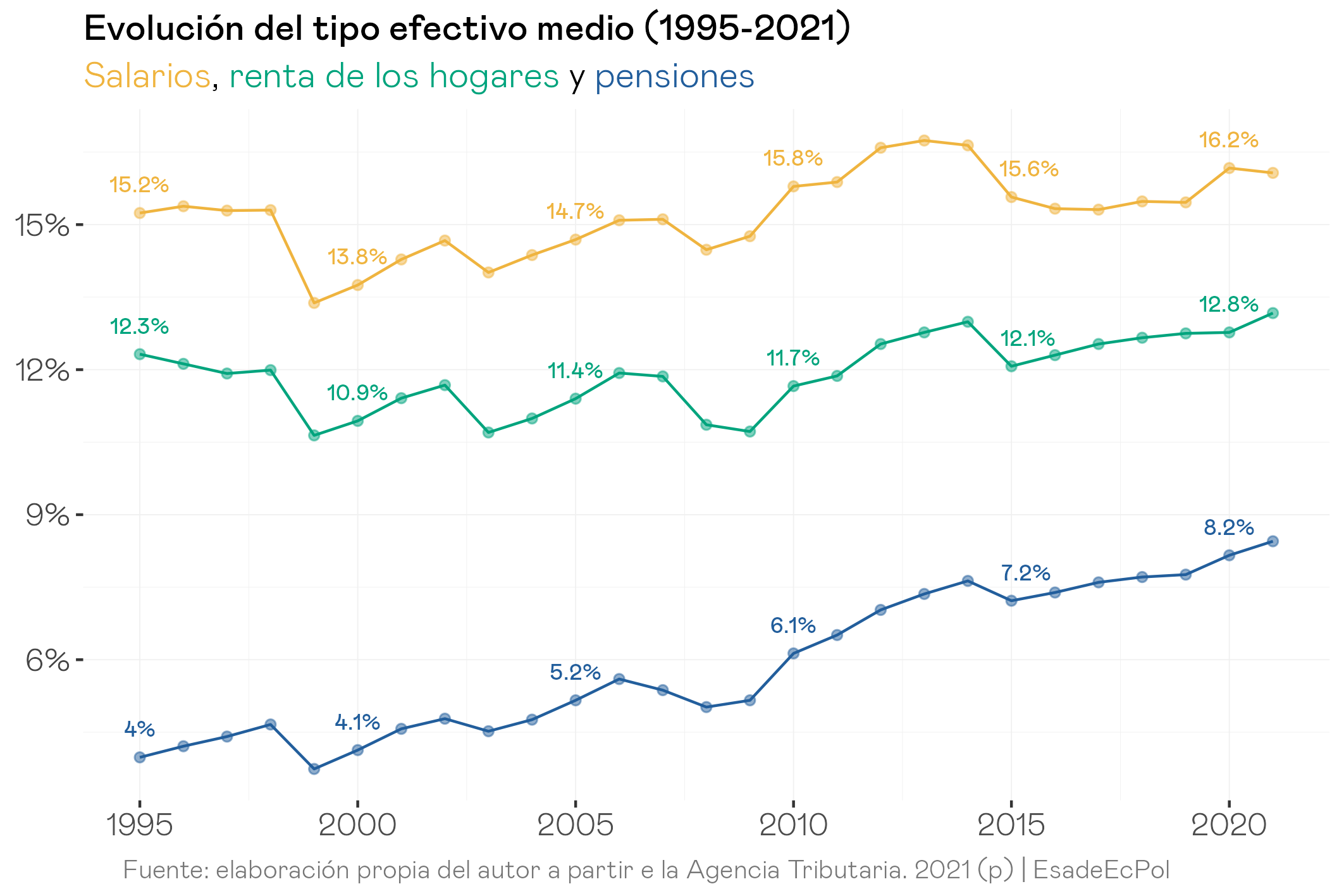
→ Updating the effective income tax of lower-middle incomes, which absorb disproportionate inflationary
impacts, in order to reduce them, especially if we return to a situation of inflation rates
more significant than those observed before 2021.
→ Promoting the extension of income tax filing beyond the short-term solution
described above.
Moreover, with universal income tax filing it would be feasible to design a more effective social and income policy that is much less costly in administrative terms, both in the
case of one-off aid in crisis situations (the 200-euro payment, emergency incomes…) and in the case of structural policies such as the minimum living income or negative income
taxes/wage supplements.