The state of the teaching profession in Spain: An analysis based on data about the situation of teachers and policies that can contribute to strengthening the profession
Lucas Gortazar
25 Mar, 2025
Teachers are the most decisive school factor for the quality of education systems. In Spain, the teaching profession is at a critical juncture, shaping education for the coming decades. Recent data show an increase in fatigue, feelings of isolation, and dissatisfaction among a portion of teachers. This report explores the state of the teaching profession in Spain over the past 25 years. Using updated data from national and international surveys, it examines the worsening social conditions of students, the evolution of teachers‘ working conditions, and the difficulties faced by the education system in attracting, supporting, and fostering professional development among talented teachers.
The growing complexity of student populations is a real phenomenon explained by various reasons:
→ Child poverty has risen by 5 percentage points since 2018, while overall population poverty has declined and the economy has grown.
→ The proportion of students with migrant backgrounds has significantly increased, reaching 32% in fourth grade of primary school in 2023.
→ A crisis in well-being and mental health is also notable, with an increase from 11% to 20% between 2018 and 2022 of 15-year-olds experiencing anxiety weekly.
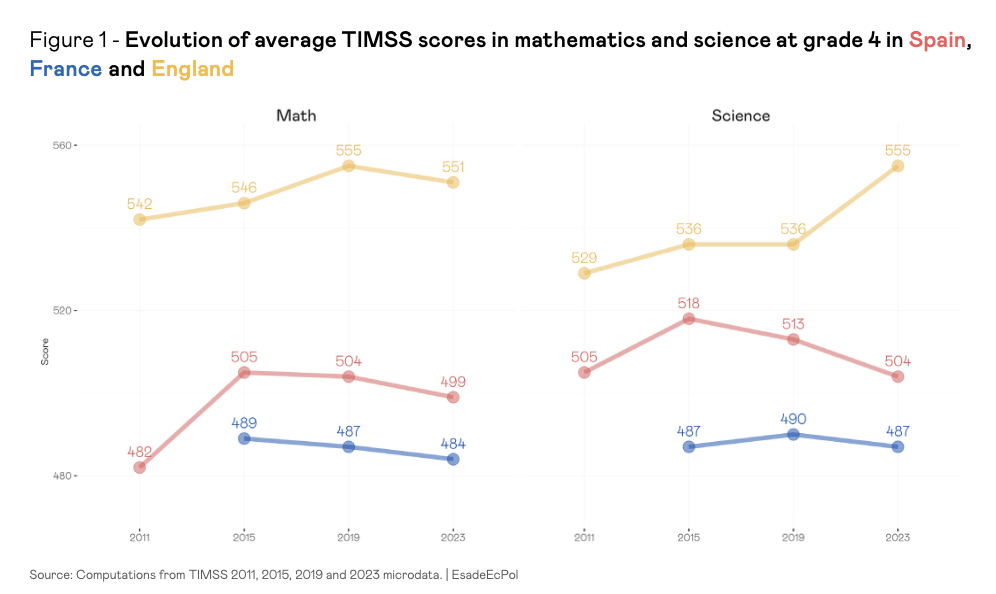
→ The classroom learning climate has also deteriorated in both primary and secondary education.
Teachers‘ working conditions are generally good, although they have worsened in some areas:
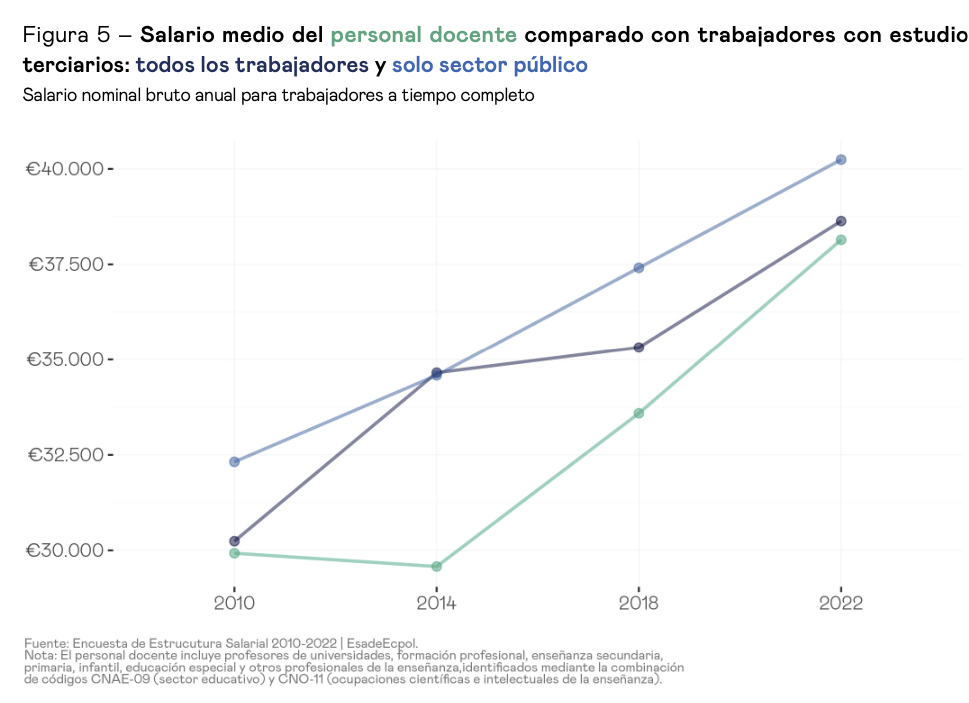
→ Salaries dropped during the Great Recession but have since recovered, aligned with other professions.
→ While the number of teaching hours is similar to the OECD average, the more compressed school calendar creates daily pressures.
→ The rate of temporary contracts is high and regressive: in 2018, 34% of teachers in the 25% of schools serving the most vulnerable students had been working at the same school for less than three years, compared to only 15% in schools serving fewer vulnerable students.
The lack of policies focused on teaching staff is negatively impacting the attractiveness of the profession:
→ Spain is the OECD country where secondary teachers feel least prepared to teach in contexts with diverse learning levels.
→ In early childhood and primary education, teachers‘ competencies in mathematics and reading are lower than in secondary education, while admission grades for teaching degrees (Magisterio) have barely increased, coinciding with lower salaries in early childhood and primary education.
→ At all levels, a culture of isolation persists, preventing teachers from learning from each other: only 34.1% of teachers experience classroom observation by more experienced colleagues, compared to the OECD average of 81.4%.
Addressing this professional crisis and providing teachers with the support and tools to meet current challenges requires tackling the three factors that have led to this situation. In 2023, only 24% of teachers claimed to remain enthusiastic despite difficulties, significantly down from 60% in 2007. Simultaneously, the proportion of teachers who say they view their profession with a certain distance has surged from 2% to 38% during this period. This situation demands addressing simultaneously the three challenges analyzed in this report: student conditions, teachers‘ working conditions, and especially the implementation of a truly attractive professional career. Four specific measures are proposed:
1. Develop an annual program providing socio-emotional support and individualized reinforcement in mathematics and reading for low-performing and more vulnerable students, valued at €1.2 billion annually.
2. Ensure greater stability among teaching staff in educational centers to enhance their functioning, improve student learning, and improve initial working conditions for early childhood and primary teachers.
3. Raise the prestige and attractiveness of teaching degrees, enhance initial pedagogical training for secondary school teachers, and establish a residency-type training program (“MIR”) for teachers that raises entry requirements in exchange for more attractive conditions.
4. Implement a voluntary evaluation and incentive system that promotes teachers‘ professional growth.

Related content