Innovating Business Models
Enable participants to redesign business models for circularity, focusing on resource efficiency, waste elimination, and regenerative practices.
The "Strategies for Circular Value Chains" program is designed for leaders committed to driving sustainable change. It emphasizes implementing sustainability, circular economy models, global value chain management, and systems mapping. Participants gain practical tools, strategies to align environmental and financial goals, and insights to foster innovation and responsible leadership in sustainability.
Firms face increasing pressure to reduce their environmental impact and support ecosystem regeneration. Consumers demand ethical products, financial institutions assess nature-related risks, and policymakers enforce accountability. Companies must also manage extreme weather, resource shortages, and disruptions to Earth systems.
The circular economy provides a solution by redesigning operations to eliminate waste, maintain product value, and regenerate natural systems, offering competitive advantages and sustainability. Achieving this requires a comprehensive approach, including global supply chains.
Regulations like the Corporate Sustainability Due Diligence Directive (CSDDD) drive this shift, requiring firms to address Scope 2 and 3 emissions, presenting opportunities for cost savings and value through circularity.
Transforming your organization for circularity goes beyond understanding sustainability; it requires tools and approaches to reshape business models and value chains. Unlike other programs, this one focuses on rethinking business models for circularity and managing complexities in global value chains. It uniquely addresses balancing business goals with environmental and societal imperatives. You'll gain practical strategies for implementing circularity at scale while navigating global supply network challenges.
Enable participants to redesign business models for circularity, focusing on resource efficiency, waste elimination, and regenerative practices.
Explore strategies for achieving sustainability by closing loops in global supply chains and managing interdependencies.
Provide tools and insights to navigate the tensions between financial performance and environmental sustainability.
Develop skills in systems thinking to analyze environmental complexity and identify leverage points for change.
Offer actionable tools and strategies to implement change toward circularity within organizations effectively.

SESSION 0 | “Learning the Basic Vocabulary” (ONLINE)
DAY 1 | Understanding: “Foundations of Circularity and Regenerative Practices”
DAY 2 | Transforming: “Circular Business Models: Innovation and Value Creation”
DAY 3 | Envisioning: “System Mapping in a Context of Global Value Chains”
DAY 4 | Enacting: “Sustainable Value Chain Management and Environmental Resilience”
DAY 5 | Empowering: “Dealing Successfully with Emerging Tensions When Transitioning toward Circularity”
POST HOC ACTIVITY | Frontline Learning Lab
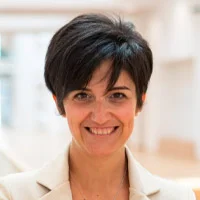
Valentina De Marchi
Associate Professor, Department of Society, Politics and Sustainability at Esade
Valentina is a Circular Economy and Sustainable Value Chain expert. She is a World’s Top 2% Scientists as for the prestigious Stanford List. A pioneer in the study of environmental innovation and upgrading within Global Value Chains, Valentina has authored over 60 international publications, with a strong focus on circularity, B Corps, and environmental upgrading.
In addition to her academic achievements, Valentina holds key leadership roles, serving as President of GRONEN (Group for Research on Organizations and the Natural Environment) and as a leading member of the organizing committee for Network O (Global Value Chains) within the academic organization SASE.
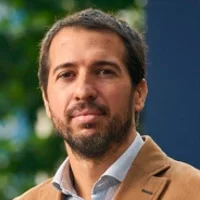
Guillermo Casasnovas
Associate Professor, Department of Society, Politics and Sustainability at Esade
Guillermo is an expert in system mapping. He teaches and researches on the fields of social entrepreneurship and impact investing and in the practice of system mapping.
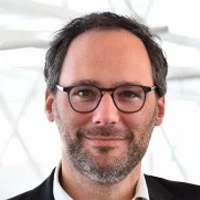
Tobias Hahn
Professor, Department of Society, Politics and Sustainability at Esade
Tobias is an expert in the management of sustainability tensions. He is a World’s Top 2% Scientists as for the prestigious Stanford List, who has pioneered the understanding of paradoxes and tensions in sustainability and corporate social responsibility. He worked extensively in the context of business sustainability strategies, and sustainable performance assessment.
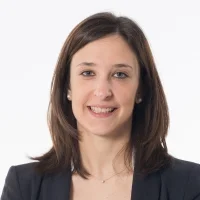
Annachiara Longoni
Professor, Department of Operations, Innovation and Data Sciences at Esade
Annachiara is an expert in sustainable supply chain management. She is a pioneer in exploring the role of sustainability in product and process innovation within operations and supply chains. Her work focuses on driving systemic change across organizations and supply chains, with a strong emphasis on generating positive social impact.
Ángel Saz Carranza
Professor, Department of Strategy and General Management at Esade
Angel is a Geopolitics and scenario building expert. He is the Director of EsadeGeo Center for Global Economy and Geopolitics in addition to being Associate Professor of Strategy and Policy and Adjunct Visiting Professor at Georgetown University's MCDonough School of Business. With extensive expertise in international business, business-government relations, and nonmarket strategy, Angel’s work explores key areas such as foresight and scenario planning, intergovernmental organizations, and organizational networks.
Marie Vandendriessche
Senior Researcher and Research Coordinator at EsadeGeo
Marie is a teaching fellow at Esade’s Department of Society, Politics and Sustainability. Her work focuses on global governance and geopolitics, with a special interest in the interface between energy and climate change. Her research has been published at the European University Institute, the Brookings Institution, Global Policy, and the Journal of European Integration, among others.
Marc Vilanova
Senior Lecturer, Department of Society, Politics and Sustainability at Esade
Marc is a CSR strategies and circular economy expert . With extensive experience as an international consultant alongside his academic career, Marc brings a wealth of expertise in responsible competitiveness, corporate social responsibility (CSR) strategy, and accountability.
The program is designed for senior executives and board members who aspire to deepen their understanding of how to effectively embed circularity into their company’s strategy. It provides a comprehensive framework and actionable insights, regardless of participants’ prior experience with sustainability, making it accessible to those new to the field while still challenging seasoned professionals. It could also be useful for senior sustainability managers, working in service or manufacturing industries worldwide, especially those working in/targeting European markets.
Candidates must complete the registration application and attach the documentation required by Esade.

Muchas gracias por tu interés. En breve daremos respuesta a tu solicitud.
Mientras tanto, queremos que sepas que estamos deseando que formes parte de la comunidad Esade. Con este sencillo gesto que acabas de hacer, ya estamos más cerca de ello.