How was inflation in 2024 for poor and rich households in Spain
EsadeEcPol
12 January 2025
What happened to inflation in 2024? For the third year running, we repeat the exercise we carried out in 2022 and 2023 to look at what drove inflation and whom it affected most (or least).

In 2024, the main components pushing inflation up were the price of electricity, gas, alcoholic beverages and tobacco, together with restaurants and hotels. Other groups, such as transport, probably benefited from the continuation of policies aimed at containing prices, in contrast with the measures that have gradually been withdrawn in sectors such as electricity and gas.

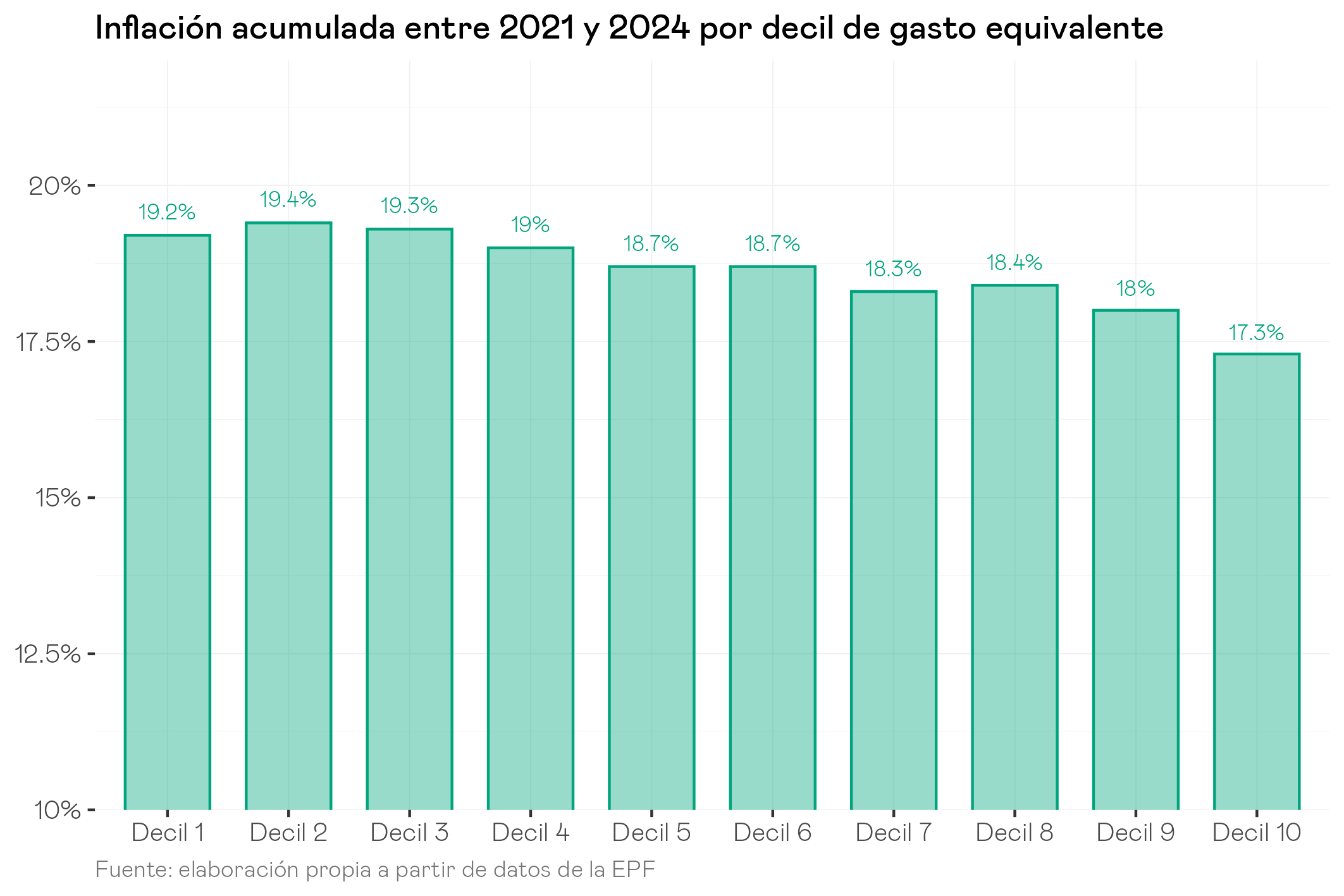
This has produced a mixed picture in the behaviour of the CPI by expenditure decile. On the one hand, some categories that rose significantly, such as restaurants, hotels and insurance, hit higher-income households harder because of their relative weight in those budgets. However, the sustained increase in the prices of electricity and other housing utilities had a disproportionate impact on the three lowest income deciles, offsetting the slowdown in food price growth seen during 2024. This effect is particularly visible when looking at the composition of inflation by decile, where essential categories such as electricity and housing carry more relative weight in households with fewer resources.

Although the picture for 2021-2023 was not entirely clear, 2024 seems to tip the balance towards a slightly regressive distributional effect of inflation in recent years, with cumulative inflation for the lowest deciles close to 20%.

What will happen in 2025? In January of this year, VAT on electricity has already returned to its normal level, and considerable cuts are expected in the discounts of the social electricity tariffs (bonos sociales). If, in addition, other tax cuts on food (such as olive oil) are withdrawn in 2025, the picture for 2025 will very probably be worse than that of 2024 in terms of regressivity.

This also opens a debate on how tax burdens are distributed across energy sources. Revising them with both redistribution and the energy transition in mind could preserve much of the revenue while shifting the distributional balance of the tax towards greater progressivity and, at the same time, encouraging decarbonisation.