Team building, literally translated as “building teams,” has become an essential practice for organizations seeking to foster a positive work environment and increase productivity. While it may seem simple, developing a cohesive and efficient team requires planning and continuous effort.
At Esade, we offer comprehensive information on this discipline, covering its meaning, benefits, and various activities that can be applied in both physical and virtual environments.
What is team building?
The well-known Aristotle Project was a study conducted by tech giant Google to draw conclusions about what factors make a team truly effective. The study, which lasted over seven years and involved interviews with more than 100 active teams within the company, concluded that the work environment and interpersonal relationships directly impact employees’ emotional security and, therefore, the organization’s performance.
One way to improve team cohesion is through team building, which consists of activities and dynamics designed to enhance teamwork, communication, and collaboration within a workgroup.
This approach, often used in Human Resources, aims to strengthen interpersonal relationships among team members, promote a positive work environment, and ultimately increase the group’s productivity and efficiency.
Team building activities can range from simple trust and communication exercises to more complex events like corporate retreats and outdoor activities.
What are the benefits of team building?
- Improves communication: Team building activities promote open and effective communication among employees, helping reduce misunderstandings and improving collaboration.
- Fosters trust and cooperation: Through exercises designed to solve group problems, employees learn to trust each other more and work together more efficiently.
- Increases motivation: Participating in such activities can boost team morale and individual motivation, resulting in a more positive and productive work environment.
- Develops leadership skills: Team building dynamics often identify and encourage the development of different leadership types among employees, allowing those with potential to lead projects and teams efficiently.
- Boosts creativity: Working together in a relaxed, playful environment can help employees think more creatively and find innovative solutions to problems.
- Improves self-awareness and team awareness: Team building activities allow employees to better understand their own strengths and weaknesses, as well as those of their colleagues, facilitating a more efficient task and responsibility allocation.
- Identifies and removes barriers: Teams can identify and overcome obstacles that hinder creativity and productivity, optimizing overall team performance.
- Empowers employees: Team building gives employees the opportunity to take initiative and responsibility, increasing their autonomy and self-confidence.
Beyond these benefits, team building helps create high-performing teams, thereby improving overall business results.
Icebreakers to Strengthen Team Spirit
When we talk about icebreakers, we refer to brief and dynamic activities that help break the ice among team members, facilitating communication and the creation of affective and effective bonds. Some ideas include:
- Curious questions: Propose original and fun questions for each team member to answer, like: What’s your hidden superpower? or What three things would you take to a deserted island?
- Two truths and a lie: Each person shares three statements about themselves, two true and one false, challenging others to guess which one is incorrect.
- Quick mime: Participants must act out a word or phrase without speaking, using gestures while others try to guess what it is.
Indoor Team Building Games
#1 Escape rooms
These are physical and mental adventure games where teams must solve a series of puzzles and riddles to escape a locked room within a set time. This team-building activity encourages collaboration, communication, and problem-solving under pressure.
#2 Innovation workshops
These team-building practices allow teams to work together to generate innovative ideas and creative solutions to specific problems. They use techniques like brainstorming and design thinking to boost creativity and collaboration.
#3 Role-playing games
As the name suggests, role-playing games allow employees to take on different roles within a fictional situation to develop leadership, negotiation, and conflict-resolution skills. Additionally, these dynamics promote empathy and understanding among coworkers.
#4 Cooking workshops
Organizing a cooking workshop where teams must prepare a specific dish can be a great way to foster teamwork. This activity is not only fun but also requires coordination, communication, and joint effort to achieve a common goal.
#5 Collaborative board games
Collaborative board games (Pandemic, Codenames, Forbidden Island, Hanabi, or The Mind, among others) require players to work together to reach a common goal. These team-building games help improve communication, strategy, and problem-solving.
#6 Reflection activities
Organizing reflection sessions where teams can discuss their strengths, weaknesses, and areas for improvement is crucial for continuous growth and development. During these sessions, it’s essential that all members feel comfortable sharing their thoughts and suggestions.
#7 Mindfulness and relaxation sessions
Incorporating mindfulness sessions and relaxation techniques into the workplace can help reduce stress and improve focus and productivity. Team-building activities like guided meditation or yoga are perfect for promoting employees’ mental and physical well-being.
#8 Trivia competitions
Organizing a “Trivia” style game on various topics can be a fun and educational way to encourage teamwork. Teams must collaborate to answer questions and compete for incentives, which can boost morale and healthy competitive spirit.
#9 Improvisation games
Improvisation games, similar to techniques used in theater, can be excellent options for developing communication and quick adaptation skills. These types of team-building activities also promote creativity and group cohesion.
Outdoor Team Building Ideas
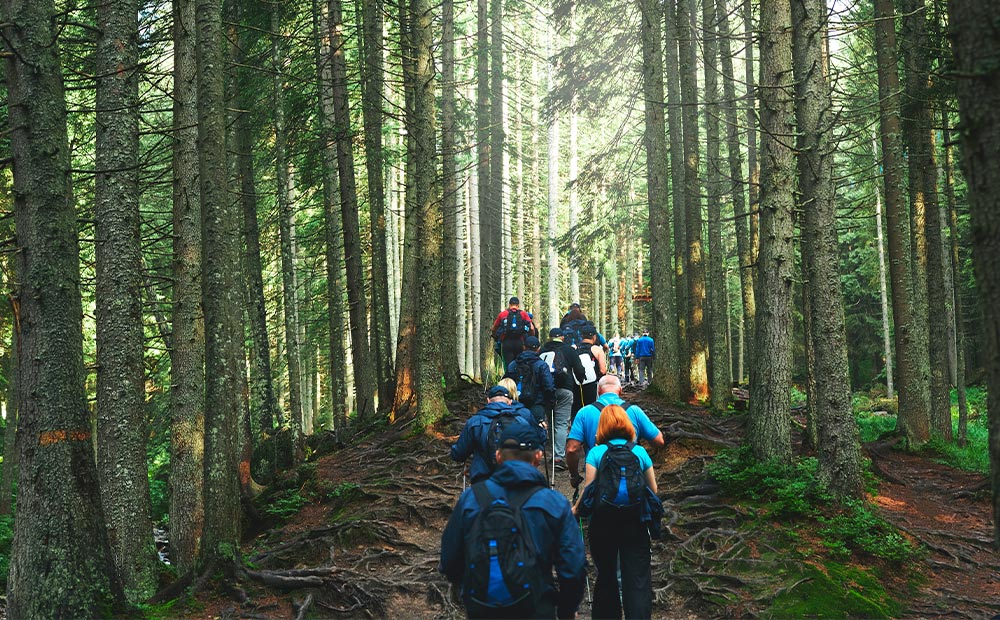
- Mountain hikes with challenges: Plan a hike through the mountains with stations where teams must complete physical and mental challenges. This experience promotes leadership, resilience, and overcoming obstacles in a natural environment.
- Sports games: Organize sports tournaments like paddle tennis, soccer, volleyball, or even relay races. These team-building games encourage healthy competition, teamwork, and improve cooperation among employees.
- Raft building: Divide employees into teams and challenge them to build a raft capable of sailing on water. This activity requires collaboration, creativity, and teamwork to achieve a common goal.
- Survival activities: Teach basic survival skills like making a fire or building improvised shelters. These activities not only strengthen teamwork but also improve participants’ confidence and resilience.
Team Building Activities for Remote or Virtual Teams
- Virtual icebreaker games: Activities like trivia questions, word games, or shared drawing activities are excellent for kicking off virtual meetings and creating a relaxed and collaborative atmosphere.
- Online trivia: Competitions with questions and answers on various topics using platforms like Kahoot! or Quizizz.
- Virtual escape rooms: Adapted escape room simulations for virtual platforms where teams must solve puzzles and complete challenges together.
- Virtual wellness workshops: Yoga, meditation, or mindfulness sessions via video calls to promote the team’s mental and physical health.
- Virtual happy hour: Organize online networking sessions with activities like sharing recipes, Q&A games, or informal conversation sessions to strengthen social bonds among employees.
Ultimately, team building is a powerful tool to strengthen work teams, improve communication, and increase productivity.
Whether through indoor, outdoor, or virtual activities, organizations can greatly benefit from investing in these dynamics.
At Esade, we understand the importance of building strong and cohesive teams. That’s why we offer various training solutions that help companies achieve their goals through team building.