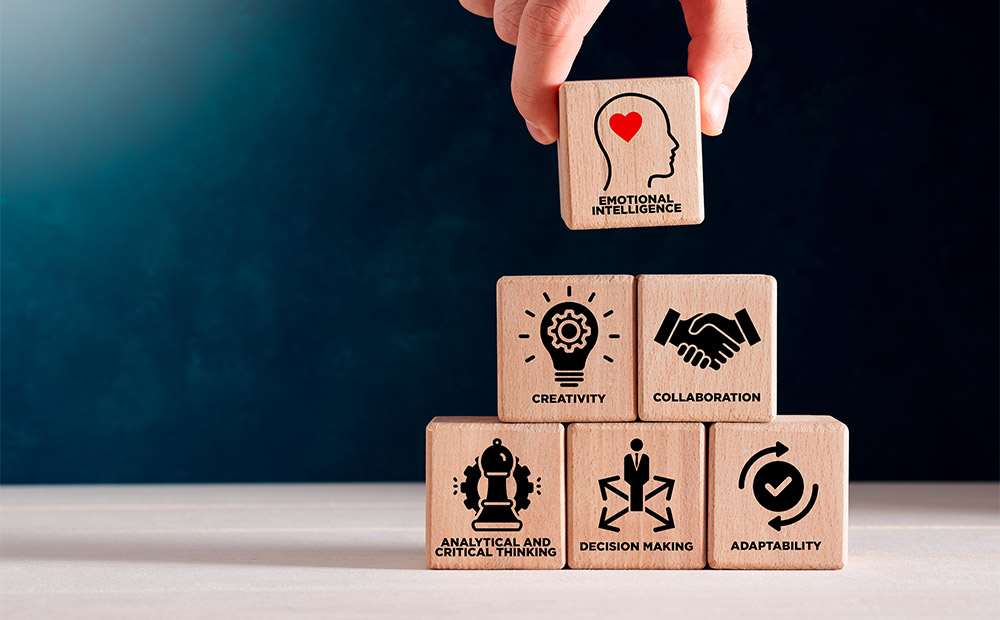

Daniel Goleman burst onto the literary and scientific radar in the 1990s with his book Emotional Intelligence, which popularized the term. This concept invites us to contemplate its implications beyond the individual level, reaching into the realm of business and professional environments.
Let’s engage in a brief exercise: think of someone in your surroundings whom you perceive as possessing high emotional intelligence and describe them using three adjectives. Got them? At Esade, we have conducted this exercise on numerous occasions, and the responses typically share a common thread: these individuals are often described as calm, positive, considerate, and kind. This prompts us to ponder several crucial questions regarding emotional intelligence within the context of business: Is emotional intelligence truly a coveted asset in leadership and the corporate world? Will a naturally kind-hearted individual encounter challenges when making tough decisions that, while unpopular, are essential for the team’s welfare? Do they possess ample capacity for fostering innovation? And what about providing constructive feedback to correct behaviors within the team?
In this blog post, we aim to unravel this mystery by exploring the definition of emotional intelligence and understanding why and how it evolves into a fundamental tool for those striving to excel in the business sector. We will delve into methods for assessing our own emotional intelligence and, more significantly, how we can cultivate it to not only enhance our professional capabilities but also to become more effective leaders.
What is emotional intelligence?
Emotional intelligence encompasses the capacity to comprehend and regulate our own emotions, alongside the ability to empathize with the emotions of others. This skill set not only enables us to navigate our personal emotional landscapes with increased wisdom and composure but also empowers us to exert a positive influence on our social and professional surroundings.
It manifests through competencies, which are measurable traits of an individual that distinguish their performance level within a job, role, organization, or culture.
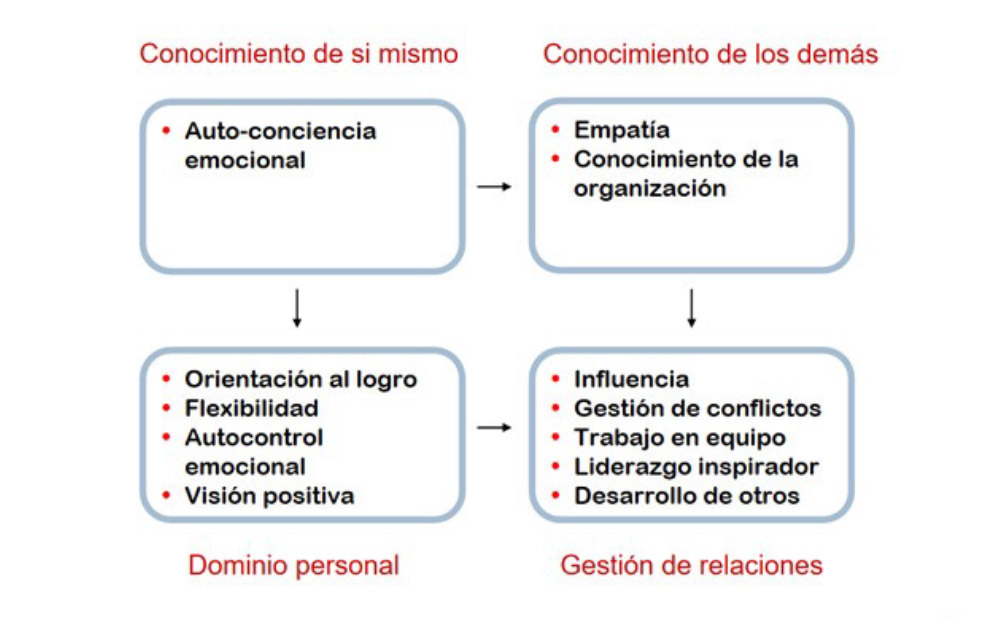
This concept is rooted in four fundamental pillars, each representing a crucial dimension of emotional intelligence:
1. Emotional Self-Awareness
This entails the capability to identify and acknowledge our own emotions. This self-awareness is coupled with a second dimension, which involves being cognizant of the influence one exerts on others and thereby comprehending how they experience your leadership.
2. Awareness of Others
This pillar encompasses our capacity to perceive and comprehend the emotions of those around us. It is demonstrated through competencies such as empathy and a profound understanding of the organization.
3. Emotional Self-Management
This refers to the skill of regulating and controlling our emotions, enabling us to channel our emotional energy in a constructive manner. It is demonstrated through competencies such as achievement orientation, adaptability, and emotional self-control.
4. Social Skills
This pillar emphasizes our capacity to establish and sustain healthy and productive interpersonal relationships. It encompasses competencies such as conflict management, influencing others, and teamwork.
Each of these quadrants unveils, as mentioned earlier, emotional and social competencies – skills that can undoubtedly be acquired and enhanced by all individuals and serve as catalysts for exceptional performance in the business environment.
Now you understand that emotional intelligence surpasses mere traits like being calm, positive, considerate, and kind. While these attributes are indeed essential facets of emotional self-control, emotional intelligence encompasses a much broader spectrum.
Why should you care about emotional intelligence?
Daniel Goleman, in his seminal work on emotional intelligence, offered an intriguing insight: the brightest individual in a class, with the highest IQ, may not necessarily achieve the greatest success in business. Going beyond this intriguing observation, compelling reasons emerge as to why emotional intelligence should command your attention:
- Emotional Intelligence as a Meta-Skill:
Emotional intelligence functions as a meta-skill, meaning it enhances and complements any other skill or intellectual capacity you possess. To illustrate this concept, let’s consider an example. Many students who choose to study at Esade hail from diverse countries. For a significant number of them, this experience marks their initial venture into independent living, far from familiar surroundings and amidst the allure of a vibrant city like Barcelona. In such a setting, emotional self-control – the capacity to resist the allure of distractions and focus on preparing for the upcoming exam – emerges as pivotal, if not more so, than sheer intellectual prowess. - Leadership, a Social Relations Intensive Profession:
Let’s contemplate the amount of time a leader dedicates to communicating with others. Between diverse meetings and composing emails, research indicates that a leader may allocate over 85% of their time to intense interactions within their environment. Therefore, possessing a high level of emotional intelligence – consider, for instance, the ability to positively influence others, a pivotal competency within the soft skills quadrant – can profoundly impact your effectiveness as a future leader. It enables you to attune to your team members and assist them in uncovering and harnessing their optimal potential. - The Distinction Between an Average and an Exceptional Leader:
What sets apart an exceptional manager from a mediocre one? This question has been the subject of investigation by both organizations and academics for years, consistently leading to the conclusion that a critical distinction lies in the emotional intelligence of leaders. For instance, Google’s renowned Project Oxygen identified behaviors exhibited by its most outstanding managers. The findings unveiled that the best managers were not only adept coaches who fostered their team’s autonomy but also demonstrated a genuine concern for the well-being of their team members. - The importance of recognizing our underlying mindset:
This pertains to how we perceive and interpret the world around us – our views on others, ourselves, circumstances, challenges, opportunities, and obligations. Being mindful of this lens is essential as it often leads us to either justify our actions or attribute our mistakes to external factors. Overcoming this inherent bias enables us to uncover new possibilities and address longstanding issues effectively.
How can you find out the degree of your emotional intelligence?
In academic and business settings, three methods are commonly employed to assess the emotional intelligence of candidates or employees, serving to gauge their suitability for specific roles and promote their personal and professional growth.
- Critical Incident Interviews: This involves asking individuals to recount instances of both success and failure. By closely analyzing the events and emotions described by the individual, it becomes feasible to delineate a profile of their emotional and social competencies.
- Balance sheet: This tool serves as a valuable aid in organizing thoughts concerning aspects of your life, encompassing strengths and weaknesses, both immediate and long-term, with a focus on personal growth and well-being. It facilitates the discernment of characteristic strengths and identifies areas requiring development and attention.
- 360-Degree Surveys: These assessments evaluate observable behaviors associated with various emotional intelligence competencies. Named for their comprehensive approach, they involve gathering feedback from individuals who are familiar with us across various contexts and from diverse perspectives within the professional environment (colleagues, supervisors, collaborators, clients), and occasionally, from personal relationships (partners, friends, etc.).
- Assessment Centers: This methodology involves simulating typical workplace scenarios, such as a consensus-building meeting, while an observer with expertise in emotional intelligence evaluates relevant behaviors.
For a simple self-assessment of your emotional intelligence, consider conducting personal interviews with individuals in your close circle who know you well. Consider asking them the following three questions:
– What are your perceptions and feelings when you interact with me?
– What are the three strengths you value most in me?
– What three aspects do you believe I could modify to enhance my effectiveness?
As you collect responses, it’s crucial to practice active listening, a behavior deeply aligned with empathy, which is one of the most significant emotional competencies.

How can you develop your emotional intelligence?
The ancient Greek philosophers advised, “Gnosce te ipsum”: self-knowledge is the initial stride toward cultivating emotional intelligence. Understanding and regulating your emotions needs first acknowledging them. In preceding sections, we presented strategies to enhance your comprehension of your emotional intelligence level. Now, we offer two specific recommendations for each quadrant of emotional intelligence:
- Emotional Self-Awareness:
- Keep a diary: Dedicate a few moments at the end of the day to reflect on notable events and their impact on your emotional state. This practice aids in recognizing patterns and emotional triggers.
- Use an emotion tracker: Use apps specifically designed to assist in monitoring your emotional states throughout the day. These tools enable you to visualize your emotions and track their evolution over time.
- Awareness of Others:
- Ask deeper and more frequent questions: During your daily interactions, make a conscious effort to pose questions that encourage deeper understanding of your conversational partners. This practice is not only characteristic of highly emotionally intelligent individuals but also of exceptional negotiators.
- Observe nonverbal cues: In conversations, pause and attentively observe the facial expressions and gestures of your interlocutors. Take a moment to consider the emotions they may be experiencing.
- Emotional Self-Control:
- Practice Mindfulness or Meditation: Embrace mental training techniques like mindfulness or meditation, which are increasingly recognized for their efficacy in stress management and emotional self-regulation, supported by a burgeoning body of scientific evidence.
- Cultivate a positive outlook: Before concluding your day, mentally note at least three things you are grateful for. This practice nurtures a positive attitude and directs your focus toward the beneficial aspects of your life.
- Social Skills:
- Study the influential people around you: Observe their interactions and take note of the strategies they employ to persuade and motivate others. Engaging in observational learning can provide valuable insights.
- Mobilize others with your enthusiasm: Harness your passion for upcoming projects to inspire and positively mobilize your team or individuals within your environment.
Conclusion
Boosting your emotional intelligence not only holds the potential to expedite your professional advancement but also enhance your personal relationships and overall well-being. The encouraging news is that these skills are cultivable and can be refined with consistent practice and dedication. Our MBA high education programs are not solely centered on developing technical and intellectual skills; we also prioritize creating environments tailored to heighten awareness of participants’ emotional and social competencies. Through seminars and workshops, we furnish the requisite tools for everyone to nurture and fortify these vital skills.