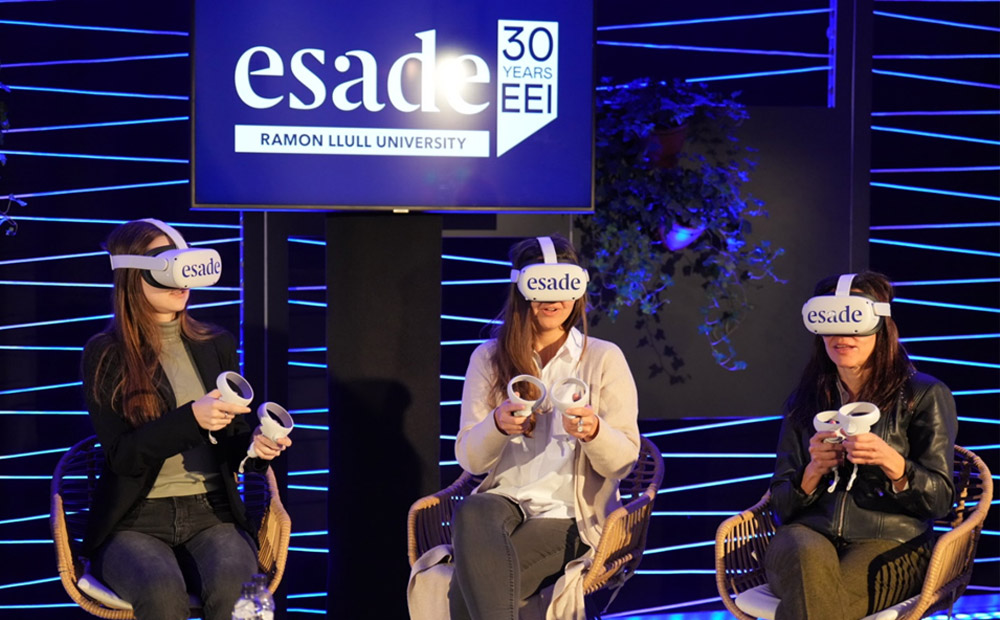


In the digital age, education has been transformed by innovative technologies like Augmented Reality (AR) and Virtual Reality (VR). These tools not only enrich the teaching process, but also provide immersive experiences for students.
Here, we will explore what augmented reality and virtual reality are, their major differences, practical examples in the academic sector, and their main benefits, as well as some specific applications to successfully implement them in education.
What is augmented reality?
Generally speaking, augmented reality consists of integrating graphic elements into the real world, improving our perception of the environment. In education, this is achieved by superimposing digital information onto physical objects, providing an enriched and contextualized experience.
Example of augmented reality in the educational sector
A prime example is the use of applications that, using a device’s camera, display additional information about images or textbooks (interactive books). You can also go on virtual tours by visiting historical or geographical sites using mobile devices.
What is virtual reality?
The goal of virtual reality is to immerse the user in a fully digital environment, often through devices such as VR headsets or VR goggles. In education, this makes it possible to recreate virtual situations for hands-on and surprisingly realistic learning.
Example of virtual reality in the educational sector
In higher education, virtual reality enables hands-on simulations, like exploring virtual laboratories or attending conferences in virtual environments, providing unparalleled experiences.
As can be seen in the video, Esade’s virtual campus consists of a main auditorium, where relevant academic sessions are taught and presentations or videos can be viewed; several meeting rooms for discussion and group work; as well as a recreational area, which offers experiences such as basketball or archery. And, of course, there is an area where participants can interact with each other and move from one space to another.
Differences between augmented reality and virtual reality
Augmented reality and virtual reality are fundamentally different in the way they interact with the environment. While augmented reality enhances the real world by overlaying virtual elements, virtual reality creates a completely new environment , immersing the user in a fully digital experience.
In other words, augmented reality modifies real-world scenes by adding digital information without replacing the surrounding reality; Whereas virtual reality, as its name suggests, creates virtual environments from scratch, disconnecting the user from physical reality and transporting them to a new space.
Another crucial distinction is that augmented reality uses devices such as smartphones to overlay information on top of the real environment, while virtual reality requires more specialized hardware such as VR headsets or goggles.
Benefits of augmented and virtual reality in the classroom
The implementation of augmented reality and virtual reality in education has obvious benefits. These technologies not only have a positive impact on academic performance, but also transform the educational experience, making learning more accessible, engaging, and tailored to the individual needs of students.
- More autonomous learning: AR and VR foster learner independence by enabling interactive and personalized learning experiences.
- Improved performance: the application of augmented reality in education has been shown to contribute to higher academic performance, thanks to the more engaging nature of the content.
- Personalization of learning: virtual reality makes it possible to adapt educational content to individual needs, creating unique experiences for each student.
- Increased participation and motivation: the incorporation of virtual elements attracts students’ attention, increasing their motivation and active engagement in the learning process.
- Enhanced learning experience: both augmented and virtual reality enrich the learning experience by providing interactive and realistic environments.
- Facilitates learning: augmented reality simplifies the understanding of complex concepts by providing visual and practical representations.
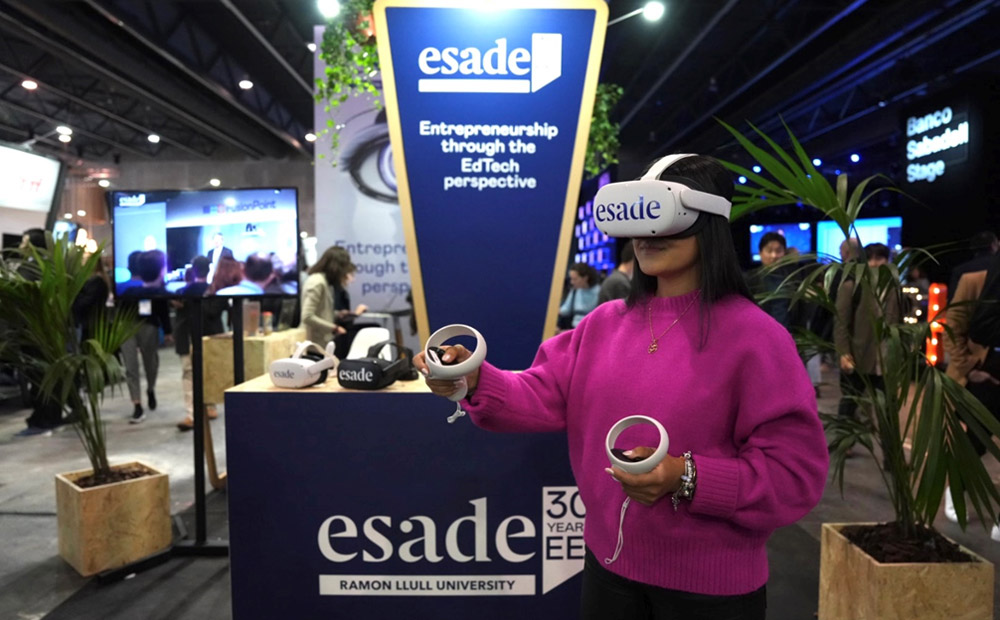
Augmented reality applications for the education sector
The integration of augmented reality applications in education offers interactive and immersive experiences. The following are some of the most important applications:
JigSpace
This lets you explore concepts in 3D, facilitating the understanding of complex topics. In addition, it is a 3D interactive presentation application and platform that allows anyone to create augmented reality demonstrations easily and without programming.
Some features of JigSpace include the ability to create and share 3D presentations in minutes, instantly view them in augmented reality, and manage a library of 3D content including materials, textures, videos, and sounds.
Layar
This is an augmented reality tool that superimposes digital information, such as images, videos, or web links, over the physical environment captured by the device’s camera. The Layar application has been praised for its usefulness in a variety of contexts, from education to entertainment, and advertising.
AR Anatomía 4D+
This augmented reality application provides an immersive and educational way to study human anatomy, allowing users to view and manipulate anatomical models in real time. By using 4D technology, the application allows for a more dynamic experience, where anatomical models can be explored from different angles and layers.
Metaverse
Developed by Metaverse Studio, this free augmented reality Android app is ideal for creating custom AR experiences for the classroom, in record time and with ease. A variety of tools and templates are used for this purpose. In turn, these experiences can be shared with other users, who can view them using the same application.
>> Did you know that Esade was the first European business school to open a campus in the metaverse? In fact, since November 2022, Esade offers a virtual space in which Executive Education students enjoy an immersive training experience, interact with their avatars, explore their possibilities, and experiment by mapping future scenarios in which to test new business models that impact society and the planet.
Arloopa
The Arloopa app, available on Google Play, is an excellent platform for creating augmented reality experiences. It also lets you visualize 3D models integrated in the real world. The tool has been used in various contexts, both at the developer level and among end users. It also offers six different languages, including English, Armenian, Russian, German, Spanish, and Czech.
Educational virtual reality applications
Virtual reality has transformed education, offering immersive experiences that enhance learning. Here are some virtual reality applications to consider:
VirtualSpeech
This is a soft skills training platform that uses virtual reality (VR) and artificial intelligence (AI) feedback to optimize communication skills, such as public speaking, developing sales and persuasion skills, among others.
This virtual reality application, used at Esade, allows users to practice in a safe, risk-free environment, reducing anxiety and increasing confidence. It also provides accurate and personalized feedback in real time to improve communication.
Bodyswaps
This virtual reality application simulates realistic work scenarios, allowing users to encounter authentic work situations and learn by exchanging roles with different perspectives. In short, Bodyswaps is a useful tool for professional training, as it facilitates the development of soft and technical skills necessary for real work contexts.
VR Math
This is a virtual reality application designed to improve the teaching and learning of mathematical concepts in an immersive way. Through three-dimensional environments and interactive experiences, VR Math allows students to explore and understand mathematical concepts in a more visual and hands-on way.
Anatomyou
Anatomyou is an educational virtual reality application designed for learning and teaching human anatomy in an immersive way. With this platform, students will be able to explore the human body in 3D using virtual reality. This interactive experience is undoubtedly very valuable in the field of healthcare, as it allows for an understanding of anatomy from different perspectives.
Unimersiv
Unimersiv is the largest platform for educational experiences in virtual reality. Offering a downloadable application, Unimersiv provides access to a variety of virtual experiences and educational activities covering multiple topics.
VR Lessons by ThingLink
This allows for the creation of interactive and immersive lessons using 360-degree images and videos. Users can use ThingLink to develop immersive educational content that can be experienced through virtual reality devices. In addition, ThingLink facilitates the creation and sharing of virtual tours, making it a valuable educational tool.
Mondly VR
Mondly VR is a language learning platform that uses virtual reality to simulate everyday conversational situations. The application integrates a world-class chatbot and speech recognition to engage users in an interactive and immersive learning process.
With Mondly VR, students can improve their language skills by interacting with virtual characters, giving them the confidence to deal with real-life situations.
After taking an in-depth look at the role of augmented reality and virtual reality in education, we can conclude that these emerging technologies are having a true transformative impact on the way we teach and learn.
It is clear that both technologies present challenges, such as the need for adequate technological infrastructure and teacher training, but the potential benefits far outweigh these obstacles.
The flexibility, personalization of learning, and intrinsic motivation offered by augmented reality and virtual reality suggest a promising future for education. Likewise, it is imperative to continue researching, innovating, and collaborating in order to take full advantage of their potential.