These are the most effective negotiation techniques for your company
In today’s fast-paced and competitive business landscape, organizations continually encounter challenges demanding adept negotiation skills. At Esade, we assist you in honing these skills by delving deeply into the essence of negotiation, its constituent stages, various negotiation types, and ultimately, the most effective techniques for reaching mutually advantageous agreements amidst business conflicts.
What is a negotiation?
Business negotiation is a process wherein two or more parties strive to reach an agreement that addresses their respective business interests and objectives. This exchange entails discussions and collaborative decision-making geared towards reaching mutually beneficial compromises.
The key points of a negotiation are specified below:
- Exchange of commitments. This is a fundamental aspect of negotiation, wherein the involved parties share commitments, information, and resources with the aim of forging an agreement that is advantageous to all parties involved.
- Importance of mutual gains. Unlike competitive approaches, which focus solely on individual gains, business negotiation endeavors to create value and formulate solutions that benefit all stakeholders involved.
- Exchange process. In negotiation, this follows a structured and reciprocal nature, often encompassing various stages. These stages may range from preparation and discussion to the formalization of agreements and the ultimate closure of the negotiation itself.
What are the phases of a negotiation?
Negotiation typically unfolds through distinct phases, each contributing to attaining effective agreements: preparation, discussion, clarification of interests, proposal, actual negotiation, and closing. Let’s delve deeper into the specifics of each stage:
- Preparation. This is a crucial initial phase before sitting down at the negotiating table, wherein parties undertake research, set clear goals, and outline strategies. This phase lays the groundwork for the negotiation’s future success.
- Discussion. In this stage, involved parties exchange information, present their positions, and commence exploring potential solutions. Effective communication plays a pivotal role.
- Proposals and signals. Concrete proposals are presented, and parties keenly observe signals of acceptance or rejection. It is crucial to pay close attention to these signals to adapt the negotiation strategy accordingly.
- Exchange. Partners persist in negotiation, making concessions and striving to find common ground. Flexibility and creativity are highly prized during this period of negotiation.
- Closing and agreement. Lastly, a consensus is ultimately reached that satisfies the interests of both parties. This negotiation phase encompasses the formalization of the agreement and ensuring its fulfillment.
Types of business negotiation
Business negotiation encompasses various approaches and strategies, tailored to the objectives and dynamics of the parties involved. Here are some of the most prominent types of negotiation, each with its advantages and limitations:
#1 Accommodative negotiation
This type of negotiation is characterized by a greater willingness to concede in order to preserve harmony and foster long-term relationships.
#2 Competitive or distributive negotiation
This approach centers around the allocation of finite resources, where the success of one party implies the loss of the other. It can prove useful in situations characterized by conflicting interests.
#3 Collaborative negotiation
This aims to generate value for both parties by collaborating to maximize mutual benefits. It emphasizes creative solutions and employs the “win-win” negotiation technique.
#4 Negotiation by compromise
This involves parties striving for equitable agreements through mutual concessions. It entails an intermediate level of cooperation and compromise to attain a middle ground.
#5 Avoidant negotiation
As its name suggests, it is marked by a desire to evade conflicts and challenging situations, often by postponing or altogether avoiding the negotiation process. It is employed when it is deemed more advantageous to forego negotiation, as there is an anticipation of no benefit from reaching an agreement.
How to negotiate Techniques
Negotiation techniques are specific methods employed during a negotiation process with the aim of reaching beneficial agreements for all parties involved. These techniques are designed to maximize joint value and address potential conflicts to achieve a favorable outcome.

#1 Harvard Method
The Harvard Method emphasizes finding collaborative solutions, nurturing open dialogue, and identifying shared interests to achieve a mutually beneficial agreement.
- Prioritizing uncovering underlying interests rather than fixating on rigid positions.
- Refraining from viewing negotiation as a competition, instead promoting collaboration.
- Seeking to detach emotions and personal relationships from the problem at hand.
- Encouraging the exploration of creative options that address the interests of all parties involved.
- Furthermore, striving for mutual commitment in the pursuit of solutions.
#2 SPIN Method
This approach revolves around identifying and comprehending the client’s Situations, Problems, Implications, and Needs to tailor the negotiation strategy and offer targeted solutions.
- Investigating the client’s present circumstances.
- Probing about the client’s problems and challenges.
- Gaining insight into their severity and significance to comprehend the importance of resolving these issues for the client.
- Facilitating the presentation of an offer positioned as the optimal solution to the identified needs.
#3 AIDA Method
AIDA, representing Attention, Interest, Desire, and Action, serves as a sales negotiation technique. It is geared towards persuading and guiding the interlocutor through the stages of the purchasing process by employing effective communication principles.
- Capturing the attention of the target audience. For instance, using striking headlines, eye-catching graphics, or other prominent visual elements to draw them in.
- Sparking customer interest entails promoting benefits, solving problems, or presenting unique features of the product or service to captivate their attention.
- Generating a desire or need in the customer. This involves highlighting how the product or service fulfills their specific needs or desires.
- Driving the customer to perform a desired action, such as making a purchase, registering, or contacting. This is achieved by including clear and compelling calls to action.
#4 Win-win technique
This technique is centered on crafting mutually beneficial agreements, aiming to maximize joint value and fortify long-term business relationships.
- Both parties collaborating equitably to identify mutually beneficial solutions.
- Exploring and understanding each other’s interests and needs, transcending initial positions.
- Fostering open and honest communication to build trust between the parties.
- Seeking creative solutions that satisfy their interests, allowing for flexibility in negotiation.
- Focusing on common interests to identify areas of agreement, thereby maximizing overall value.
- Prioritizing long-term relationship building, recognizing which mutually beneficial agreements strengthen future collaboration.
#5 Strategic empathy
Strategic empathy entails comprehending the needs and perspectives of the other negotiator to adapt the strategy and foster a relationship founded on trust and mutual understanding.
- Practicing active empathy, understanding the emotions, needs, and perspectives of the other party.
- Establishing a positive emotional connection with the interlocutor, thereby creating an environment conducive to collaboration.
- Exploring and highlighting common interests between the parties involved is essential for finding beneficial points of agreement.
- Adapting the negotiation strategy considering the personality, communication style, and values of the other negotiator.
- Strategically employing empathy to positively influence the other party’s perception and disposition during the negotiation process.
- Driving empathy towards the search for solutions that satisfy both parties, fostering a “win-win” negotiation approach.
#6 Face-to-face strategy
The strategy prioritizes direct communication and personal interaction to establish stronger connections and gain a deeper understanding of the needs and concerns of the other negotiator.
- Using clarity in expressing the expectations of each party involved in the negotiation.
- Continuously checking to ensure that the information is interpreted in a similar manner.
- Actively seeking and exploring alternative options that may be acceptable to all parties involved.
- Fostering an empathetic environment where both parties feel heard and understood.
- Applying flexibility to adapt to changes in negotiation dynamics as needed.
- Implementing the principled negotiation method, seeking solutions that satisfy the fundamental interests of the parties involved.
- Focus on achieving tangible expectations and agreements during the face-to-face meeting.
>> At Esade, we recommend reading the post “Navigating time pressure in negotiations”, as it addresses intriguing questions such as ‘What is the best strategy when negotiating a deal?’, ‘Should you reveal your time pressures or is it better to hide them?’, and ‘Should you impose deadlines or let conversations run without haste?’.
Negotiation examples
Negotiating within a company is a fundamental activity that encompasses various fields. Consider a salary negotiation, whether during the hiring process or an annual review. By applying win-win negotiation techniques and focusing on interests, solutions can be reached that satisfy the expectations of both the employer and the employee.
Other common examples of business negotiation include:
- Reaching contractual agreements with suppliers, customers, or business partners.
- Negotiating collaborations and strategic alliances with other companies for mutual benefit.
- Negotiating purchase and sales conditions, prices, and terms with suppliers and customers.
- Reaching agreements and conditions with business partners for joint projects.
- Agreeing on terms for loans, lines of credit, or other financial services.
- Resolving internal conflicts between departments or teams through negotiation.
- Reaching an agreement on terms and conditions in corporate merger processes.
- Negotiating licenses or agreements related to intellectual property.
- Agreeing to hire external services, such as consultancies or agencies.
In conclusion, effective negotiation is indispensable in the business world. Understanding its fundamentals, stages, and types, and applying the right techniques at all times can make the difference between success and stagnation for your company.
Introduction to Emotional Intelligence in the field of business
Daniel Goleman burst onto the literary and scientific radar in the 1990s with his book Emotional Intelligence, which popularized the term. This concept invites us to contemplate its implications beyond the individual level, reaching into the realm of business and professional environments.
Let’s engage in a brief exercise: think of someone in your surroundings whom you perceive as possessing high emotional intelligence and describe them using three adjectives. Got them? At Esade, we have conducted this exercise on numerous occasions, and the responses typically share a common thread: these individuals are often described as calm, positive, considerate, and kind. This prompts us to ponder several crucial questions regarding emotional intelligence within the context of business: Is emotional intelligence truly a coveted asset in leadership and the corporate world? Will a naturally kind-hearted individual encounter challenges when making tough decisions that, while unpopular, are essential for the team’s welfare? Do they possess ample capacity for fostering innovation? And what about providing constructive feedback to correct behaviors within the team?
In this blog post, we aim to unravel this mystery by exploring the definition of emotional intelligence and understanding why and how it evolves into a fundamental tool for those striving to excel in the business sector. We will delve into methods for assessing our own emotional intelligence and, more significantly, how we can cultivate it to not only enhance our professional capabilities but also to become more effective leaders.
What is emotional intelligence?
Emotional intelligence encompasses the capacity to comprehend and regulate our own emotions, alongside the ability to empathize with the emotions of others. This skill set not only enables us to navigate our personal emotional landscapes with increased wisdom and composure but also empowers us to exert a positive influence on our social and professional surroundings.
It manifests through competencies, which are measurable traits of an individual that distinguish their performance level within a job, role, organization, or culture.
This concept is rooted in four fundamental pillars, each representing a crucial dimension of emotional intelligence:
1. Emotional Self-Awareness
This entails the capability to identify and acknowledge our own emotions. This self-awareness is coupled with a second dimension, which involves being cognizant of the influence one exerts on others and thereby comprehending how they experience your leadership.
2. Awareness of Others
This pillar encompasses our capacity to perceive and comprehend the emotions of those around us. It is demonstrated through competencies such as empathy and a profound understanding of the organization.
3. Emotional Self-Management
This refers to the skill of regulating and controlling our emotions, enabling us to channel our emotional energy in a constructive manner. It is demonstrated through competencies such as achievement orientation, adaptability, and emotional self-control.
4. Social Skills
This pillar emphasizes our capacity to establish and sustain healthy and productive interpersonal relationships. It encompasses competencies such as conflict management, influencing others, and teamwork.
Each of these quadrants unveils, as mentioned earlier, emotional and social competencies – skills that can undoubtedly be acquired and enhanced by all individuals and serve as catalysts for exceptional performance in the business environment.
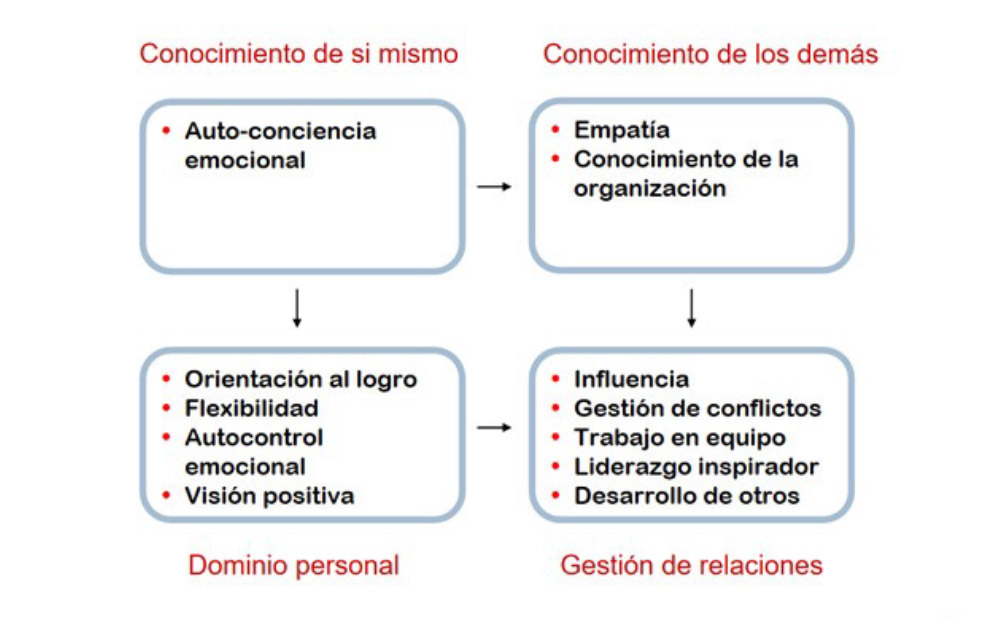
Now you understand that emotional intelligence surpasses mere traits like being calm, positive, considerate, and kind. While these attributes are indeed essential facets of emotional self-control, emotional intelligence encompasses a much broader spectrum.
Why should you care about emotional intelligence?
Daniel Goleman, in his seminal work on emotional intelligence, offered an intriguing insight: the brightest individual in a class, with the highest IQ, may not necessarily achieve the greatest success in business. Going beyond this intriguing observation, compelling reasons emerge as to why emotional intelligence should command your attention:
- Emotional Intelligence as a Meta-Skill:
Emotional intelligence functions as a meta-skill, meaning it enhances and complements any other skill or intellectual capacity you possess. To illustrate this concept, let’s consider an example. Many students who choose to study at Esade hail from diverse countries. For a significant number of them, this experience marks their initial venture into independent living, far from familiar surroundings and amidst the allure of a vibrant city like Barcelona. In such a setting, emotional self-control – the capacity to resist the allure of distractions and focus on preparing for the upcoming exam – emerges as pivotal, if not more so, than sheer intellectual prowess. - Leadership, a Social Relations Intensive Profession:
Let’s contemplate the amount of time a leader dedicates to communicating with others. Between diverse meetings and composing emails, research indicates that a leader may allocate over 85% of their time to intense interactions within their environment. Therefore, possessing a high level of emotional intelligence – consider, for instance, the ability to positively influence others, a pivotal competency within the soft skills quadrant – can profoundly impact your effectiveness as a future leader. It enables you to attune to your team members and assist them in uncovering and harnessing their optimal potential. - The Distinction Between an Average and an Exceptional Leader:
What sets apart an exceptional manager from a mediocre one? This question has been the subject of investigation by both organizations and academics for years, consistently leading to the conclusion that a critical distinction lies in the emotional intelligence of leaders. For instance, Google’s renowned Project Oxygen identified behaviors exhibited by its most outstanding managers. The findings unveiled that the best managers were not only adept coaches who fostered their team’s autonomy but also demonstrated a genuine concern for the well-being of their team members. - The importance of recognizing our underlying mindset:
This pertains to how we perceive and interpret the world around us – our views on others, ourselves, circumstances, challenges, opportunities, and obligations. Being mindful of this lens is essential as it often leads us to either justify our actions or attribute our mistakes to external factors. Overcoming this inherent bias enables us to uncover new possibilities and address longstanding issues effectively.
How can you find out the degree of your emotional intelligence?
In academic and business settings, three methods are commonly employed to assess the emotional intelligence of candidates or employees, serving to gauge their suitability for specific roles and promote their personal and professional growth.
- Critical Incident Interviews: This involves asking individuals to recount instances of both success and failure. By closely analyzing the events and emotions described by the individual, it becomes feasible to delineate a profile of their emotional and social competencies.
- Balance sheet: This tool serves as a valuable aid in organizing thoughts concerning aspects of your life, encompassing strengths and weaknesses, both immediate and long-term, with a focus on personal growth and well-being. It facilitates the discernment of characteristic strengths and identifies areas requiring development and attention.
- 360-Degree Surveys: These assessments evaluate observable behaviors associated with various emotional intelligence competencies. Named for their comprehensive approach, they involve gathering feedback from individuals who are familiar with us across various contexts and from diverse perspectives within the professional environment (colleagues, supervisors, collaborators, clients), and occasionally, from personal relationships (partners, friends, etc.).
- Assessment Centers: This methodology involves simulating typical workplace scenarios, such as a consensus-building meeting, while an observer with expertise in emotional intelligence evaluates relevant behaviors.
For a simple self-assessment of your emotional intelligence, consider conducting personal interviews with individuals in your close circle who know you well. Consider asking them the following three questions:
– What are your perceptions and feelings when you interact with me?
– What are the three strengths you value most in me?
– What three aspects do you believe I could modify to enhance my effectiveness?
As you collect responses, it’s crucial to practice active listening, a behavior deeply aligned with empathy, which is one of the most significant emotional competencies.

How can you develop your emotional intelligence?
The ancient Greek philosophers advised, “Gnosce te ipsum”: self-knowledge is the initial stride toward cultivating emotional intelligence. Understanding and regulating your emotions needs first acknowledging them. In preceding sections, we presented strategies to enhance your comprehension of your emotional intelligence level. Now, we offer two specific recommendations for each quadrant of emotional intelligence:
- Emotional Self-Awareness:
- Keep a diary: Dedicate a few moments at the end of the day to reflect on notable events and their impact on your emotional state. This practice aids in recognizing patterns and emotional triggers.
- Use an emotion tracker: Use apps specifically designed to assist in monitoring your emotional states throughout the day. These tools enable you to visualize your emotions and track their evolution over time.
- Awareness of Others:
- Ask deeper and more frequent questions: During your daily interactions, make a conscious effort to pose questions that encourage deeper understanding of your conversational partners. This practice is not only characteristic of highly emotionally intelligent individuals but also of exceptional negotiators.
- Observe nonverbal cues: In conversations, pause and attentively observe the facial expressions and gestures of your interlocutors. Take a moment to consider the emotions they may be experiencing.
- Emotional Self-Control:
- Practice Mindfulness or Meditation: Embrace mental training techniques like mindfulness or meditation, which are increasingly recognized for their efficacy in stress management and emotional self-regulation, supported by a burgeoning body of scientific evidence.
- Cultivate a positive outlook: Before concluding your day, mentally note at least three things you are grateful for. This practice nurtures a positive attitude and directs your focus toward the beneficial aspects of your life.
- Social Skills:
- Study the influential people around you: Observe their interactions and take note of the strategies they employ to persuade and motivate others. Engaging in observational learning can provide valuable insights.
- Mobilize others with your enthusiasm: Harness your passion for upcoming projects to inspire and positively mobilize your team or individuals within your environment.
Conclusion
Boosting your emotional intelligence not only holds the potential to expedite your professional advancement but also enhance your personal relationships and overall well-being. The encouraging news is that these skills are cultivable and can be refined with consistent practice and dedication. Our MBA high education programs are not solely centered on developing technical and intellectual skills; we also prioritize creating environments tailored to heighten awareness of participants’ emotional and social competencies. Through seminars and workshops, we furnish the requisite tools for everyone to nurture and fortify these vital skills.
Virtual reality and augmented reality, essential in education today
In the digital age, education has been transformed by innovative technologies like Augmented Reality (AR) and Virtual Reality (VR). These tools not only enrich the teaching process, but also provide immersive experiences for students.
Here, we will explore what augmented reality and virtual reality are, their major differences, practical examples in the academic sector, and their main benefits, as well as some specific applications to successfully implement them in education.
What is augmented reality?
Generally speaking, augmented reality consists of integrating graphic elements into the real world, improving our perception of the environment. In education, this is achieved by superimposing digital information onto physical objects, providing an enriched and contextualized experience.
Example of augmented reality in the educational sector
A prime example is the use of applications that, using a device’s camera, display additional information about images or textbooks (interactive books). You can also go on virtual tours by visiting historical or geographical sites using mobile devices.
What is virtual reality?
The goal of virtual reality is to immerse the user in a fully digital environment, often through devices such as VR headsets or VR goggles. In education, this makes it possible to recreate virtual situations for hands-on and surprisingly realistic learning.
Example of virtual reality in the educational sector
In higher education, virtual reality enables hands-on simulations, like exploring virtual laboratories or attending conferences in virtual environments, providing unparalleled experiences.
As can be seen in the video, Esade’s virtual campus consists of a main auditorium, where relevant academic sessions are taught and presentations or videos can be viewed; several meeting rooms for discussion and group work; as well as a recreational area, which offers experiences such as basketball or archery. And, of course, there is an area where participants can interact with each other and move from one space to another.
Differences between augmented reality and virtual reality
Augmented reality and virtual reality are fundamentally different in the way they interact with the environment. While augmented reality enhances the real world by overlaying virtual elements, virtual reality creates a completely new environment , immersing the user in a fully digital experience.
In other words, augmented reality modifies real-world scenes by adding digital information without replacing the surrounding reality; Whereas virtual reality, as its name suggests, creates virtual environments from scratch, disconnecting the user from physical reality and transporting them to a new space.
Another crucial distinction is that augmented reality uses devices such as smartphones to overlay information on top of the real environment, while virtual reality requires more specialized hardware such as VR headsets or goggles.
Benefits of augmented and virtual reality in the classroom
The implementation of augmented reality and virtual reality in education has obvious benefits. These technologies not only have a positive impact on academic performance, but also transform the educational experience, making learning more accessible, engaging, and tailored to the individual needs of students.
- More autonomous learning: AR and VR foster learner independence by enabling interactive and personalized learning experiences.
- Improved performance: the application of augmented reality in education has been shown to contribute to higher academic performance, thanks to the more engaging nature of the content.
- Personalization of learning: virtual reality makes it possible to adapt educational content to individual needs, creating unique experiences for each student.
- Increased participation and motivation: the incorporation of virtual elements attracts students’ attention, increasing their motivation and active engagement in the learning process.
- Enhanced learning experience: both augmented and virtual reality enrich the learning experience by providing interactive and realistic environments.
- Facilitates learning: augmented reality simplifies the understanding of complex concepts by providing visual and practical representations.

Augmented reality applications for the education sector
The integration of augmented reality applications in education offers interactive and immersive experiences. The following are some of the most important applications:
JigSpace
This lets you explore concepts in 3D, facilitating the understanding of complex topics. In addition, it is a 3D interactive presentation application and platform that allows anyone to create augmented reality demonstrations easily and without programming.
Some features of JigSpace include the ability to create and share 3D presentations in minutes, instantly view them in augmented reality, and manage a library of 3D content including materials, textures, videos, and sounds.
Layar
This is an augmented reality tool that superimposes digital information, such as images, videos, or web links, over the physical environment captured by the device’s camera. The Layar application has been praised for its usefulness in a variety of contexts, from education to entertainment, and advertising.
AR Anatomía 4D+
This augmented reality application provides an immersive and educational way to study human anatomy, allowing users to view and manipulate anatomical models in real time. By using 4D technology, the application allows for a more dynamic experience, where anatomical models can be explored from different angles and layers.
Metaverse
Developed by Metaverse Studio, this free augmented reality Android app is ideal for creating custom AR experiences for the classroom, in record time and with ease. A variety of tools and templates are used for this purpose. In turn, these experiences can be shared with other users, who can view them using the same application.
>> Did you know that Esade was the first European business school to open a campus in the metaverse? In fact, since November 2022, Esade offers a virtual space in which Executive Education students enjoy an immersive training experience, interact with their avatars, explore their possibilities, and experiment by mapping future scenarios in which to test new business models that impact society and the planet.
Arloopa
The Arloopa app, available on Google Play, is an excellent platform for creating augmented reality experiences. It also lets you visualize 3D models integrated in the real world. The tool has been used in various contexts, both at the developer level and among end users. It also offers six different languages, including English, Armenian, Russian, German, Spanish, and Czech.
Educational virtual reality applications
Virtual reality has transformed education, offering immersive experiences that enhance learning. Here are some virtual reality applications to consider:
VirtualSpeech
This is a soft skills training platform that uses virtual reality (VR) and artificial intelligence (AI) feedback to optimize communication skills, such as public speaking, developing sales and persuasion skills, among others.
This virtual reality application, used at Esade, allows users to practice in a safe, risk-free environment, reducing anxiety and increasing confidence. It also provides accurate and personalized feedback in real time to improve communication.
Bodyswaps
This virtual reality application simulates realistic work scenarios, allowing users to encounter authentic work situations and learn by exchanging roles with different perspectives. In short, Bodyswaps is a useful tool for professional training, as it facilitates the development of soft and technical skills necessary for real work contexts.
VR Math
This is a virtual reality application designed to improve the teaching and learning of mathematical concepts in an immersive way. Through three-dimensional environments and interactive experiences, VR Math allows students to explore and understand mathematical concepts in a more visual and hands-on way.
Anatomyou
Anatomyou is an educational virtual reality application designed for learning and teaching human anatomy in an immersive way. With this platform, students will be able to explore the human body in 3D using virtual reality. This interactive experience is undoubtedly very valuable in the field of healthcare, as it allows for an understanding of anatomy from different perspectives.
Unimersiv
Unimersiv is the largest platform for educational experiences in virtual reality. Offering a downloadable application, Unimersiv provides access to a variety of virtual experiences and educational activities covering multiple topics.
VR Lessons by ThingLink
This allows for the creation of interactive and immersive lessons using 360-degree images and videos. Users can use ThingLink to develop immersive educational content that can be experienced through virtual reality devices. In addition, ThingLink facilitates the creation and sharing of virtual tours, making it a valuable educational tool.
Mondly VR
Mondly VR is a language learning platform that uses virtual reality to simulate everyday conversational situations. The application integrates a world-class chatbot and speech recognition to engage users in an interactive and immersive learning process.
With Mondly VR, students can improve their language skills by interacting with virtual characters, giving them the confidence to deal with real-life situations.
After taking an in-depth look at the role of augmented reality and virtual reality in education, we can conclude that these emerging technologies are having a true transformative impact on the way we teach and learn.
It is clear that both technologies present challenges, such as the need for adequate technological infrastructure and teacher training, but the potential benefits far outweigh these obstacles.
The flexibility, personalization of learning, and intrinsic motivation offered by augmented reality and virtual reality suggest a promising future for education. Likewise, it is imperative to continue researching, innovating, and collaborating in order to take full advantage of their potential.
10 keys to being a good leader
Leaders are born and made. While no one ever said that leading a group of people was easy, there are certain qualities that can be developed to positively influence them and guide organizations to success. In this sense, according to a study published by the Center for Creative Leadership (CCL.ORG), the traits or characteristics that make a good leader include honesty, the ability to delegate, communication, trust, positive attitude, creativity, intuition, and commitment. But there is much more.
What is a leader?
A leader is defined as “a person who directs or guides a group, whose authority is recognized”, whether in a professional or personal context. But what does this mean in practice? In other words, we can say that a leader is someone who has the ability to manage a given team of people, and who is capable of influencing, motivating, and getting all members to work enthusiastically to achieve business objectives.
Qualities of a good leader
Here are the essential tips and qualities for a successful leader. A leader is never a leader by chance.
#1 They communicate efficiently
One of the most important tasks of a leader is undoubtedly to be able to ensure that information flows in all directions (bottom-up, top-down, and horizontally). In other words, to establish dynamic and effective communication channels between all members of the organization.
#2 They empower the tea
Yes, one of the fundamental qualities to be a good leader is being capable of motivating others, so that people can happily develop their full potential. When this happens, we achieve much greater business results. That’s a fact.
#3 They possess high emotional intelligence
A good leader is able to manage and express its emotions, to show empathy by putting themselves in others’ shoes, and are aware of the influence they can exert on people, the so called “leadership by influence”. Understanding the team’s emotions and knowing how to manage them is a key part of leadership.
#4 They encourage professional growth
A good leader also focuses on the team’s development , sharing knowledge, solving problems together, or enhancing the skills of the organization’s members.
#5 They listen actively
A true leader listens more and talks less. And they pay attention to the problems and different perspectives of the members of the company. They always try to take turns to speak, ask questions before expressing their opinion, and promote spaces for dialogue, such as regular meetings.
#6 They know how to delegate

Not everyone has the ability to trust others. An optimal leader is one who surrounds themselves with talent and who delegates. This translates into a commitment to people’s abilities, to assigning responsibilities and merits according to the efforts made. In short, they establish relationships of mutual trust.
#7 Own up to the consequences
When things do not go as planned, a good leader is one who takes responsibility for the team and provides solutions. And their resilience allows them to turn crisis into opportunities for growth, both personally and for the organization as a whole.
#8 They encourage strategic thinking
Looking for new ways to keep the company, and therefore the workforce, growing is a fundamental characteristic of any leader. A systemic approach makes it possible to plan, predict, and foresee opportunities, which are essential to ensuring the success of a corporation.
#9 They are a source of inspiration
A leader should be a role model for the rest of the team. Leading by example is one of the best leadership skills. As such, a leader must always show the way to be followed and comply with all the demands that they, in turn, will pass on to their team.
>> Fortunately, addressing gender inequality and fostering women’s leadership is appearing on the agenda of most companies. And not only for reasons of equity, but also for profitability: it has been proven that organizations with women in management generate more profits and are better at retaining talent.
#10 They prioritize personal development
In order to command a good leadership style, leaders must be very up-to-date, regardless of the stage of their career, since we live in a society that changes at a dizzying pace. Conclusion? Renew or die.
What happens if I do not have these characteristics?
Although some people are much more naturally predisposed to become leaders, genetics are not everything. You can learn to be a leader. And you have to. In fact, a good leader is the result of a combination of experience and ongoing training. So, there is no secret formula. However, every leader chooses a different leadership style to manage their team, based on their own personality. That said, at Esade we inspire you to broaden your skills and boost your professional profile with the aim of empowering the leader you have inside you. Long live learning is key to succeed and improve.
What is the net worth of a company and how to calculate it
A company’s net worth, or shareholder equity, is a core concept in finance and business. It is a crucial indicator reflecting the financial health of a company. In this article, we will explore in detail what net worth is, its usefulness, how it is calculated, strategies to increase it, the implications of negative net worth, and some illustrative examples, among other related topics.
What is net worth?
Net worth, or shareholder equity, represents the difference between a company’s assets and liabilities It symbolizes the owners’ investment in the company and retained earnings. It is essentially the residual value of resources after all obligations have been met. This indicator reflects shareholder investment and is a fundamental part of a company’s balance sheet.
What net worth is for
Net worth acts as an indicator of a company’s financial strength. It is an essential value for investors, as it provides them with information on the company’s ability to remain financially strong and to withstand economic shocks, like a rise in interest rates. It is also a key criterion for assessing the company’s ability to take on risk and finance future projects. The ratio of net worth to debt determines this ability.
How is the net worth of a company calculated?
The calculation of net worth involves subtracting total liabilities from total assets. The basic formula is: net worth = assets – liabilities. This calculation gives us the value of the company’s net worth at that specific point in time.
On the one hand, assets represent all the goods and rights owned by an entity. These in turn can be classified as tangible (such as machinery or real estate) or intangible (such as intellectual property, patents, and trademarks). On the other hand, liabilities are the obligations and debts that the organization owes to third parties. Loans or accounts payable to suppliers are some of the most common examples of liabilities.
Let’s look at more typical examples of corporate assets and liabilities:
Assets
- Property and real estate.
- Financial investments.
- Cash and cash equivalents.
- Inventories.
- Accounts receivable.
Liabilities
- Loans and debts.
- Financial obligations.
- Accounts payable.
- Taxes payable.
Example of net worth calculation
To illustrate the calculation of net worth, let’s consider a hypothetical example:
Total assets: €500,000
- Properties: €250,000
- Investments: €100,000
- Cash: €150,000
Total liabilities: €200,000
- Loans: €120,000
- Accounts payable: €80,000
Net worth = assets – liabilities
Net worth = €500,000 – €200,000
In this case, the company has a net worth of €300,000.
How to increase a company’s net worth

Companies with strong net worth can more easily access financing and are more resilient to economic adversity.
Increasing net worth involves strategies such as: increasing profits, reducing expenses, issuing new shares, or improving asset management. Reinvesting profits and optimizing the capital structure are key to strengthening this indicator. The ratio of net worth to debt is always of interest. Increasing net worth involves changing the ratio with respect to debt: if it increases, it becomes stronger; and if it falls, financial strength suffers.
At Esade we take a closer look at various strategies to attain this financial objective:
- Generate sustainable profits. Designing a business strategy to increase and sustain the company’s profits over time, which will contribute to the growth of net worth.
- Optimize asset management. Understanding and efficiently managing the business (assets) and external financing (liabilities) of the company is essential. Wealth management strategies can help maximize the return on equity for shareholders and improve the financial health of the company.
- Capital increase. Consider options such as issuing shares or raising capital to inject additional funds into the company and strengthen its net worth.
- Cost control. Optimizing costs and improving operational efficiency can increase profits and, consequently, net worth.
- Reinvestment of profits. Assigning part of the profits for reinvestment in the company can boost long-term growth.
What is negative net worth and what does it mean?
Negative net worth occurs when a company’s accumulated losses are greater than its assets and capital. This means that the organization has more debts and liabilities than assets and equity. Consequently, the company faces the need to refinance and its financing and structure. In the United States, there are companies with negative net worth as a result of share buybacks and, in this case, restructuring is not so problematic.
The consequences of having a negative net worth can be considerable and they vary depending on the magnitude and duration. Such consequences include:
- Financial risk. The company faces increased financial risk due to its lack of solvency.
- Difficulties in obtaining financing. With negative net worth, the company may find it difficult to borrow or attract investors.
- Legal problems. It may face legal and regulatory problems, as negative net worth may breach trading regulations.
- Impact on corporate reputation. The company’s image may be affected, as negative net worth may be perceived as a sign of instability and volatility.
What is the statement of changes in equity?
The statement of changes in equity (SCE) is a financial report that shows the changes in a company’s net worth during a specified period.
This statement reflects changes in recognized income and expenses, as well as other transactions with shareholders or owners that affect equity. It includes details of financial operations, such as share issues, dividend distributions and other transactions that have an impact on the company’s own funds.
In short, the SCE provides a detailed view of how a company’s net worth evolves over time, allowing an in-depth analysis of the financial and operational decisions that affect its capital structure.
Lastly, it is important to note that the statement of changes in equity is a mandatory financial document for all companies.
In summary, net worth is a critical indicator for assessing the financial health of a company. Its simple but meaningful calculation provides valuable information on the owners’ investment, the ability to meet financial obligations, and it serves as a basis for strategic decision making. This indicator is used by financial managers and analysts to assess the financial position and the associated level of indebtedness or financial obligations with third parties. It is also a variable that affects shareholder returns in the short and long term, and it allows corrective action to be taken when necessary.
In a dynamic business environment, understanding net worth is essential to navigate financial challenges and ensure sustainable growth. By closely monitoring and managing this indicator, companies can make informed decisions that contribute to their long-term success.
What are a company’s
financial statements?
In the captivating realm of business, financial statements serve as the language that unveils the economic and financial well-being of an entity. These indispensable reports transcend mere accounting records; they serve as the portal into the financial standing, performance, and cash flow that shape an organization’s path. Within this article, we will delve into the intriguing universe of financial statements, deciphering their structure, significance, and the abundance of information they offer.
What are financial statements and what are they for?
Financial statements are comprehensive reports that summarize a company’s economic and financial status over a specific period. Also referred to as accounts, these documents offer an intricate perspective of the organization’s financial well-being, thereby aiding strategic decision-making processes. Specifically, they encompass vital details regarding assets, liabilities, equity, revenues, expenses, and cash flow.
In essence, their primary purpose is to furnish strategic insights to stakeholders, including investors, analysts, and managers, empowering them to make informed decisions regarding the company and its financial performance.
Why are a company’s financial statements important?
The significance of an organization’s financial disclosures resides in their capacity to offer a comprehensive overview of the company’s financial well-being. This enables strategic decisions regarding investment and financing, along with the analysis of its performance across time.
Elements comprising financial statements
Financial statements or accounts comprise several key elements that offer a comprehensive view of the economic situation. In Esade’s programs we tackle details on the main components:
#1 Balance sheet
The balance sheet presents the assets, liabilities, and equity of a company. It serves as an indispensable financial report, offering a snapshot of an organization’s solvency and financial strength at a specific point in time.
- Assets. They represent the company’s funds and rights. They are divided into current assets (encompassing assets and rights with rapid realization linked to the maturity cycle), and non-current assets (comprising assets and rights with long-term realization).
- Equity and liabilities. They reflect how the company has financed its assets, either through own capital (equity) or debt (liabilities). They are further subdivided into current liabilities (representing short-term debt), and non-current liabilities (representing long-term debt).
In short, this report is essential for evaluating the profitability, efficiency, and financial management of the entity, furnishing valuable information for both strategic and operational decision-making processes.
#2 Income Statement
The income statement delineates the revenues, expenses, and net income for a specific period, typically a fiscal year. It is also referred to as the “Statement of Profit and Loss” and constitutes a core component in assessing the company’s profitability.
These are the key aspects:
- Revenues: these represent sales generated from the sale of goods or services. They are classified into operating and non-operating revenue.
- Costs and expenses: these encompass expenditures associated with the production and sale of goods or services. They can be divided into variable and fixed costs.
- Profit or loss: the difference between revenues and costs/expenses determines whether the company has made a profit or incurred a loss.
- Structure: the income statement is organized into sections to break down the results based on various criteria, such as products, customers, distribution channels, geographical areas, or other criteria.
In short, this report is essential for evaluating the profitability, efficiency, and financial management of the entity, furnishing valuable information for both strategic and operational decision-making processes.
#3 Statement of changes in equity
This is a financial report that delineates the changes in the components of a company’s equity during a specific accounting period. It includes the following considerations:
- Purpose: the statement aims to illustrate the evolution of various elements of equity, such as owners’ contributions, retained earnings, and other changes.
- Components: they include information on share issuances, dividends, retained earnings or losses, and other factors directly affecting equity.
- Materiality: enables shareholders and stakeholders to comprehend how decisions and operations impact the company’s financial structure.
- Compliance: crucial for adhering to accounting standards and presenting a comprehensive view of the company’s financial position.
As expected, this statement complements other financial reports and contributes to a comprehensive understanding of the company’s financial health. Its analysis aids in evaluating the management of funds and the capability to generate long-term value.
#4 Statement of cash flows
A crucial tool in financial accounting that offers a detailed view of how cash moves in and out of a company during a specific period. To accurately prepare this financial statement, the following factors must be considered:
- Purpose: its primary objective is to delineate the sources and uses of cash, illustrating how operating, investing, and financing activities influence liquidity.
- Key sections: divided into three main sections, namely operating activities, investing activities, and financing activities.
- Operating: reflects cash flows generated by daily business operations, such as sales and expenses.
- Investment: breaks down transactions involving long-lived assets, such as purchases and sales of property and equipment, as well as other investments.
- Financing: displays cash flows related to the financing of the company, such as loans, issuance of shares, and payment of dividends.
- Materiality: provides an assessment of the company’s ability to generate cash, maintain solvency, and finance its activities.
#5 Company’s Annual Report
In the context of financial statements, the Company’s Annual Report serve as a crucial document that elaborates, explains, and supplements the information found in the balance sheet, the income statement, and other accounting documents. For instance, they include details on accounting policies, post-closing events, pertinent facts, explanations of financial statement items, among other pertinent information.
This report furnishes users of the financial statements with a more comprehensive and detailed comprehension of the company’s economic and financial situation. Consequently, it must be prepared based on specific accounting regulations and principles, ensuring transparency and reliability in presenting financial information.
The indispensable tool: financial analysis
Financial analysis plays a pivotal role in business management by providing a detailed view of a company’s financial health and furnishing valuable information for strategic decision-making.

Here are some reasons why financial analysis is essential for a company:
- Evaluation of the economic situation. The financial analysis makes it possible to evaluate the true economic situation of the company, identifying its strengths and weaknesses. It provides an accurate picture of its financial health, including aspects such as liquidity, solvency, and profitability.
- Informed decision-making. Understanding financial reporting empowers business leaders to make informed decisions. From resource allocation to strategic planning, it guides crucial decisions that affect the growth and stability of the entity.
- Detection of opportunities and threats. Identifying investment opportunities, new projects, or potential risks is crucial. Financial analysis provides information to anticipate and address these aspects, contributing to adaptability and survival in changing business environments.
- Effective financial planning. Financial analysis facilitates sound financial planning by assessing profitability and operating efficiency. This information enables companies to set realistic financial goals and develop strategies to achieve them.
As we have seen throughout the article, understanding financial statements is paramount for any individual involved in the business world. These documents serve as the compass that guides business leaders toward informed and strategic decisions.
The 10 most important skills for a lawyer
In the legal world, a lawyer’s success hinges not only on their grasp of the law, but also on a suite of essential skills that enable them to practice their profession effectively. Indeed, in an increasingly competitive and globalized environment, lawyers must develop skills that go beyond the mere interpretation of legal standards.
Here at Esade, we will delve into the ten paramount skills that a lawyer must possess to excel in their career and provide quality service to their clients. Let’s take a look at them.
10 essential skills for a lawyer
Below we set out the core skills that every lawyer must cultivate to excel in their profession and satisfy the demands of their clients and society.
#1 Verbal and written communication
The ability to communicate effectively is critical for any lawyer. This encompasses both the ability to draft clear and concise legal documents and to deliver persuasive oral arguments in a courtroom. Effective communication enables lawyers to adeptly represent their clients and negotiate settlements, as well as to ensure that their arguments are understood and duly considered.
#2 Teamwork
Law is seldom a solitary practice, because it involves collaboration with other legal professionals and experts in various fields. In this regard, lawyers often work in teams, either within their own firm or in collaboration with other professionals in the sector. The ability to work as part of a team is essential for managing intricate cases, sharing knowledge and experience, and formulating comprehensive legal strategies.
#3 Empathy
Empathy is a skill of lawyers that allows them to gain deeper insight into the needs and concerns of their clients. An empathetic lawyer can build trusting relationships, which is vital when it comes to effectively representing their clients and providing additional emotional support throughout (often complex and stressful) legal proceedings. Ultimately, empathy helps lawyers to have a more understanding and humane approach.
#4 Professional ethics
Professional ethics are the cornerstone of legal practice. A lawyer must consistently uphold integrity, honesty and respect for the ethical rules of the profession. It is important to note that professional ethics not only safeguard the lawyer’s reputation, but also bolster the public’s trust in the judicial system. With this in mind, ethical conduct is indispensable in order to practice law responsibly.
#5 Analytical skills
Law requires an analytical mind capable of breaking down complex and multifaceted information. Lawyers must be able to analyze laws, precedents, and facts critically to construct sound arguments and make informed decisions. This analytical quality that lawyers possess is also vital for identifying risks and opportunities within a case.
#6 Initiative

Initiative is the ability to be proactive rather than waiting for circumstances to dictate the next move. In the legal field, this means anticipating problems, looking for opportunities for improvement and consistently staying one step ahead in planning legal strategy. For this reason, a lawyer with initiative demonstrates leadership and determination, qualities that are crucial to success.
#7 Negotiation skills
Negotiation is a key skill for resolving conflicts and reaching favorable agreements. A lawyer must be an adept negotiator, capable of advocating for their client’s interests while seeking consensual solutions. In short, negotiation skills encompass the ability of lawyers to communicate assertively, listen actively and find common ground.
#8 Planning and organization
The ability to effectively plan and organize their time and resources is vital for any lawyer. Managing multiple cases, meeting tight deadlines and coordinating with other professionals requires meticulous organization. Good planning also helps to minimize errors, ensure that all tasks are completed in a timely manner, as well as alleviating the stress that goes hand in hand with the profession.
#9 Mastery of new information technologies
Advances in technology have transformed the field of law. A lawyer needs to be well-versed in legal tech, from electronic document management to the use of legal databases and online communication platforms. Proficiency in these technologies not only enhances efficiency, but also streamlines access to information and optimizes time management.
Did you know that according to the World Economic Forum’s latest Future of Jobs Report, over 75% of companies plan to adopt technologies, such as artificial intelligence, big data and cloud computing in the next five years? This underscores an undeniable reality: the technological revolution is underway and transforming the way organizations approach their activities. Read more about it in our article “The profession of the (good) lawyer”.
#10 Lifelong learning
Law is a dynamic discipline that is constantly evolving, so lawyers must stay abreast of new laws, case law and legal trends. As a result, continuous training and active participation in seminars and refresher courses are essential to remaining competitive and relevant in this field.
Key factors for improving the core skills of the legal practitioner
Enhancing these qualities requires a continuous focus on professional and personal development. Here are some essential strategies to help you achieve this:
- Continuing education: after graduating from a Law Degree, participating in courses and seminars to stay abreast of the latest legal trends and changes is vital to succeed in this profession.
- Regular practice: without a doubt, practice makes perfect. Actively engaging in cases and seeking opportunities to apply new lawyer skills is absolutely essential.
- Mentoring: working with experienced mentors can provide invaluable guidance and help develop specific skills within the legal discipline.
- Constructive feedback: seeking and accepting constructive criticism from colleagues and superiors to pinpoint areas for improvement is a fundamental learning process in any profession.
- Networking: forging connections with other legal professionals can open up avenues for learning and, consequently, professional development.
As we have seen throughout the article, a lawyer’s skills go beyond technical knowledge of the law. The fusion of skills such as communication, teamwork, empathy and professional ethics, among others, is what distinguishes a good lawyer from an excellent one.
In an ever-changing legal landscape, the development and continuous improvement of these skills are essential to deliver quality service and uphold clients’ trust. At Esade, we promote the comprehensive training of our students, equipping them to tackle the challenges of the legal world with success and professionalism.
Successful entrepreneurship: characteristics and qualities of an entrepreneur
Entrepreneurship and successful entrepreneurship are different things. In the same way that having a brilliant idea is no guarantee of success, nor is doing a good job if you don’t have a good team, solution or even timing. The journey of an entrepreneur can be one of the most rewarding, but also most difficult. It is a path that requires a combination of factors and resources, including the skills and qualities of those who tread this path.
If your vocation is to create and innovate, the Master in Innovation and Entrepreneurship provides the tools, network, and practical approach to turn your ideas into viable ventures.
In this article we will explore the meaning of entrepreneurship, what are the key skills and qualities for those who want to launch their own business and how Esade and Esade eWorks contribute to developing entrepreneurship. We will also discuss the differences between an entrepreneur and a business owner.
The definition of entrepreneurship concerns the idea of undertaking and starting a project, business, or endeavor, especially those involving difficulty or danger. However, we at Esade conceive this action as something much more profound. For us, entrepreneurship goes beyond simply starting something; it involves innovation, risk-taking and a long-term vision, among other core qualities.
From our perspective, an entrepreneurial person not only starts projects, but is also distinguished by their ability to identify opportunities, create solutions, and tackle challenges with determination.
Characteristics and skills of a successful entrepreneur
The business world is marked by the presence of exceptional individuals who, through their vision, determination, and unique skills, manage to stand out as successful entrepreneurs. What are the technical qualities and personal attributes that distinguish these visionary leaders?
Effective communication
Without a doubt, an entrepreneur must be a great communicator, capable of transmitting ideas to their environment in a truthful, clear and, of course, persuasive manner. Also, did you know that an entrepreneur’s body language gives clues to the success of start-ups?
Leadership
Leadership skills are a core quality for successful entrepreneurship, as they are essential to guiding, inspiring and leading teams toward effective organizational decision making.
Strategic vision
The entrepreneur has a clear and strategic vision, which entails the ability to anticipate and plan the future of the company, identifying opportunities, pre-empting challenges, and setting long-term goals.
Ability to work as part of a team
An entrepreneur must work harmoniously with others because it allows them to capitalize on the diversity of skills, set shared goals, and build a solid foundation for business growth.
Passion
Passion is one of the quintessential qualities of entrepreneurship. In fact, passion drives commitment and perseverance in achieving business goals.
Adaptability
Successful entrepreneurs have a common denominator: they are able to cope with a dynamic business environment, overcoming constant challenges and upholding an ongoing learning approach.
Creativity
The ability to generate innovative ideas is essential to excel in competitive environments. It fosters differentiation, continuous innovation, problem solving, adaptability, and the stimulation of entrepreneurial initiative.
Motivation
Motivation is the quality that drives the entrepreneur to overcome obstacles and achieve goals. It also maintains their emotional well-being and contributes directly to business results.
Knowledge of the product or service
Mastering a company’s product or service information provides an entrepreneur with the tools necessary to sell effectively, provide excellent customer service, differentiate themselves in the marketplace, and continue to innovate for the sustained success of their company.
Ability to negotiate
Negotiation skills are not only essential for closing business deals, but also contribute to building strategic partnerships, conflict resolution, obtaining resources, and adaptability to a dynamic business environment, which are crucial factors for the success of an entrepreneur.
Differences between an entrepreneur and a business owner
Some people see a big difference, while others don’t think the distinction is so clear. Broadly speaking, an entrepreneur is constantly looking for opportunities and willing to take risks, whereas a business owner typically focuses on managing and optimizing an already established business. Some of the key differences include:
- Approach and action. The entrepreneur initiates innovative projects and takes significant risks, while the business owner manages and runs an existing business.
- Objectives and strategies. The entrepreneur seeks to innovate and create new markets, while the business owner focuses on operational efficiency and established management.
- Roles and responsibilities. The entrepreneur designs, evaluates, and executes their ideas, while the business owner establishes roles to fulfill specific responsibilities.
- Focus on productivity. The entrepreneur is more focused on employee productivity and business growth, while the business owner focuses on developing a strong and profitable business.
In short, the distinction lies mainly in the approach to innovation and the willingness to take risks. However, this distinction does not imply that a business owner cannot be a skilled entrepreneur and vice versa. At Esade, we train our students not only to be able to identify and seize opportunities, but also to become successful managers and business owners capable of generating a positive impact on society and the business environment.
How to become a good entrepreneur with Esade and eWorks

Are entrepreneurs born or made? As professors Marcel Planellas and Maria Batet explain in their article “Learning to Be an Entrepreneur”, the skills and abilities needed to become a successful entrepreneur can be learned and developed.
What are they?
- Business education and training. Taking courses, workshops, or educational programs in entrepreneurship provides fundamental knowledge and practical tools for business management. In this sense, at Esade we have prestigious entrepreneurship programs that offer a solid foundation for future entrepreneurs. For example, the Master in Innovation and Entrepreneurship and the Bachelor of Business Administration. In addition, we also have the Esade Entrepeneur Institute (EEI), which helps to foster entrepreneurship and spread the knowledge we generate to contribute to our community and society in general.
- Development of entrepreneurial skills. Identifying and enhancing qualities such as communication, teamwork, leadership, the ability to delegate, perseverance, tenacity, and a strong work ethic are essential for entrepreneurial success.
- Networking. Establishing connections with other entrepreneurs and professionals provides opportunities for learning, mentoring, and collaboration.
- Practical experience. Participating in real business projects, creating your own venture, or collaborating in entrepreneurial initiatives provides practical experience and valuable lessons for a promising entrepreneurial future.
- Creativity and personal branding. Fostering creativity, developing a strong personal brand, and learning how to stand out in the marketplace are essential strategies for entrepreneurial success.
- Entrepreneurial mindset. Cultivating an entrepreneurial mindset involves adopting a proactive attitude, the ability to face challenges, and the willingness to learn from mistakes.
At Esade, we have more than 60 years of experience preparing our students to be entrepreneurs with the ability to generate a real and positive impact on society through business. Over the past six decades, we have created an entrepreneurial ecosystem that connects students, faculty, experts, and alumni through classrooms, innovative projects, student associations, institutions, and business owners. With support and resources such as the Rambla de la Innovación, eWorks, and Esade Alumni, as well as external entrepreneurial organizations, our community extends all over the world and benefits from Esade’s active network of Business Angels, alongside prominent business events in Barcelona.
To achieve this, we work across three levels: the academic sphere in the classroom (with modules, degrees, and courses), institutional sphere at Esade (collaborating with key entities such as the Esade Entrepreneurship Institute, Esade Alumni, and student entrepreneurship associations), and in the business environment (the entrepreneurial ecosystem in Barcelona and the resources and facilities available at our Esade campuses).
In addition, we collaborate not only with Esade students, but also with entrepreneurs internationally, providing them with support through resources, tools, networking opportunities, and programs through Esade eWorks. In this sense, we focus on the initial stages of the entrepreneurial process through events, activities, programs, and advisory services.
Becoming a successful entrepreneur involves a constant process of learning, adapting, and improving both personally and professionally. The combination of training, hands-on experience, the honing of interpersonal skills, and the backing of a strong community of support is the formula for aspiring to and achieving success in the challenging yet rewarding world of entrepreneurship.
>> When an entrepreneur decides to make their idea a reality, one of the first hurdles they encounter is the immediate need to raise funds. Therefore, it is important that you keep in mind that there are sources of financing for entrepreneurship that are more recommendable than others, depending on the stage of development of the company.
What innovative business ideas does the metaverse offer?
The word “metaverse”, introduced in the early 1990s, has become even more relevant since Mark Zuckerberg, founder and CEO of Facebook, announced that his company would change its name from “Facebook” to Meta in March 2021. This move further evidenced its determined leadership in the race towards a virtual universe. But what is the metaverse really? What business opportunities does it provide for companies today? And why has it become a key target for the world’s most renowned brands? Esade we want to tackle these paradigmatic questions together.
What is the metaverse?
From an etymological point of view, “metaverse” is an acronym derived from the combination of “meta” (Greek prefix denoting something beyond) and “universe”. Accordingly, the metaverse is conceptualized as that which transcends the conventional universe, presenting itself as a three-dimensional universe that brings together diverse virtual spaces. In essence, we could describe the metaverse as a future evolution of today’s Internet: a step beyond, an immersive, multi-sensory experience on the web, made possible through virtual reality and the application of advanced devices and technologies.
In simpler terms, the metaverse is a virtual environment that we access through technological devices, such as virtual reality goggles and other accessories, giving us the sensation of being truly present in a virtual world.
What can the metaverse offer us?
The metaverse offers a wide range of possibilities from augmented and virtual reality experiences to commercial opportunities and major changes in sectors such as tourism. In short, it’s a real gold mine for the business world. Let’s look at some examples:
Immersive experiences
Augmented reality (AR) and virtual reality (VR) are key to providing sensory experiences within the metaverse, allowing users to immerse themselves in three-dimensional and diverse environments.
Monetization
From investments in virtual goods to the creation of unique content, the metaverse presents various monetization opportunities, with options for entrepreneurs and creators.
Commercial opportunities
As more users join the metaverse, commercial initiatives emerge, attracting the attention of consumers with innovative proposals.
Improved user experience
The metaverse goes beyond simply offering commercial services to businesses. In fact, this highly immersive virtual environment allows users to interact more actively through avatars, contributing to a more personalized, dynamic, and exciting experience.
Efficient business operations
The implementation of the metaverse can lead to improved productivity and cost savings for companies, enabling effective monitoring of results and offering flexibility in carrying out business tasks. For example: BMW’s Digital Twins (digital replicas of its products, services, or processes), which optimize methods, improve efficiency and product quality, and enable greater flexibility in production.
Impact on sectors such as education
the metaverse not only promotes experiential learning, but also facilitates mass access to educational materials, as well as greater interactivity, which can increase student interest, participation, and engagement. Proof of this is the Esade metaverse, a pioneering Business school offering a virtual space in which students enjoy an immersive learning experience, interact with their avatars, explore their possibilities, and experiment by mapping future scenarios in which to test new business models that impact society and the planet.
Impact on sectors such as tourism
The integration of artificial intelligence together with mixed reality driven by companies such as Meta, social platforms, and Apple is substantially transforming the tourism sector among other industries like Real State, Education, Healthcare, Retail, etc.
Evolution of the virtual economy
The integration of the metaverse is opening up new possibilities in the virtual economy; the ownership of digital assets and the creation of new business models is a palpable reality today.
Metaverse examples: What forms does it take?
The metaverse offers a wide range of possibilities from augmented and virtual reality experiences to commercial opportunities and major changes in sectors, like we saw above. In essence, it represents a lucrative opportunity for the business world. Now, let’s examine some instances:
- Immersive education: there are metaverse-oriented applications in education, such as Layar, Metaverse, and Augment, which offer educational experiences in three-dimensional virtual environments.
- Accessible virtual environments: this is a virtual world that can be accessed through devices such as virtual reality goggles or augmented reality devices.
- Use in real estate: examples of metaverses can be found in real estate, where platforms such as Decentraland enable immersive experiences in the sector.
- Immersive gaming: the metaverse provides a more sensory gaming experience, greatly expanding the possibilities of interactive entertainment.
- Business applications: organizations can leverage the metaverse for a variety of purposes, from virtual meetings to the creation of collaborative work environments.

How do you offer products and services in the metaverse?
Offering products and services in the metaverse involves taking advantage of the immersive nature of these virtual environments to interact with users in a unique way.
Here are some specific key points on how to achieve this:
- Creativity and collaboration: creativity is key. Firms can collaborate with users to create content or promote products within the metaverse, generating shared and engaging experiences.
- Selling digital goods: platforms such as Meta’s metaverse allow the creation, sale, and purchase of digital goods. This opens up new opportunities for creators and brands to monetize their creations within the metaverse.
- Personalization and support: in metaverse environments, companies can offer personalized services and support, enhancing the customer experience during the purchasing process.
- Specific marketing plan: developing a specific marketing plan for the metaverse is essential. Collaborating with other users, creating unique content, and utilizing the unique features of the virtual environment are effective strategies.
- Exploring new ways to connect: the metaverse allows you to find ideal prospects in a unique way. Exploring new ways to connect with the audience, whether through virtual events or immersive interactions, is crucial.
Booming digital business models
The term “metaverse” encompasses a wide range of virtual environments that go beyond a single digital universe. These environments can vary in terms of design, interactivity, and purpose. This then opens up endless possibilities for institutions to harness in order to unleash innovation and entrepreneurship.
#1 Digital Art Gallery and NFTs
In the context of the metaverse, digital art galleries and NFTs (non-fungible tokens) have transformed the way art is created, exhibited, and marketed. Creating a platform that facilitates the sale and purchase of digital art in NFT format is a growing business trend, allowing digital artists to monetize their work. In fact, companies such as Asseco have led projects to convert works by renowned painters into NFTs, thus tokenizing artistic property.
The combination of digital art galleries and NFTs has opened up new forms of acquiring art, attracting a global audience and offering unique opportunities for artists and collectors.
#2 Selling virtual products
In the metaverse, brands create virtual stores where users can browse and buy digital products, providing unique experiences and innovative market opportunities. This ranges from virtual entertainment items to exclusive goods and services.
In other words, establishing an online store that offers exclusive digital products such as avatar skins, virtual accessories, and other items within the metaverse has become a key strategy for companies seeking to take advantage of technological innovation, the limited edition of digital products, and unique interaction with consumers.
#3 Marketing strategies in the metaverse
Nowadays, there are different programs that prepare professionals to head up marketing initiatives in the metaverse, an area that is constantly evolving with ever increasing opportunities and challenges. And that’s no coincidence, as brands are looking to create advertising campaigns that allow for more meaningful interaction with users. Mainly, they take advantage of the immersive nature of the metaverse, exploring elements such as virtual reality, augmented reality, and other related technologies.
Also, did you know that partnering with specific influencers in the metaverse has become a popular tactic to reach specific audiences within these virtual platforms? Strategies for integrating social media into the metaverse are also being explored, giving firms the opportunity to connect with their audiences in new ways.
This innovative approach seeks not only to promote products and services, but also to build meaningful experiences that harness the uniqueness and interconnectedness of the metaverse. The key lies in understanding the unique dynamics of this digital space and adapting creatively to its infinite possibilities.
Strategies for Businesses of the future in the metaverse

Similar to the space race of the 20th century, the “race to the metaverse” has become a reality. Many companies, spanning diverse sectors, such as Meta (formerly Facebook), Google, Epic Games, Nvidia, Microsoft, Soft Bank, Unity, Autodesk, and Cupra, are actively engaged in building their own platforms in this parallel virtual space.
This scenario raises numerous uncertainties and questions related to the metaverse, along with aspects yet to defined and regulated, such as privacy protection and the handling of personal data, ethical dilemmas, and possible criminal activities.
However, only time will tell us the answers to the questions we have raised in this article, and many others. So we will have to wait and see whether the metaverse will simply become a contest between big tech titans, whether small and medium-sized enterprises will be able to enter this virtual universe and offer their products and services effectively, or whether, if implemented globally, there will be a seamless integration between the virtual and physical worlds, to mention just a few unknowns.
Lastly, from our perspective, preparing a company for the metaverse involves understanding the opportunities it offers, acquiring virtual and augmented reality technologies, exploring metaverse-specific business models, and adapting AI marketing strategies (contextual advertising, predictive analytics, advanced personalization, conversational interaction…) to this evolving environment.
Professional skills: Which ones are most coveted by companies?
In today’s increasingly competitive job market, professional skills have emerged as pivotal for career success. Employers seek candidates equipped not only with the technical competencies essential for the role but also with the requisite skills to execute their duties proficiently.
This article by the Esade Careers team analyses the professional skills most valued by companies today.
The most coveted professional skills
A study conducted by the World Economic Forum revealed that the professional skills highly esteemed by companies in 2023 encompass the following:
Complex problem solving
The capacity to address intricate issues stands as a cornerstone skill across all professions. Employers seek individuals capable of identifying and analyzing problems, devising innovative and efficient solutions, and implementing them effectively within their respective domains.
Creative thinking
Creative thinking stands as another pivotal skill today. Companies actively pursue individuals capable of thinking outside conventional boundaries and fostering innovative concepts. This skill is indispensable for driving innovation, resolving challenges, and spearheading the creation of novel products and services.
Technological literacy
Tech literacy describes the ability to use information and communication technologies adeptly. Employers seek candidates who possess knowledge of cutting-edge technologies and can leverage them to enhance productivity and efficiency within the company.
Self-efficacy skills
Self-efficacy skills encompass abilities that empower employees to oversee their own learning, development, and job performance. Companies require individuals capable of taking initiative, learning from setbacks, and embracing change.
Social-emotional attitudes
Social-emotional attitudes denote the qualities that enable employees to engage proficiently with others. Companies are in pursuit of individuals who can communicate with clarity and efficacy, collaborate seamlessly within teams, resolve conflicts amicably, and inspire and motivate their peers.

Other well-valued professional skills
Besides the basic skills mentioned above, companies are also increasingly valuing the following skills:
- Systems thinking: This refers to the capability to comprehend the interconnections among various components within a system. This proficiency is indispensable for navigating the intricate and dynamic challenges prevalent in today’s world.
- Artificial intelligence and big data: This involves the ability to leverage artificial intelligence and big data analytics to examine data and make informed decisions. These proficiencies are progressively crucial in an era inundated with data across all facets of our lives.
- Talent management: The proficiency to identify, cultivate, and retain talent. This skill is indispensable for companies striving to excel in a competitive market.
- Service and customer orientation: This entails the capability to deliver high-quality service to customers. This skill is imperative for any company aspiring to meet the demands of its customer base effectively.
Other relevant professional skills
In addition to the skills outlined above, there are other competencies pertinent to today’s labor market. These include:
- Adaptability: Companies seek candidates capable of adjusting to change and novel situations seamlessly.
- Resilience: Companies seek candidates who can rebound from setbacks and failures, demonstrating the ability to persevere and progress forward.
- Organization and planning: Companies seek candidates who can effectively structure and strategize their work to optimize efficiency.
- Time management: Companies prioritize candidates who demonstrate efficient time management skills.
- Foreign languages: Foreign language proficiency is becoming increasingly vital in the globalized job market.
- Digital skills: Digital skills are essential for any professional striving to keep up with today’s work environment.
Skills in decline
While no skill is undergoing a net decline, significant portions of companies perceive certain skills to be decreasing in importance for their workforce:
- Reading, writing, and mathematics: While still crucial, they are gradually decreasing in relative importance as technology automates tasks that rely on these foundational skills.
- Global citizenship: This encompasses the ability to comprehend and adapt to diverse cultures and environments. This competition continues to be important for companies operating in the global market.
- Sensory processing skills: These involve the capability to perceive and interpret information from the physical world. These skills are crucial for tasks demanding a heightened level of coordination and physical dexterity.
- Manual dexterity, endurance, and precision: These skills are paramount for tasks demanding a high level of physical adeptness.
How to develop professional skills
Professional skills can be cultivated through training, hands-on experience, and consistent practice.
Training
Academic and vocational education serves as a foundation for acquiring fundamental knowledge and skills. Nonetheless, in today’s fiercely competitive professional landscape, it is crucial to supplement such training with specialized expertise.
For instance, Esade offers a Master’s Degree in Law and Procuration as a dual program alongside a Master’s Degree specialization, offering a choice from eight distinct specializations. This opportunity enables students to gain comprehensive and specialized training in the legal domain, providing them with a competitive edge in the job market.
Experience
Work experience stands as one of the most effective methods for cultivating professional skills.
Internships
Practice is essential for mastering professional skills.

In essence, professional skills play a pivotal role in achieving success in today’s job market. Employers seek candidates equipped not only with the technical competencies essential for the role but also with the requisite skills to execute their duties proficiently.
To enhance your job prospects, it’s crucial to recognize and refine your professional skills.
One avenue for achieving this is by participating in training and development initiatives, such as the Esade Summer School. This program features a range of tailored offerings designed for high school students, university attendees, and recent graduates from any academic background and nationality. Participating in Summer School programs offers you the opportunity to broaden your foundational knowledge and skill set while nurturing a global mindset and cultural awareness.
Esade Summer School programs are particularly effective for honing specific professional skills, such as:
- Complex problem solving: By immersing participants in real-world business challenges, these programs compel individuals to sharpen their problem-solving abilities.
- Creative thinking: Summer School programs provide participants with opportunities to explore unconventional approaches and generate innovative ideas.
- Technological literacy: Summer School programs are designed to equip participants with the proficiency to use information and communication technologies efficiently.
- Self-efficacy skills: Participation in Summer School programs fosters the development of your initiative-taking abilities, encourages learning from mistakes, and cultivates adaptability to change.
- Social-emotional attitudes: Summer School programs provide instruction in clear and effective communication, collaborating seamlessly within teams, resolving conflicts amicably, and inspiring and motivating peers.
To stand out in the job market, prioritizing the development of your professional skills is paramount. The Esade Summer School is an excellent option to achieve this.