In a constantly changing world, lifelong learning is no longer an option: it's a necessity. At Esade Executive Education, we design our Open Programs to support you at every stage of your professional development, with an innovative, flexible, and high-impact training program.
Our portfolio covers key areas such as executive development, leadership, strategy, innovation, artificial intelligence, sustainability, finance, marketing & sales, as well as management skills, among others. Each program is designed for demanding professionals, like you, who seek to stay ahead, lead with purpose, and generate a real impact in their organizations.
Whether you are an established manager or a professional in the midst of evolving, you will find at Esade a space for growth, reflection, and connection with a global community of leaders because we believe in the power of lifelong learning to transform careers and build more sustainable, humane, and competitive futures.
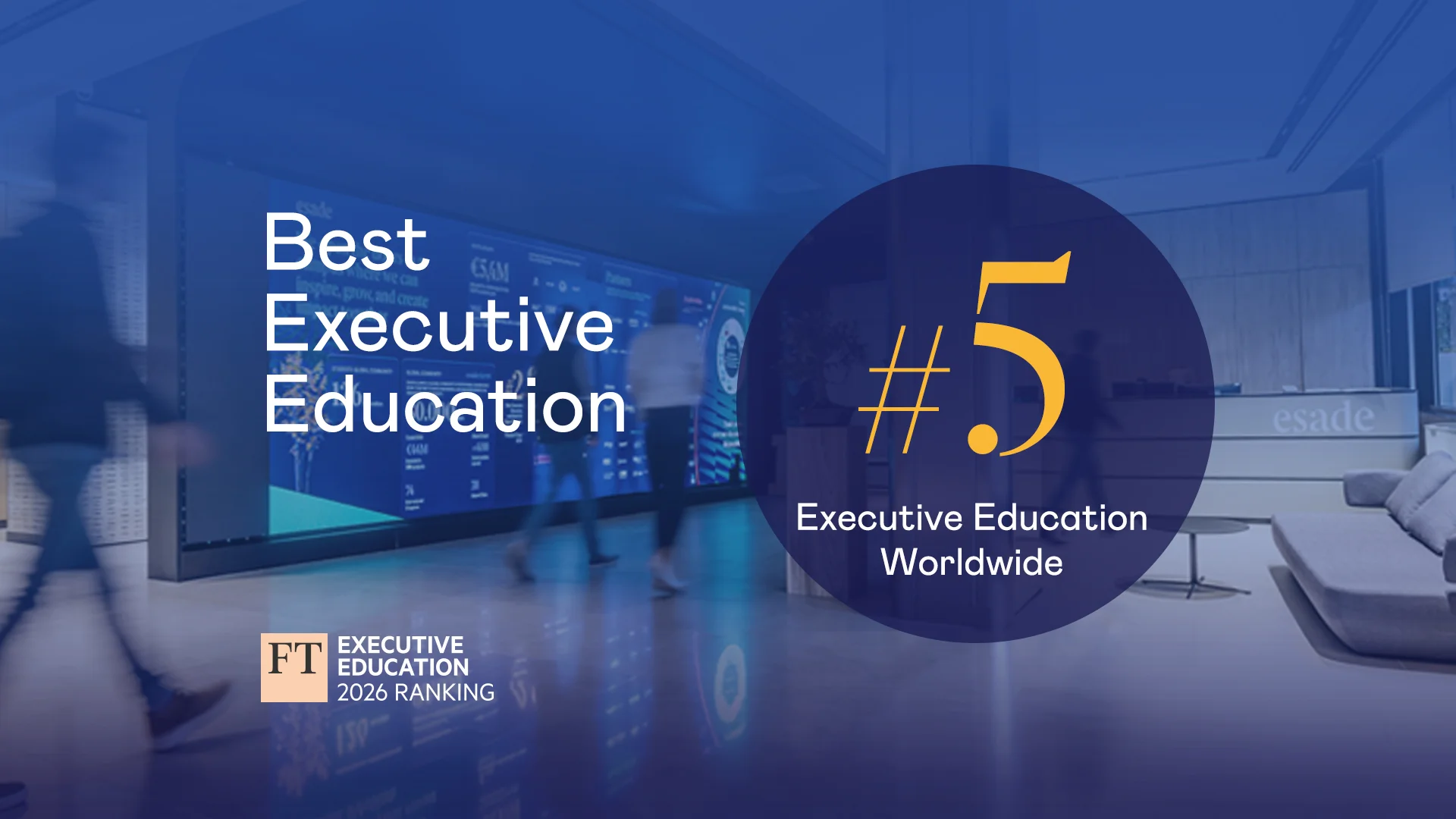
Esade is recognized as one of the best business schools in the world and has achieved prominent positions in the most prestigious international rankings. In 2025, our Open Programs were ranked fifth best in the world by Financial Times, highlighting the reach and effectiveness of the post-course follow-up, the relevance of the skills acquired for the workplace, and the excellence of our teaching and faculty.
Discover how our programs can help you take the next step.